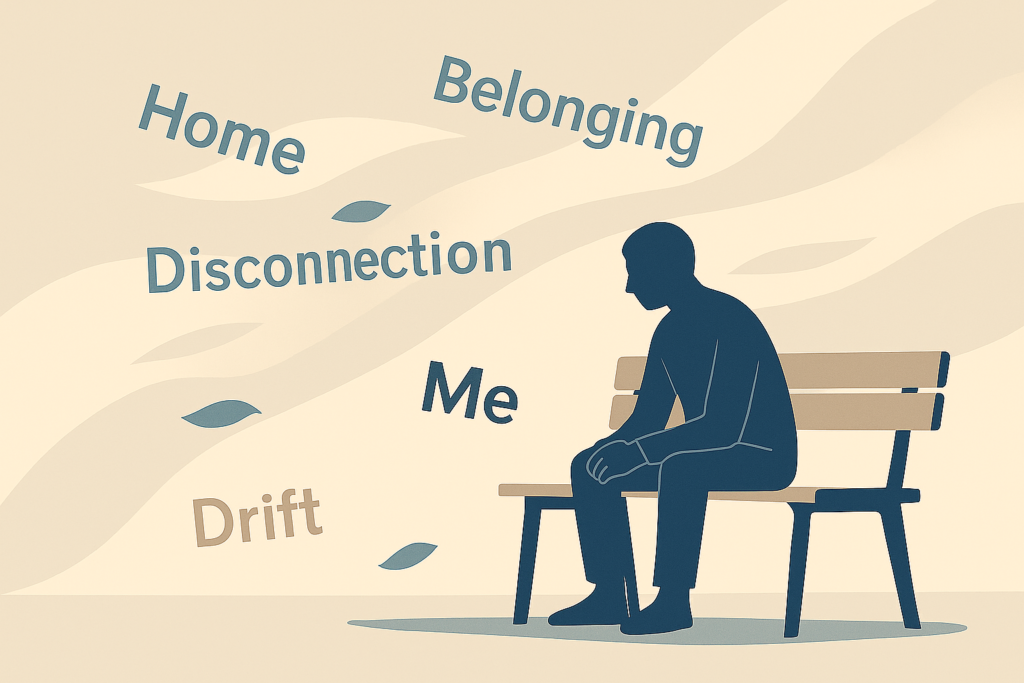
Imagine entering a room where your voice is familiar, yet suddenly, it feels foreign. You open your mouth, and instantly, the atmosphere shifts. The words that once flowed effortlessly now seem to stumble, and the room’s energy becomes tentative. Your accent, your intonation, the very melody of your speech mark you as different before a single phrase is spoken.
This is the phenomenon I call linguistic loneliness — the quiet alienation that surfaces when no one else speaks like you. It is a subtle yet profound experience that touches many, from migrants adapting to new environments to second-language speakers navigating unfamiliar social terrains. In our hyperconnected, globalised world, where English has become a lingua franca, belonging remains more elusive than ever for those whose ways of speaking do not conform to dominant norms.
Defining ‘Linguistic Loneliness’
Linguistic loneliness transcends mere language barriers; it embodies a deeper sense of not being recognised or understood within a community. It is about the emotional and social dissonance that arises when your speech, that is, your accent, vocabulary, or intonation, sets you apart, even when you are perfectly capable of communicating.
This phenomenon manifests in various contexts: migrant communities striving to retain their native dialects, second-language learners feeling the weight of their accents, teachers who navigate between local and international standards, or native speakers in spaces where regional dialects are dismissed.
From a sociolinguistic perspective, linguistic loneliness is entwined with issues of identity, power, and social recognition. It is not simply a matter of being misunderstood; it is about the invisibility of one’s linguistic identity in the broader social fabric.
When Language Stops Feeling Like Home
The emotional toll of linguistic loneliness can be profound. It often involves a relentless process of adjusting one’s voice, vocabulary, or rhythm to ‘fit in’, which can lead to exhaustion and even identity erosion.
Consider the accommodation theory, which suggests individuals modify their speech to align with others, sometimes out of politeness, sometimes out of necessity. Over time, this can result in code-switching fatigue, where speakers constantly toggle between linguistic identities, often feeling they are losing touch with their authentic selves.
Accent prejudice further complicates this landscape. A particular way of speaking, say, an Indian English accent, may be perceived as less competent or less intelligent, despite its inherent richness and diversity. Such biases reinforce feelings of alienation and diminish the speaker’s sense of belonging.
Writers such as Eva Hoffman, or example in her memoir Lost in Translation, eloquently explore how multilingual lives often involve a loss: of rhythm, of cultural roots, of a sense of ‘home’ in language. Her reflections remind us that language is more than communication; it is a core part of our identity.
The Power and Pain of Accent
Accent is a double-edged sword. It can be a badge of pride, a marker of cultural heritage, and a symbol of resilience. Yet, it can also be a source of vulnerability, especially in global settings where standardisation and uniformity are valorised.
Take the example of Indian professionals engaging in international calls. Many find themselves consciously softening their accents to project confidence or professionalism, sometimes at the expense of their authentic speech. Despite their proficiency, they encounter biases that question their competence based solely on their accent.
Similarly, non-native English teachers, who often possess impeccable language skills, face subtle discrimination rooted in their pronunciation. The insecurity stemming from accent prejudice can diminish their confidence and reinforce feelings of linguistic inadequacy.
For diaspora children, the struggle is often internal: they may feel ‘not enough’ in either language. They drift between worlds, never fully belonging to one, their voices echoing the complex realities of hybrid identities.
Linguistic insecurity becomes a silent undercurrent, shaping how individuals see themselves and their place in the world. It is an underexplored dimension of the broader conversation on belonging and social equity.
Reclaiming the Voice
Yet, amid these challenges, hope emerges from the recognition that language is a living, evolving entity. It is not a fixed standard but a dynamic spectrum of identities, histories, and cultures.
Linguistic hybridity — mixing languages, accents, idioms — is not a sign of deficiency but a testament to resilience and creativity. It is an act of building, of constructing new spaces where multiple identities coexist and thrive.
‘You don’t lose home in language,’ writes writer and linguist bell hooks. ‘You build it.’ This perspective invites us to celebrate linguistic diversity as an asset rather than a barrier.
In recent years, the rise of global Englishes, which are varieties such as Indian English, Singaporean English, and African English, illustrates this shift. These varieties challenge the notion of a ‘standard’ English and open space for more inclusive, representative forms of communication.
By embracing linguistic hybridity, we foster environments where individuals can express themselves authentically without fear of marginalisation. We move from a deficit model, which sees non-standard accents as wrong, to a valorisational one, recognising the richness they add to our collective voice.
Closing Reflection
Linguistic loneliness is a subtle, often invisible wound: a testament to the complex interplay between language, identity, and power. It is the silent reminder that, even in a world where English unites, many remain unheard in their own voices.
Perhaps, in crossing linguistic borders, we pay a price: a sense of dislocation, a feeling of not quite fitting. Nevertheless, this crossing also signifies a profound richness: an openness to new worlds, new selves, and new possibilities.
Maybe linguistic loneliness is the cost of crossing borders, but it is also the proof that we have lived between worlds, carrying more than one voice. It is a testament to resilience, a call for recognition, and an invitation to reimagine language as a space of belonging.
Conclusion
As thought leaders and global citizens, our role is to listen, to value, and to amplify voices that have been marginalised by linguistic prejudice. We must foster environments where diversity in speech is celebrated, where accents are not obstacles but markers of identity, history, and culture.
Because, in the end, language is not just a tool for communication; it is the foundation of who we are. When we honour all voices, we build a world where no one feels silent in their own language.
Discover more from Methods and Musings
Subscribe to get the latest posts sent to your email.