Language

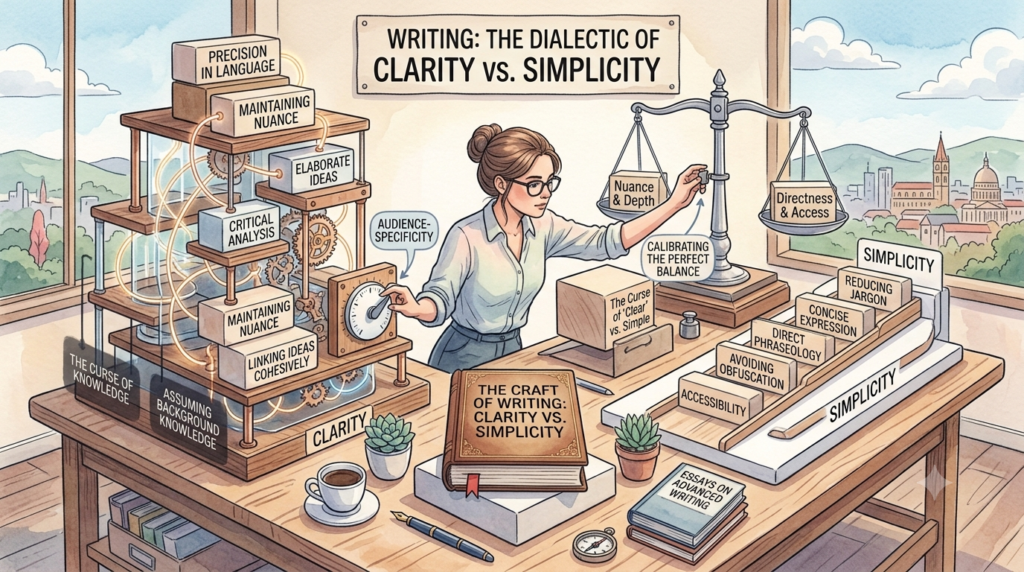
Most Writing Advice Is Anti-Intellectual: Why Simplifying Too Early Weakens Your Thinking

In the world of writing and communication, there is a pervasive mantra: ‘Keep it simple.’ It is everywhere, from advice columns to executive coaching, from classroom lectures to LinkedIn posts. The message feels intuitive: clarity comes from brevity, from stripping away complexity, from making ideas accessible. But what if this well-intentioned guidance is actually doing more harm than good?

Most Writing Advice Is Anti-Intellectual: Why Simplifying Too Early Weakens Your Thinking Read More »

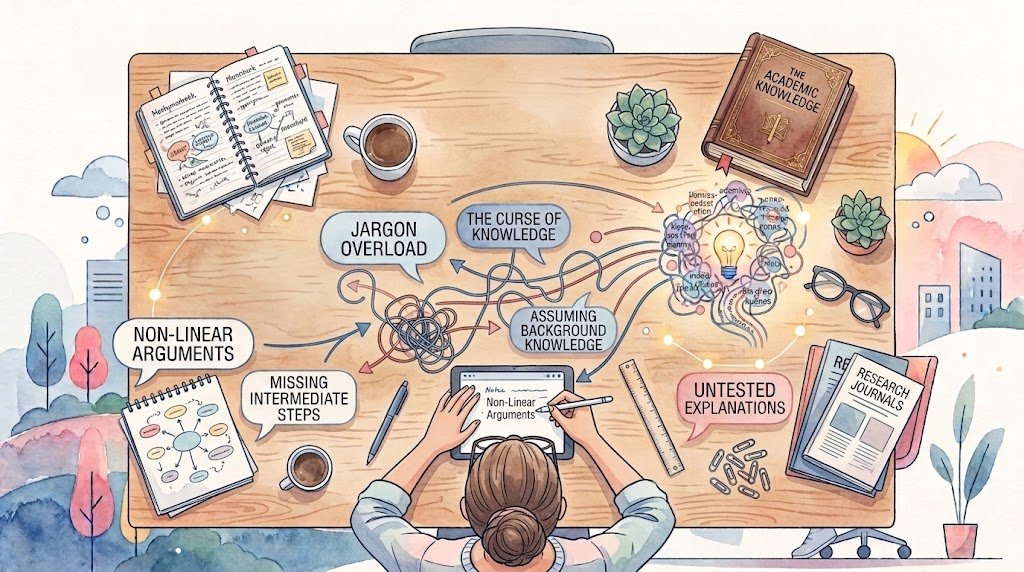
Your Problem Is Not That You Cannot Explain It. It Is That You Have Not Decided What It Is.

Have you ever found yourself saying:

— ‘I’m struggling to explain this.’

— ‘I know what I mean, but I can’t say it properly.’

— ‘Let me try that again . . . ‘

And then, after a few attempts, you feel frustrated, as if the words are just out of reach. Most of us assume that this is a communication problem. That if only we could find the right words, everything would be clear. However, here is the surprising truth: most of the time, the problem is not communication; it is decision. It is not a failure of language. It is a lack of definition.

Your Problem Is Not That You Cannot Explain It. It Is That You Have Not Decided What It Is. Read More »

Clarity Is Not a Writing Skill. It Is a Strategic Advantage.

Most people treat clarity as a peripheral skill, something to tidy up after you have finished your message. It is often seen as a writing skill, a communication preference, or a ‘nice-to-have’ finishing touch.

Many approach clarity as a superficial layer, an editing task to be polished at the end, rather than a fundamental strategic lever. However, here is the truth: in high-stakes work, clarity is not a finishing touch. It is a strategic advantage.

Clarity Is Not a Writing Skill. It Is a Strategic Advantage. Read More »

Your Organisation Does Not Have a Writing Problem: It Has a Thinking Problem

‘We need better writing.’

It is one of the most common, and often the most frustrating, complaints inside organisations today. Leaders, managers, and teams alike seem convinced that the root of their communication woes is a lack of polish, clarity, or style. The typical fix? Hire a writer. Or bring in an editor. Polish the words until they shine.

But what if that is not the real problem?

Your Organisation Does Not Have a Writing Problem: It Has a Thinking Problem Read More »

Why English Is So Good at Naming Problems

Imagine this: you have been feeling exhausted, frustrated, and plagued by self-doubt for weeks or even months. The days blur together, and you struggle to articulate what is wrong. You might think, ‘Why do I feel this way? What is this?’ However, words continue to elude you.

Then one day, you hear a term, such as burnout, imposter syndrome, gaslighting, or overthinking, and suddenly, everything shifts. That nebulous, tangled feeling suddenly has a shape, a name. The chaos in your mind condenses into a concept you can grasp.

Why English Is So Good at Naming Problems Read More »

Holi and the Language of Colour: How English Paints the World

Today, the air is colour.

Faces blur into pinks and blues.
Clothes lose their boundaries.
Identity softens under gulal.

Holi reminds us that colour is not merely decoration: it is an experience. It is a language, a way of seeing and feeling. And interestingly, the language we use, particularly English has very specific ways of handling colour, shaping our perception in subtle ways.

Holi and the Language of Colour: How English Paints the World Read More »

English Is Addicted to Clarity: What We Lose When Everything Must Be Clear

Imagine a familiar scene: a teacher tells a student that their answer is ‘unclear’. A boss tells an employee, ‘I need this to be clearer.’ A friend texts, ‘Just say what you mean.’ These moments are commonplace in everyday communication. Clarity, in these contexts, is not merely a stylistic choice; it is a moral imperative.

In English-speaking cultures, the demand for clarity has become almost sacrosanct. It is as if clarity is the moral currency of honesty, trustworthiness, and competence. But when did this obsession with clarity begin? And what might we be sacrificing in the process? More importantly, when did clarity become a virtue, an ethical obligation of sorts, and ambiguity a flaw?

English Is Addicted to Clarity: What We Lose When Everything Must Be Clear Read More »

English Has No Place for the Collective Soul

Imagine you are sitting in a meeting, and someone says, ‘We apologise for the inconvenience.’ Or perhaps, during a national tragedy, they say, ‘We are heartbroken.’

In both cases, the pronoun we appears, invoking a sense of collective unity. Yet, have you ever paused to ask, ‘Who exactly is we?’

Everyone understands the sentence; yet, nobody clearly inhabits it. It is a linguistic gesture, a shared social convention, but not necessarily an experience. We can be a political statement, a diplomatic phrase, or a rhetorical device, but it rarely captures the visceral feeling of a true shared inner life.

This leads us to a fundamental question: why does English, despite its global reach, seem to lack a linguistic space for the collective soul? Why does it struggle to articulate genuine shared emotion, thought, and responsibility?

English Has No Place for the Collective Soul Read More »

English and the Disappearing Body: Why the Language Prefers Minds Over Flesh

Imagine a typical conversation, whether in a clinic, a classroom, or a casual chat. We often hear expressions such as  ‘I’m stressed,’ ‘I feel anxious,’ or ‘I have a headache.’ Notice, however, that we do not usually say, ‘My heart is tight,’ ‘My chest feels heavy,’ or ‘My stomach is knotted.’  

The body lurks in the background of our language — present, yet often silent. It is as if the flesh and bones that house our experience have been politely asked to step aside or, perhaps, invisibly excised from our linguistic landscape.

This raises a central question: why does English so frequently report and describe human experience from the head, the mind, rather than from the flesh and bones?

English and the Disappearing Body: Why the Language Prefers Minds Over Flesh Read More »

Why English Sounds So Certain (Even When It Isn’t)

Imagine listening to a conversation in English: a friend declares, ‘This is how it works,’ or states confidently, ‘That’s not true,’ or simply says, ‘Obviously.’ These statements seem to arrive with an air of certainty, as though the speaker holds absolute authority over their words. Even when opinions are expressed, they often sound like undeniable facts, leaving little room for doubt.

This phenomenon raises an intriguing question: why does English sound so sure of itself, so confident, even when speakers might be merely guessing, hedging, or uncertain?

Why English Sounds So Certain (Even When It Isn’t) Read More »