Methods and Musings

Why Humans Cannot Think Without Categories: How Language Carves Reality into Manageable Pieces

In the grand tapestry of human cognition, categories serve as the fundamental threads that weave our perceptions, thoughts, and communications into a coherent fabric. From distinguishing a chair from a stool to understanding complex scientific theories, our minds rely on categorisation, an intrinsic mechanism that transforms the chaotic flux of sensory input into manageable, meaningful units. But why are categories so essential? How does language shape and carve reality itself? To understand this, we must delve into the interplay of cognitive science, linguistics, and philosophy, revealing a profound truth: human thought is inherently structured by the categories our language provides.

Why Humans Cannot Think Without Categories: How Language Carves Reality into Manageable Pieces Read More »

Why Every Conversation Has Two Languages: The Difference Between What We Say and What We Mean

In an increasingly interconnected world, understanding communication goes far beyond the literal words exchanged. Every conversation operates on two levels: the explicit language we utter and the implicit meaning we intend or perceive. As industry leaders and communicators, recognising and navigating this duality is essential for clarity, persuasion, and cultural intelligence. This post explores the nuanced layers of human communication, drawing from pragmatics, linguistic theory, and intercultural insights to illuminate the invisible language that underpins every interaction.

Why Every Conversation Has Two Languages: The Difference Between What We Say and What We Mean Read More »

Why We Argue About Words When We Really Disagree About Ideas

Picture this common scene: two people are debating the meaning of a fundamental concept.

A: That’s not what equality means.

B: That’s exactly what equality means.

At first glance, it seems like they are arguing over a dictionary definition. But is that really the case? Or are they, perhaps, talking past each other, each with a different mental model of what the word means?

This question cuts to the core of human communication. When we argue about the meaning of a word, are we really debating language itself? Or are we, in fact, wrestling with contrasting visions of how the world works? Understanding this distinction reveals much about the nature of disagreement and the role language plays in shaping, and reflecting, our worldview.

Why We Argue About Words When We Really Disagree About Ideas Read More »

The Words We Never Invented: What the Gaps in English Reveal About the Way We Think

Languages are often measured by their vocabulary, the lexicons that enable us to articulate colours, emotions, objects, and abstract ideas. Yet, if we want to understand what a language truly reveals about its speakers, we should look beyond what it can say. The most compelling insights may lie in what it cannot say: those silent gaps, the words that do not exist, the concepts that remain unnamed.

The Words We Never Invented: What the Gaps in English Reveal About the Way We Think Read More »

Why We Notice Some Words and Ignore Others: Attention, Salience, and the Hidden Politics of Language

Imagine this: you have recently learned a new word, say, ‘resilience’, and suddenly, it is everywhere. It pops up in news articles, social media posts, conversations, even billboards. You wonder, ‘Was it always there?’ or ‘Did I just start noticing it?’ This phenomenon is more than coincidence. It is rooted in the complex interplay between language, attention, and perception.

Why We Notice Some Words and Ignore Others: Attention, Salience, and the Hidden Politics of Language Read More »

Why We Mistake Familiarity for Truth: What Language, Repetition, and Cognition Reveal About Belief

In an age inundated with information, where social media feeds, headlines, and viral content compete for our attention, the line between familiarity and truth has blurred dangerously. We are more exposed than ever to repeated messages, shared narratives, and linguistic patterns that reinforce beliefs, not necessarily because they are accurate, but because they feel true. This phenomenon is not accidental; it is rooted deeply in cognitive processes, linguistic cues, and social dynamics that shape our perception of reality.

Why We Mistake Familiarity for Truth: What Language, Repetition, and Cognition Reveal About Belief Read More »

The Myth of Finding the Right Words

For centuries, the prevailing view has been that language serves as a mirror to our thoughts. We believe that given enough time and effort, we can find the ‘perfect’ words to articulate our ideas: words that precisely capture our intentions, emotions, and insights. This assumption underpins much of our communication philosophy: the idea that language is a transparent vessel, a neutral conduit through which our pre-existing thoughts flow.

Yet, this perspective is fundamentally flawed. It presumes that thought exists in a vacuum — fully formed, waiting to be expressed — and that language’s primary role is to transmit that thought without distortion. This myth has shaped everything from educational practices to corporate communication strategies, fostering the belief that clarity is merely a matter of vocabulary or articulation.

But what if this assumption is backwards? What if language is not just a passive mirror but an active participant in shaping our cognition?

The Myth of Finding the Right Words Read More »

Why We Trust Confident Language More Than Accurate Language

In the realm of communication, a peculiar paradox persists: we are more inclined to trust statements delivered with unwavering confidence than those rooted in nuanced accuracy. This phenomenon is not accidental but deeply embedded in our cognitive and social frameworks. While precision and factual correctness are prized academically and scientifically, in everyday life, it is the language of certainty that shapes perceptions, influences decisions, and establishes authority.

Understanding this paradox requires unpacking the subtle interplay between language, psychology, and social trust. When someone asserts a claim with conviction, our brains tend to interpret that certainty as a marker of truth, even when the underlying facts may be complex or uncertain. Conversely, cautious language often triggers scepticism, as it signals a lack of decisiveness or knowledge.

Why We Trust Confident Language More Than Accurate Language Read More »

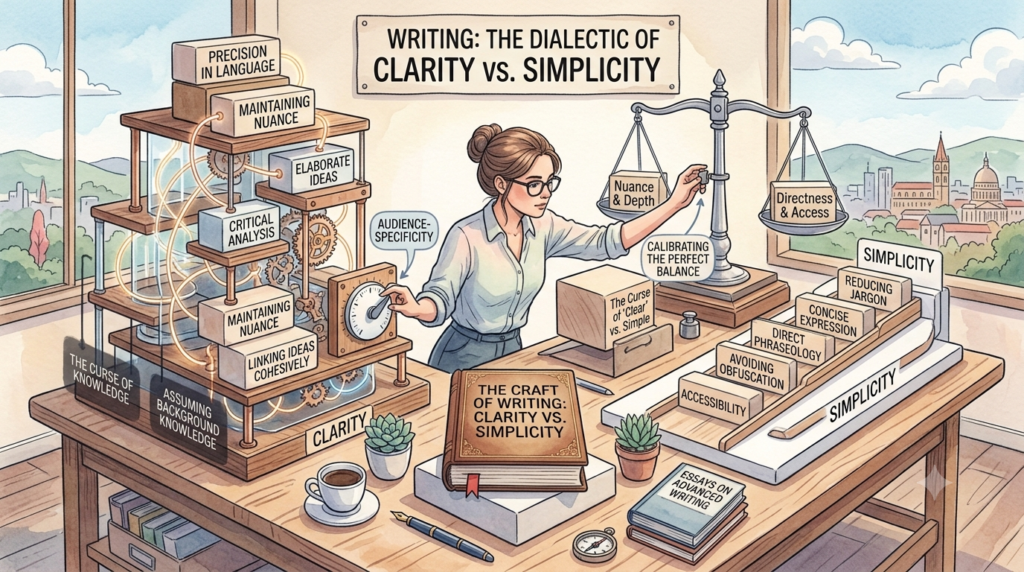
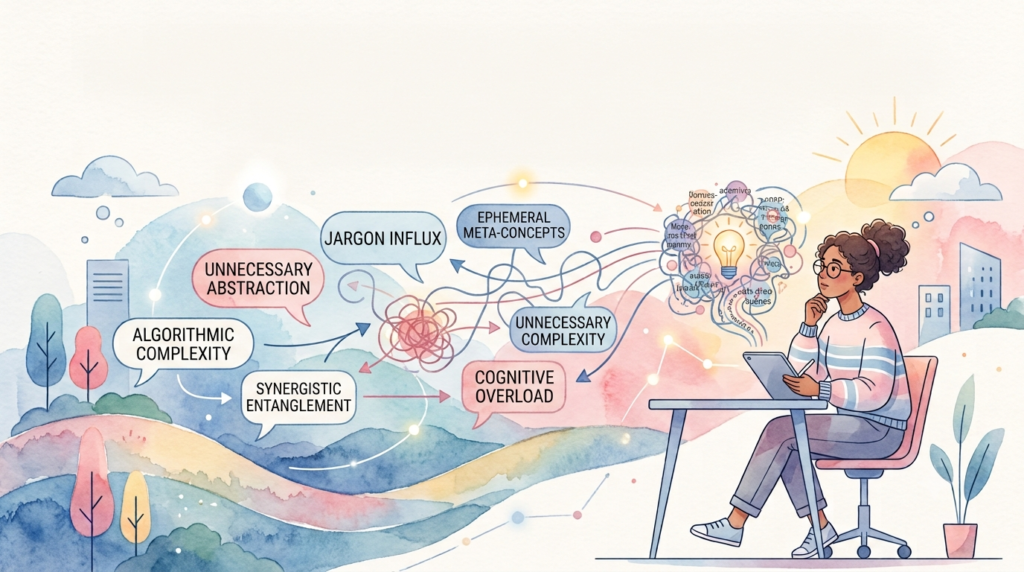
Why Intelligent Writing Often Feels Difficult to Read: Fluency, Friction, and the Psychology of Complex Thought

In an age awash with information, clarity has become a currency of respect, and yet, some of the most intellectually rigorous writing is often perceived as hard to read. Why is it that ideas rooted in complexity, nuance, and depth can feel inaccessible, even to the most engaged readers? The answer lies not just in the content itself but in the subtle dynamics of how our minds process language, ideas, and the very act of understanding.

Why Intelligent Writing Often Feels Difficult to Read: Fluency, Friction, and the Psychology of Complex Thought Read More »

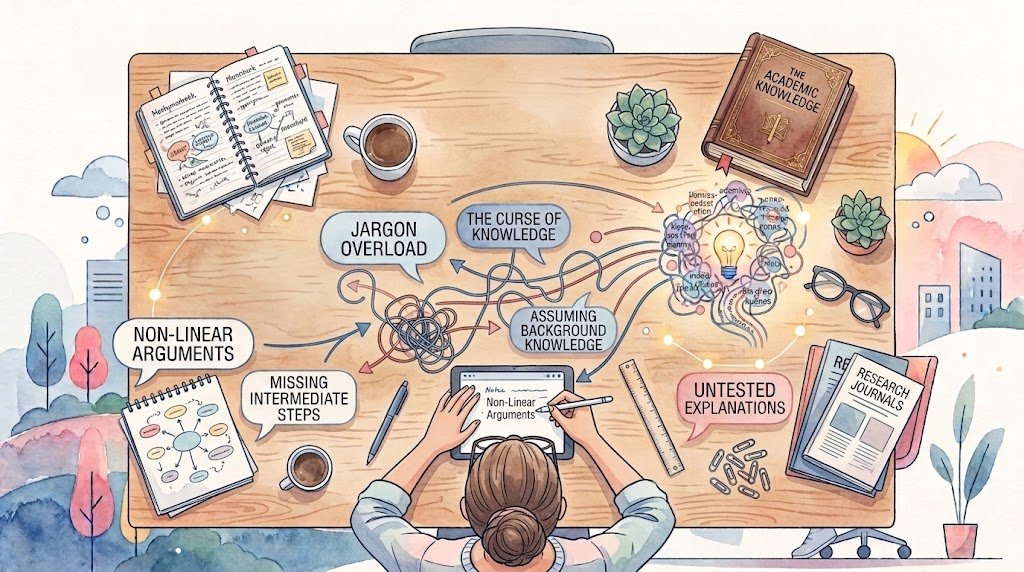
Most People Don’t Revise Their Ideas. They Just Rewrite Their Sentences.

In the age of instant communication and rapid content production, it is tempting to believe that rewriting is the same as revising. We polish sentences, tweak word choices, and adjust style — all in the name of clarity. But beneath this surface-level effort lies a deeper phenomenon: most of us are not revising our ideas. We are merely rewriting our sentences.

This subtle yet profound distinction has enormous implications for how we think, communicate, and, ultimately, how we grow intellectually. Because if we mistake superficial editing for genuine revision, we risk reinforcing our existing assumptions, obscuring our misunderstandings, and missing opportunities for real progress.

Most People Don’t Revise Their Ideas. They Just Rewrite Their Sentences. Read More »