Introduction: The Power of Language and Its Hierarchies
Language is more than just a means of communication; it is a vessel of identity, culture, history, and social power. Among the myriad languages spoken worldwide, English holds a unique position, serving as a global lingua franca, a symbol of modernity, and a marker of social status. However, within the vast spectrum of English varieties, certain accents, dialects, and pronunciations are considered more ‘prestigious’ than others. This hierarchy of English varieties influences social mobility, professional opportunities, and cultural perceptions across the globe.
In this blog post, we delve into the fascinating dynamics of language prestige and power, exploring why some Englishes are heard and valued more than others. We will examine the historical roots of these hierarchies, their impact on speakers, and the ongoing shifts driven by globalisation and social change. Our goal is to foster a nuanced understanding of linguistic diversity, challenge stereotypes, and consider how policy and community efforts can reshape perceptions of English.
Defining Language Prestige: What Makes an Accent or Dialect ‘Prestigious’?
Language prestige refers to the social value or status assigned to certain speech varieties over others. It is not merely about how understandable or correct a dialect is but about the social connotations attached to it. For example, in many countries, the accent associated with the upper classes, education, or colonial power tends to be seen as more ‘prestigious’.
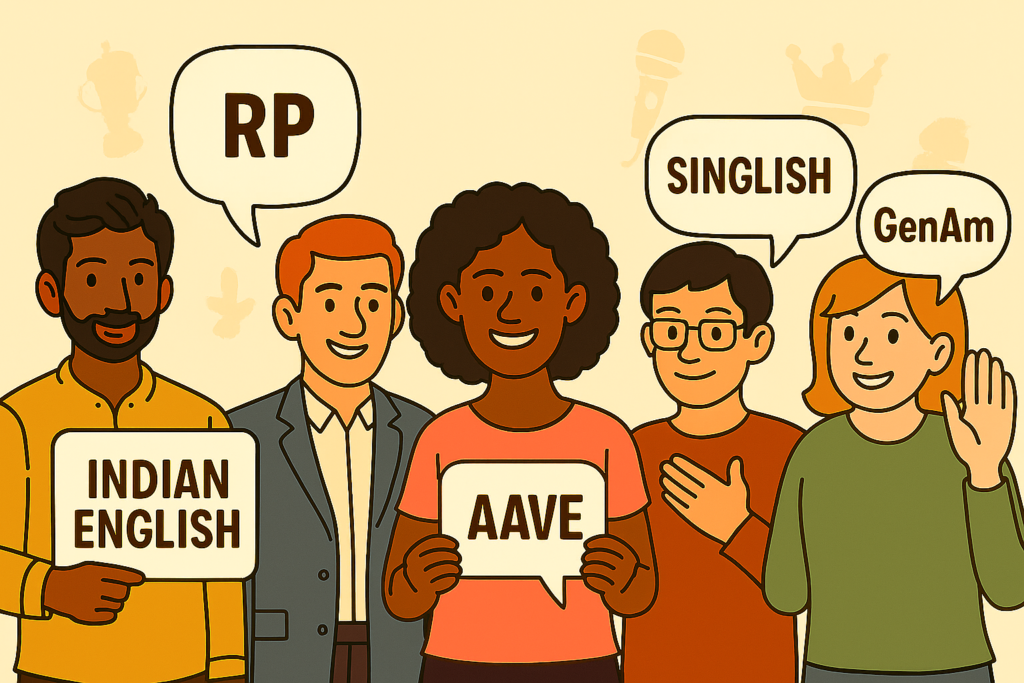
Historically, the prestige of a particular English variety often originates from its association with power, wealth, and influence. For instance, Received Pronunciation (RP) in England, often called ‘The Queen’s English’, has long been considered the accent of the British elite and the BBC. Similarly, in the United States, General American (GenAm) is often associated with neutrality and professionalism.
However, these standards are not static. They are constructed through social, political, and historical processes. Colonial histories, for example, played a crucial role in elevating certain English varieties, such as Indian English or Nigerian English, within their contexts but often still marginalised in global settings.
The Invisible Hierarchies: Biases Embedded in Language Perception
Despite the widespread use of English worldwide, biases based on accent, pronunciation, and speech patterns persist. Speakers of non-prestigious varieties often face subtle or overt discrimination in employment, education, media representation, and social interactions.
Case in Point: Job Interviews and Professional Contexts
Imagine a candidate with a South Indian English accent applying for a multinational company’s managerial role. Despite possessing excellent qualifications and experience, they might be unconsciously judged as less competent or less ‘professional’ because of their accent. Such biases are often rooted in stereotypes associating ‘standard’ accents with intelligence and credibility.
Representation in Media and Popular Culture
Media portrayals reinforce these hierarchies. Characters with prestigious accents are typically cast as heroes, professionals, or leaders, whereas those with regional or non-standard accents may be stereotyped or marginalised. This shapes societal perceptions, making certain speech patterns more desirable or acceptable.
The Bias Beyond the Surface
These biases are often invisible to speakers of prestigious varieties, yet they have profound implications. They contribute to social exclusion and perpetuate inequalities, especially for speakers of English varieties associated with marginalised communities.
Prestige, Identity, and the Tension of Code-Switching
Many English learners and speakers navigate a complex landscape where they must balance their authentic speech with societal expectations. This balancing act often involves code-switching, which means alternating between different language varieties depending on the context.
For instance, an Indian professional might speak in a more ‘neutral’ or ‘international’ English in a formal business meeting but revert to their regional accent when among friends or family. While this flexibility demonstrates linguistic adaptability, it also raises questions about identity and authenticity.
The Challenge of Sounding ‘Acceptable’ Versus ‘True to Oneself’
Some individuals may feel compelled to adopt high-prestige accents to gain social mobility, at the expense of their cultural roots. Others resist these pressures, emphasising linguistic diversity and authenticity. This tension reflects broader debates about linguistic imperialism, cultural identity, and the right to speak one’s own way.
Sociolinguistic Variation in Action: How Englishes Play Out in Society
The way English is used in different settings reveals a lot about social hierarchies and cultural values.
In Popular Culture
Films, television, and music often showcase certain English accents as desirable or aspirational. For example, Hollywood movies frequently feature American accents that align with GenAm, reinforcing their global prestige.
On Social Media and Influencer Culture
Online platforms have democratised language use, allowing diverse English varieties to gain visibility. Influencers and content creators showcase regional accents, dialects, and linguistic styles, challenging traditional notions of prestige.
In Professional and Educational Settings
International organisations and educational institutions increasingly recognise the importance of linguistic diversity. Yet, standardised testing and curricula still often favour standard or prestige varieties, influencing perceptions of competence.
Code-Shifting and Audience Awareness
Speakers often adapt their language depending on their audience. For example, a Nigerian English speaker might speak more standardised English when applying for a job abroad but switch to their local variety among peers. Such stylistic shifts demonstrate linguistic flexibility but also highlight underlying hierarchies.
The Winds of Change: How Globalisation and Digital Communication Shift Prestige
The digital age and increased migration have begun to reshape notions of linguistic prestige.
Global Englishes and the Rise of Non-Standard Varieties
Today, English is spoken by more people outside the traditional centres of Britain and America than within. Varieties such as Indian English, Nigerian English, and Singapore English, amongst others, are gaining recognition and legitimacy.
Online Platforms Amplifying Diversity
Content creators from diverse backgrounds showcase their linguistic identities, challenging the dominance of traditional prestige accents. Movements advocating for linguistic rights and diversity are gaining momentum.
Progressive Attitudes and Policy Changes
Institutions are increasingly acknowledging the legitimacy of different English varieties. Some universities now accept a range of accents and dialects, and media outlets feature diverse speech patterns, promoting inclusivity.
Ongoing Debates: Should Prestige Norms Evolve?
There is an ongoing conversation about whether societal standards of ‘good’ English should adapt to include linguistic diversity. This debate involves questions about mutual intelligibility, professionalism, and cultural identity.
Implications for Learners, Society, and Policy
Understanding the dynamics of language prestige has profound implications for educators, policymakers, and communities.
For Learners
Recognising that no single accent or dialect holds absolute superiority can empower learners to embrace their linguistic identities. It encourages a shift from conformity towards authenticity.
For Society
Promoting linguistic diversity can foster inclusivity and reduce discrimination. Recognising the value of different English varieties helps dismantle stereotypes and biases.
For Policy and Education
Language policies should reflect linguistic realities rather than impose narrow standards. Educational curricula can incorporate local and global English varieties, emphasising mutual respect and understanding.
Community Reclamation and Valuation
Community-led initiatives can celebrate local Englishes, fostering pride and resilience. For example, in India, efforts to valorise Indian English varieties challenge colonial-era hierarchies and promote linguistic equity.
Final Thoughts: Towards a More Equitable Linguistic Future
The hierarchies of English varieties are rooted in history, politics, and social power. While these structures have historically favoured certain accents and dialects, ongoing social change and global connectivity offer opportunities for transformation.
As language users, educators, and policymakers, we have a role in shaping perceptions of what constitutes ‘good’ or ‘prestigious’ English. Embracing linguistic diversity not only enriches our global communication but also affirms the cultural identities of millions.
In conclusion, the question is not merely about which Englishes are heard but about recognising the inherent value of all linguistic expressions. A truly equitable future for English — and language itself— lies in celebrating diversity, challenging hierarchies, and fostering inclusivity at every level.
Let us listen carefully to all voices, for in the richness of our linguistic tapestry lies the strength of our shared humanity.
Discover more from Methods and Musings
Subscribe to get the latest posts sent to your email.