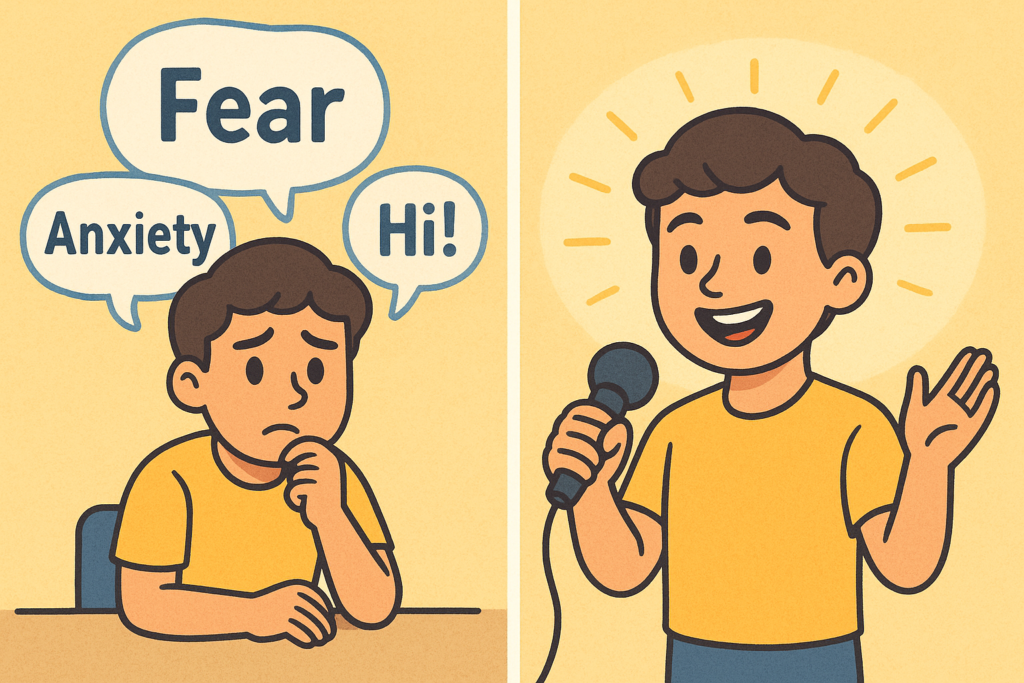
Imagine a classroom where students eagerly demonstrate their understanding of grammar rules, vocabulary, and pronunciation; yet, when the moment comes to speak, they freeze. They know the words, but they cannot quite find their voice. This paradox is a common phenomenon among English learners worldwide: the ‘knowers’ who struggle to ‘do’. It is a psychological, social, and cultural puzzle that cuts across borders, ages, and proficiency levels.
In this blog post, we explore the intriguing phenomenon of the confidence gap in language learning: why learners often possess the linguistic knowledge but lack the courage or comfort to speak. As a thought leader in second language acquisition (SLA), I will draw on academic insights, real-world examples, and practical strategies to help both learners and educators bridge this gap. Whether you are an English teacher, a self-study enthusiast, or a language coach, this post aims to empower you with a deeper understanding and actionable tools.
You Know the Words; So Why Can You Not Speak?
Many learners find themselves in a frustrating situation: they can pass written tests, recall vocabulary, and understand grammar rules, yet falter when trying to converse. This disconnect between competence and performance is a well-documented phenomenon in SLA research.
The Psychological Barriers
At the core of this issue are psychological barriers, such as fear, anxiety, and self-consciousness, that inhibit spontaneous speech. Think of a learner who has just finished a grammar drill but hesitates to speak up in a conversation because they worry about making mistakes or sounding ‘silly’. This fear acts as a barrier, blocking the flow of communication even when linguistic competence exists.
Krashen’s Affective Filter Hypothesis (1982) sheds light here. Krashen argues that learners’ emotional states, such as anxiety, self-esteem, motivation, can raise or lower this ‘filter’, impacting their ability to acquire and use language effectively. When anxiety is high, the filter is up, and input (language exposure) does not make its way into the learner’s subconscious. Conversely, a relaxed, supportive environment lowers the filter, making it easier to speak.
The Social and Cultural Contexts
Beyond internal fears, social and cultural factors influence speaking confidence. Learners who come from backgrounds where speaking out is discouraged or where mistakes are stigmatised may develop a reluctance to voice themselves. Cultural norms around politeness, deference, or shame can also shape how comfortable learners feel in expressing themselves in a new language.
For example, in India, traditionally, classroom culture has often emphasised rote memorisation and passive learning, with less emphasis on open conversation. While this approach builds knowledge, it can inadvertently suppress spontaneous speaking. However, with the rise of more communicative and student-centred methods, many Indian classrooms now foster more interactive speaking opportunities, helping learners develop confidence alongside competence.
The Affective Filter in Action
Understanding the Affective Filter concept helps us grasp why the same learner may excel in written exercises but remain silent during speaking activities. When learners experience performance anxiety, which usually manifests itself as worrying about pronunciation, grammar, or social judgment, they tend to self-censor.
Motivation and Self-Perception
Motivation is another critical factor. Learners with intrinsic motivation, such as a desire to connect with friends, access popular culture, or pursue a career, are more likely to overcome fear barriers. Conversely, extrinsic motivation, such as passing an exam, can sometimes result in surface learning that does not translate into confident speaking.
Self-perception also plays a role. Learners who see themselves as ‘bad at speaking’ or ‘not from an English-speaking background’ may develop a fixed mindset that hampers their willingness to try. Dörnyei’s Motivation Theory (2001) highlights how fostering a growth mindset and positive self-identity in language learners can boost their confidence.
The Psychological Toll of Perfectionism
Perfectionism can be a silent yet powerful enemy. Learners who set impossibly high standards for themselves may avoid speaking altogether to prevent errors. This perfectionist tendency creates a vicious cycle: fear of mistakes leads to silence, which in turn hampers fluency development.
The Hidden Role of Identity
Why do some learners ‘sound like themselves’ in English whereas others do not? It turns out that identity, that is, how learners see themselves in relation to the language, significantly influences their willingness to speak.
Authentic Voice and Cultural Identity
Learners who feel that they can express their true selves in a new language tend to speak more confidently. This authenticity creates a sense of ownership and comfort. Conversely, learners who feel pressured to adopt a ‘native-like’ accent or manner may experience alienation, leading to hesitation.
The Power of Cultural Norms
Cultural norms around speech also shape confidence. For example, in many Western cultures, questioning and debate are encouraged, fostering open dialogue. In contrast, some Asian cultures emphasise harmony and deference, which can discourage outspoken participation, especially among learners who are still negotiating their identity in the target language.
Teachers, Take Note: How Classroom Culture Shapes Confidence
Educators play a pivotal role in either widening or closing the confidence gap. The tone of feedback, classroom activities, and cultural norms influence learners’ comfort levels.
Feedback and Error Correction
Research shows that overly harsh correction can undermine confidence, especially if errors are highlighted publicly. Instead, adopting a growth-oriented feedback style, focusing on effort, progress, and specific praise, can foster a safe environment for experimentation.
Creating a Supportive Environment
Classroom culture should promote risk-taking. Activities such as ‘low-stakes’ role-plays, storytelling, and group discussions, where mistakes are viewed as part of learning, help learners relax and participate more freely.
Incorporating Learner Identity
Encouraging learners to share their interests, backgrounds, and experiences fosters a sense of community and authentic voice. When learners see their identities reflected and valued, their confidence naturally grows.
From Silent to Confident: Practical Tips
How can learners break through their confidence barriers and start speaking more freely? Here are some evidence-based, practical strategies.
(1) Micro-Speaking Challenges
Set small, manageable speaking goals, such as saying a sentence aloud in the morning or describing your day in 30 seconds. Gradually increase complexity as comfort builds.
(2) Self-Talk in English
Practise speaking to yourself in English about daily routines, thoughts, or plans. This reduces anxiety and helps develop fluency in an informal, judgment-free space.
(3) Role-Playing With AI and Virtual Partners
Use AI-powered chatbots or virtual assistants to simulate conversations. These platforms often provide instant feedback and allow repeated practice without judgment.
(4) Journalling Aloud
Record yourself reading or narrating stories and listen back. Self-assessment builds awareness and confidence over time.
(5) Engage in Authentic Communication
Join language exchange groups, online forums, or local clubs. Real-world practice, even in small doses, reinforces speaking skills and reduces fear.
(6) Visualise Success
Use mental imagery to imagine yourself confidently speaking in real situations. Visualisation can reduce anxiety and boost self-efficacy.
Final Thoughts: Embrace the Voice Within
The confidence gap is a universal challenge, one that stems from complex psychological, social, and cultural factors. Recognising that fluency is not just about knowing grammar or vocabulary but also about feeling comfortable and authentic in your language is a critical step.
Remember, every speech act is an opportunity for growth. As teachers and learners, fostering a supportive environment, celebrating progress, and practising regularly can help bridge the gap between knowing and speaking.
Discover more from Methods and Musings
Subscribe to get the latest posts sent to your email.