Theory

Clarity Is Not a Writing Skill. It Is a Strategic Advantage.

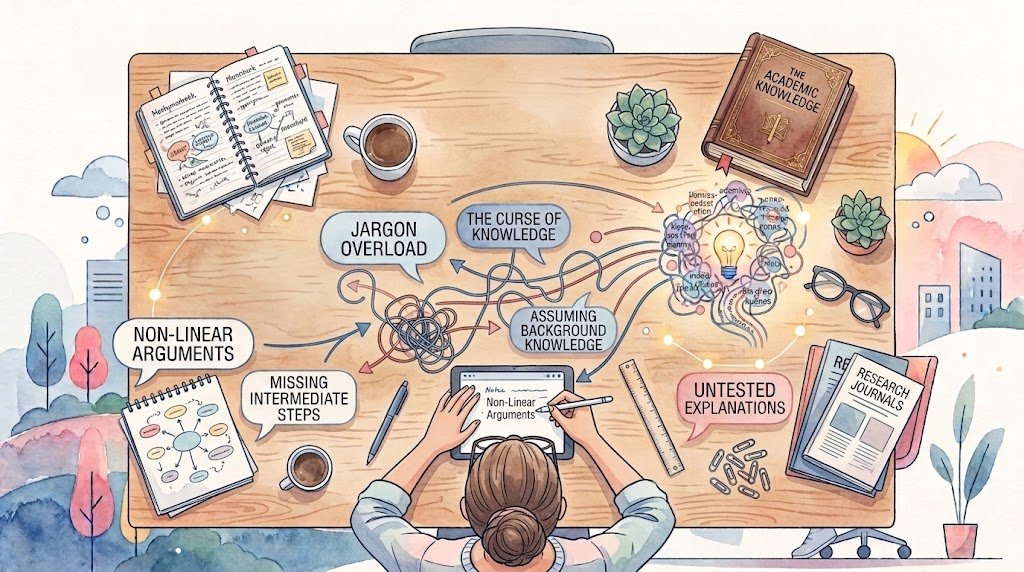
Most people treat clarity as a peripheral skill, something to tidy up after you have finished your message. It is often seen as a writing skill, a communication preference, or a ‘nice-to-have’ finishing touch.

Many approach clarity as a superficial layer, an editing task to be polished at the end, rather than a fundamental strategic lever. However, here is the truth: in high-stakes work, clarity is not a finishing touch. It is a strategic advantage.

Clarity Is Not a Writing Skill. It Is a Strategic Advantage. Read More »

Why English Is So Good at Naming Problems

Imagine this: you have been feeling exhausted, frustrated, and plagued by self-doubt for weeks or even months. The days blur together, and you struggle to articulate what is wrong. You might think, ‘Why do I feel this way? What is this?’ However, words continue to elude you.

Then one day, you hear a term, such as burnout, imposter syndrome, gaslighting, or overthinking, and suddenly, everything shifts. That nebulous, tangled feeling suddenly has a shape, a name. The chaos in your mind condenses into a concept you can grasp.

Why English Is So Good at Naming Problems Read More »

Holi and the Language of Colour: How English Paints the World

Today, the air is colour.

Faces blur into pinks and blues.
Clothes lose their boundaries.
Identity softens under gulal.

Holi reminds us that colour is not merely decoration: it is an experience. It is a language, a way of seeing and feeling. And interestingly, the language we use, particularly English has very specific ways of handling colour, shaping our perception in subtle ways.

Holi and the Language of Colour: How English Paints the World Read More »

English Is Addicted to Clarity: What We Lose When Everything Must Be Clear

Imagine a familiar scene: a teacher tells a student that their answer is ‘unclear’. A boss tells an employee, ‘I need this to be clearer.’ A friend texts, ‘Just say what you mean.’ These moments are commonplace in everyday communication. Clarity, in these contexts, is not merely a stylistic choice; it is a moral imperative.

In English-speaking cultures, the demand for clarity has become almost sacrosanct. It is as if clarity is the moral currency of honesty, trustworthiness, and competence. But when did this obsession with clarity begin? And what might we be sacrificing in the process? More importantly, when did clarity become a virtue, an ethical obligation of sorts, and ambiguity a flaw?

English Is Addicted to Clarity: What We Lose When Everything Must Be Clear Read More »

English Has No Place for the Collective Soul

Imagine you are sitting in a meeting, and someone says, ‘We apologise for the inconvenience.’ Or perhaps, during a national tragedy, they say, ‘We are heartbroken.’

In both cases, the pronoun we appears, invoking a sense of collective unity. Yet, have you ever paused to ask, ‘Who exactly is we?’

Everyone understands the sentence; yet, nobody clearly inhabits it. It is a linguistic gesture, a shared social convention, but not necessarily an experience. We can be a political statement, a diplomatic phrase, or a rhetorical device, but it rarely captures the visceral feeling of a true shared inner life.

This leads us to a fundamental question: why does English, despite its global reach, seem to lack a linguistic space for the collective soul? Why does it struggle to articulate genuine shared emotion, thought, and responsibility?

English Has No Place for the Collective Soul Read More »

English and the Disappearing Body: Why the Language Prefers Minds Over Flesh

Imagine a typical conversation, whether in a clinic, a classroom, or a casual chat. We often hear expressions such as  ‘I’m stressed,’ ‘I feel anxious,’ or ‘I have a headache.’ Notice, however, that we do not usually say, ‘My heart is tight,’ ‘My chest feels heavy,’ or ‘My stomach is knotted.’  

The body lurks in the background of our language — present, yet often silent. It is as if the flesh and bones that house our experience have been politely asked to step aside or, perhaps, invisibly excised from our linguistic landscape.

This raises a central question: why does English so frequently report and describe human experience from the head, the mind, rather than from the flesh and bones?

English and the Disappearing Body: Why the Language Prefers Minds Over Flesh Read More »

The Grammar of Blame: How Syntax Shifts Responsibility

Imagine walking into a room and accidentally knocking over a cherished vase. When you say, ‘I broke the vase,’ the words carry a weight of personal responsibility, guilt, and accountability. The emotional temperature is immediate and intense. Now, if someone else reports, ‘The vase broke,’ the tone shifts. It becomes less confrontational, more detached, almost neutral. The event remains the same, but the way it is framed through language radically alters how we perceive responsibility.

This subtle yet profound difference illustrates a vital question: how does grammar influence our attribution of blame? Beyond mere syntax, language subtly guides our moral judgements, shaping perceptions of intent, culpability, and severity.

The Grammar of Blame: How Syntax Shifts Responsibility Read More »

Why Some Words Feel Heavy: The Psychology of Lexical Weight

Imagine standing at a crossroads of language, holding two words in your mind: ‘I’m sad’ and ‘I’m devastated’. Both express sorrow; yet the second phrase weighs heavier, sinking into your mental landscape with a sense of gravity and depth. The difference is not just in the dictionary definition but in the subtle emotional and cultural layers that each word evokes.

This phenomenon, where words seem to carry emotional, moral, or cultural weight, is a fascinating aspect of human language. Some words seem to press down on us, resonating with sombre, poetic, or profound tones, whereas others evoke lightness and joy. Why does this happen? How can two words mean roughly the same thing yet feel worlds apart in their emotional heft?

Why Some Words Feel Heavy: The Psychology of Lexical Weight Read More »

The Invisible Accent: Why We Never Hear Ourselves the Way Others Do

Imagine this: you record a voice message or listen to a video of yourself speaking. Instantly, you notice something strange. You sound different from what you thought you sounded like. Maybe your voice sounds nasal, nasal, or foreign. Perhaps you are surprised at the accent that emerges, one you have never consciously noticed before. This experience is universal. Most of us believe we have no accent, until we hear ourselves objectively, and suddenly, everything sounds different.

This paradox is rooted in a fascinating linguistic and psychological phenomenon: ‘everyone has an accent’, yet most individuals perceive theirs as ‘neutral’ or ‘standard’. It is as if our own voice and speech are invisible, hidden behind a mental veil that filters how we perceive ourselves versus how others perceive us. The question then arises: why does our brain treat our own accent differently from how others hear it?

The Invisible Accent: Why We Never Hear Ourselves the Way Others Do Read More »

The Grammar of Silence: What We Say When We Say Nothing

Imagine a quiet room where two friends sit in a moment of shared understanding. One has just delivered difficult news, and the other responds not with words but with a gentle gaze and a lingering pause. Or picture a tense courtroom, where a witness’s silence speaks volumes, revealing truths unspoken. In these moments, silence is not mere emptiness; it is a language in its own right, capable of conveying complex, nuanced meaning that words sometimes fail to express.

Silence, in its many forms, shapes our interactions, influences our relationships, and reflects cultural norms. It can be an act of respect, a sign of disagreement, or a display of emotional restraint. But what does silence truly communicate? And how does it function within the broader grammar of human language?

This leads us to a compelling question: if language is how we communicate, what do we make of the moments when we do not speak? The answer lies in exploring what I call the ‘grammar of silence’ — a set of patterns, conventions, and meanings that govern what is left unsaid. Silence is not simply the absence of speech; it is a form of communication rich with intentionality and cultural significance. It follows its own rules, and understanding these rules allows us to listen more deeply to the unspoken stories around us.

The Grammar of Silence: What We Say When We Say Nothing Read More »