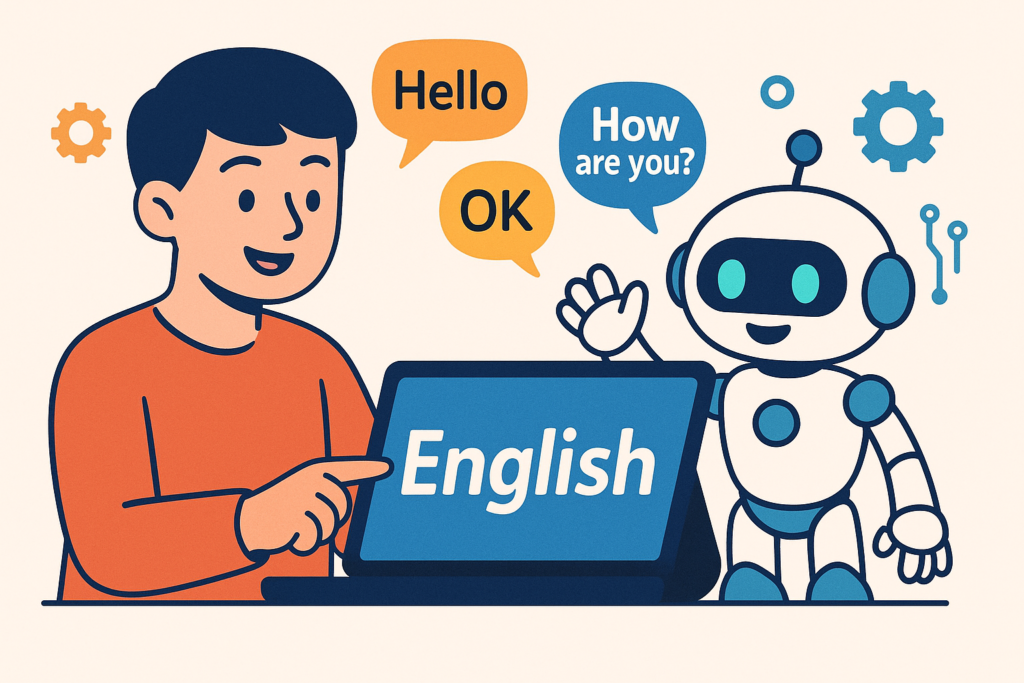
In recent years, the landscape of language learning has undergone a seismic shift. The advent of Artificial Intelligence (AI) tools such as ChatGPT, Grammarly, Duolingo Max, and others has not only made English learning more accessible but also more dynamic. As we stand at this crossroads, it is vital for both learners and teachers to understand how AI is transforming the way we acquire and teach English and, more importantly, how to adapt to this new paradigm effectively.
This blog post aims to explore the profound implications of AI on English language learning, offering insights for learners eager to leverage these tools optimally and for educators contemplating how to rethink their pedagogical strategies in this AI-driven era. While the focus is global, we will include examples from different regions, including India, to illustrate the universality and diversity of these changes.
The AI Takeover or Just a Helping Hand?
To set the stage, let’s clarify what AI currently does in the realm of English learning. Many of us have already interacted with AI-powered applications — whether it’s using Grammarly to check grammar, engaging in conversation with ChatGPT to practise speaking and writing, or relying on Duolingo Max for structured lessons.
How AI Is Being Integrated Into English Learning
Educational Apps and Platforms
Platforms such as Duolingo, Babbel, and Rosetta Stone have integrated AI to personalise lessons based on learner performance, offering tailored exercises that focus on individual weaknesses. For example, Duolingo Max employs AI to generate dynamic conversations, simulate real-life scenarios, and adapt to the learner’s pace.
Writing Assistance Tools
Grammarly and Hemingway Editor utilise AI to analyse text, suggest improvements, and explain grammatical or stylistic errors. These tools serve as real-time writing coaches, providing instant feedback that helps learners understand their mistakes better.
Conversational AI
Chatbots and AI chat companions such as ChatGPT can simulate human-like conversations, enabling learners to practise speaking and comprehension skills without the pressure of a real human interlocutor. ChatGPT, in particular, can answer questions, role-play conversations, and provide explanations on grammar or vocabulary.
Assessment and Feedback
AI-driven assessment tools analyse spoken or written responses, offering scores and feedback. This allows learners to monitor their progress consistently outside traditional classroom environments.
The Shift in Learning Environments
AI is blurring the boundaries between formal and informal learning. Learners can now study any time, anywhere, using AI-powered apps on smartphones or computers. In India, for example, students in remote rural areas are gaining access to quality English language resources via AI-driven apps, helping bridge educational gaps.
But is this AI ‘takeover’ a threat or an opportunity? The answer depends on how we approach it. While some fear that AI might replace human teachers, others see it as a powerful tool to augment teaching and learning. Let’s explore this further.
What Learners Can Gain (and Potentially Lose)
Benefits of AI in English Learning
1. Personalised Learning Experience: AI adapts to individual learner needs, providing exercises that target specific weaknesses. For instance, a learner struggling with phrasal verbs can receive extra practice tailored to their level, accelerating progress.
2. Immediate Feedback and Corrections: Instant correction helps learners understand their mistakes in real-time, fostering a growth mindset. For example, Grammarly detects grammatical errors as you compose emails, essays, or social media posts.
3. Accessibility and Convenience: AI-powered apps make language learning accessible 24/7, breaking geographical and time barriers. This is particularly significant in India, where learners in rural areas can now access high-quality resources via AI tools.
4. Cost-Effective Learning: Many AI tools are affordable or free, reducing the financial burden associated with traditional language courses.
5. Exposure to Authentic Language Use: Conversational AI provides practice with natural language, idioms, and colloquialisms, which are often difficult to master through textbooks alone.
Risks and Challenges
1. Overdependence on AI: Learners might become overly reliant on AI tools for corrections, potentially weakening their ability to self-edit or develop independent language skills.
2. Shallow Understanding: AI provides surface-level feedback but often lacks the depth needed to teach nuanced aspects such as pragmatics, cultural references, or idiomatic expressions.
3. Reduced Human Interaction: Language is inherently social. Overuse of AI may reduce opportunities for genuine human conversations, which are vital for developing fluency and intercultural competence.
4. Data Privacy and Ethical Concerns: Using AI tools involves sharing data, raising questions about privacy, especially for young or vulnerable learners.
Balancing Benefits and Risks
The key is to view AI as a supplementary tool rather than a replacement. Learners should aim for a balanced approach that combines AI-driven practice with real-world interactions, such as speaking clubs, language exchanges, and immersive experiences.
What Teachers Need to Rethink
Pedagogical Shifts in the AI Era
From Content Delivery to Facilitation
Traditional teachers often focus on delivering grammatical rules and vocabulary. Now, educators should become facilitators of critical thinking, guiding learners on how to use AI tools effectively, interpret feedback, and develop autonomous learning habits.
Emphasising Higher-Order Skills
With AI handling routine correction and practice, teachers can devote more time to teaching critical skills such as intercultural communication, pragmatic competence, and creative language use. For example, more of their time could be devoted to analysing the cultural context of idioms or discussing the appropriateness of language in different social situations.
Curating Authentic and Contextual Content
Teachers should shift their focus on providing authentic materials — such as literature, films, podcasts — that AI may not fully interpret or convey. For example, the teacher can facilitate a classroom analysis of Indian English idioms or regional expressions to develop intercultural awareness.
Integrating AI as a Teaching Partner
Rather than resisting AI tools, educators can incorporate them into lesson plans. For instance, teachers can give an assignment where students use ChatGPT to generate story prompts, followed by refining and critiquing the outputs collaboratively.
Fostering Critical Thinking and Reflection
Students should be encouraged by facilitators to question AI feedback, compare it with human input, and reflect on their learning process. This cultivates metacognitive skills necessary for lifelong learning.
Rethinking Assessment and Evaluation
Traditional exams focus on rote memorisation or standardised testing. Now, assessments should evaluate learners’ ability to use AI tools ethically and effectively, as well as their communicative competence and intercultural understanding.
Professional Development and Ethical Awareness
Teachers need ongoing training to stay updated on AI developments and understand their ethical implications, including data privacy, bias, and inclusivity.
Can AI Understand Culture and Context?
One of the critical limitations of current AI technologies is their limited grasp of cultural nuances, idiomatic expressions, pragmatics, and contextual appropriateness.
Cultural and Pragmatic Limitations
AI models learn language patterns on the basis of vast datasets, but they lack lived experiences and cultural understanding. The the following for example:
—AI might generate a sentence that is grammatically correct but culturally inappropriate in India or elsewhere.
—It might struggle with idioms such as ‘Bite the bullet’ or ‘Breaking the ice,’ which require contextual and cultural awareness.
The Role of Human Teachers
Humans excel at interpreting context, understanding cultural subtleties, and guiding learners on when and how to use certain expressions. For example, a teacher can explain how Indian English often incorporates idioms from Indian culture, such as ‘Chalta hai [it’s acceptable],’ or how politeness strategies vary across cultures.
The Future Outlook
While AI continues to improve, it remains a support tool. Teachers and learners must recognise its limitations and supplement AI-generated content with human insight, intercultural discussions, and authentic exposure.
Ideas for Using AI With English Learners
Here are a few practical, creative ways to integrate AI tools into your English language teaching/learning journey.
Classroom Activities
1. AI-Generated Role-Plays: Students can use ChatGPT to generate dialogues on specific topics and then practise acting them out in class; for example, a conversation at an Indian marketplace or a job interview scenario.
2. Vocabulary Building with AI: Use AI to create customised vocabulary quizzes based on learner interests or regional dialects.
3. Error Analysis Sessions: Students submit writing; AI tools analyse errors; and then students discuss the corrections, understanding the ‘why’ behind each.
Homework and Self-Study
1. Storytelling and Creative Writing: Students use AI to generate story prompts or outlines and then add their own creative touches.
2. Pronunciation Practice: Combine AI chatbots with speech recognition tools to practice pronunciation and intonation.
3. Cultural Exploration: Ask AI to explain idioms or customs from different English-speaking cultures, then compare with local expressions.
Collaborative Projects
1. Cross-Cultural Dialogues: Pair learners from different regions to exchange messages, with AI assisting in translating or clarifying cultural references.
2. Language Journals: Maintain digital journals where learners reflect on their AI interactions, noting improvements and challenges.
Looking Ahead: Human + Machine Collaboration
The future of English learning in the age of AI is not about machines replacing humans but about humans harnessing AI to enhance their linguistic and intercultural skills.
A Balanced Perspective
1. AI as an Assistant: Use AI tools for practice, feedback, and inspiration, freeing up time for meaningful human interaction.
2. Humans as Guides: Teachers and peers provide cultural context, emotional support, and nuanced feedback that AI cannot replicate.
3. Learners as Active Participants: Develop metacognitive skills to evaluate AI suggestions critically and to integrate them into authentic language use.
Final Thoughts
Embracing AI in English learning is both an exciting opportunity and a responsibility. It offers unprecedented access, personalised pathways, and innovative teaching possibilities. However, it also requires us to be mindful of its limitations, ethical considerations, and the irreplaceable value of human connection.
As educators and learners worldwide, we must foster a mindset of adaptability, curiosity, and critical engagement. By doing so, we can ensure that the age of AI enhances — not diminishes — the richness, authenticity, and intercultural depth of English language mastery.
In conclusion, the landscape of English language learning is evolving rapidly. AI is a powerful tool that, if used wisely, can democratise access, personalise learning, and enrich the learner’s experience. But it must be complemented with human insight, cultural awareness, and critical thinking. Together, humans and machines can create a vibrant, inclusive, and effective future for English education worldwide.
Discover more from Methods and Musings
Subscribe to get the latest posts sent to your email.