Technology

Why Humans Cannot Think Without Categories: How Language Carves Reality into Manageable Pieces

In the grand tapestry of human cognition, categories serve as the fundamental threads that weave our perceptions, thoughts, and communications into a coherent fabric. From distinguishing a chair from a stool to understanding complex scientific theories, our minds rely on categorisation, an intrinsic mechanism that transforms the chaotic flux of sensory input into manageable, meaningful units. But why are categories so essential? How does language shape and carve reality itself? To understand this, we must delve into the interplay of cognitive science, linguistics, and philosophy, revealing a profound truth: human thought is inherently structured by the categories our language provides.

Why Humans Cannot Think Without Categories: How Language Carves Reality into Manageable Pieces Read More »

Why Every Conversation Has Two Languages: The Difference Between What We Say and What We Mean

In an increasingly interconnected world, understanding communication goes far beyond the literal words exchanged. Every conversation operates on two levels: the explicit language we utter and the implicit meaning we intend or perceive. As industry leaders and communicators, recognising and navigating this duality is essential for clarity, persuasion, and cultural intelligence. This post explores the nuanced layers of human communication, drawing from pragmatics, linguistic theory, and intercultural insights to illuminate the invisible language that underpins every interaction.

Why Every Conversation Has Two Languages: The Difference Between What We Say and What We Mean Read More »

The Words We Never Invented: What the Gaps in English Reveal About the Way We Think

Languages are often measured by their vocabulary, the lexicons that enable us to articulate colours, emotions, objects, and abstract ideas. Yet, if we want to understand what a language truly reveals about its speakers, we should look beyond what it can say. The most compelling insights may lie in what it cannot say: those silent gaps, the words that do not exist, the concepts that remain unnamed.

The Words We Never Invented: What the Gaps in English Reveal About the Way We Think Read More »

Why We Notice Some Words and Ignore Others: Attention, Salience, and the Hidden Politics of Language

Imagine this: you have recently learned a new word, say, ‘resilience’, and suddenly, it is everywhere. It pops up in news articles, social media posts, conversations, even billboards. You wonder, ‘Was it always there?’ or ‘Did I just start noticing it?’ This phenomenon is more than coincidence. It is rooted in the complex interplay between language, attention, and perception.

Why We Notice Some Words and Ignore Others: Attention, Salience, and the Hidden Politics of Language Read More »

Why We Mistake Familiarity for Truth: What Language, Repetition, and Cognition Reveal About Belief

In an age inundated with information, where social media feeds, headlines, and viral content compete for our attention, the line between familiarity and truth has blurred dangerously. We are more exposed than ever to repeated messages, shared narratives, and linguistic patterns that reinforce beliefs, not necessarily because they are accurate, but because they feel true. This phenomenon is not accidental; it is rooted deeply in cognitive processes, linguistic cues, and social dynamics that shape our perception of reality.

Why We Mistake Familiarity for Truth: What Language, Repetition, and Cognition Reveal About Belief Read More »

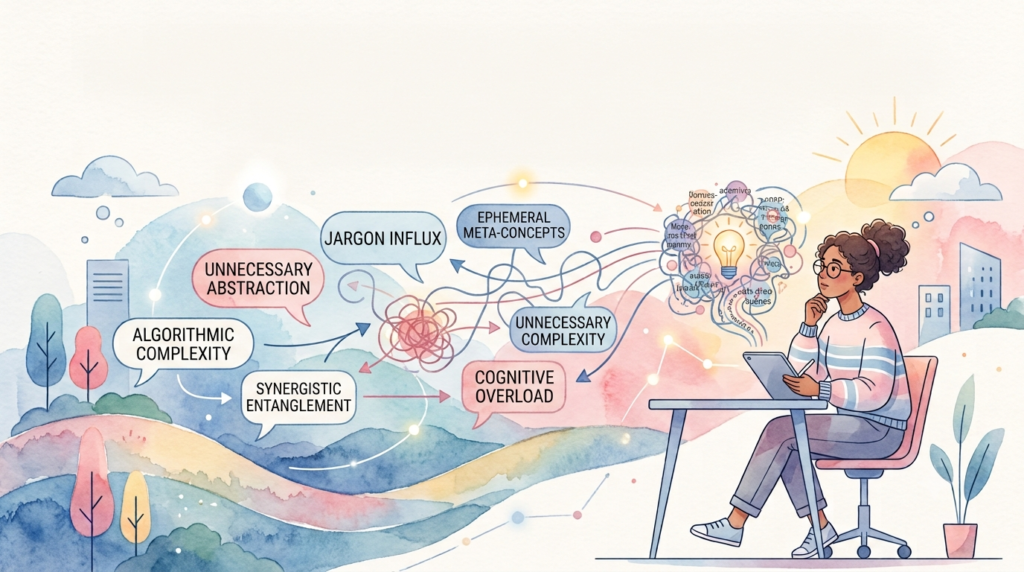
Why Intelligent Writing Often Feels Difficult to Read: Fluency, Friction, and the Psychology of Complex Thought

In an age awash with information, clarity has become a currency of respect, and yet, some of the most intellectually rigorous writing is often perceived as hard to read. Why is it that ideas rooted in complexity, nuance, and depth can feel inaccessible, even to the most engaged readers? The answer lies not just in the content itself but in the subtle dynamics of how our minds process language, ideas, and the very act of understanding.

Why Intelligent Writing Often Feels Difficult to Read: Fluency, Friction, and the Psychology of Complex Thought Read More »

Why English Is So Good at Naming Problems

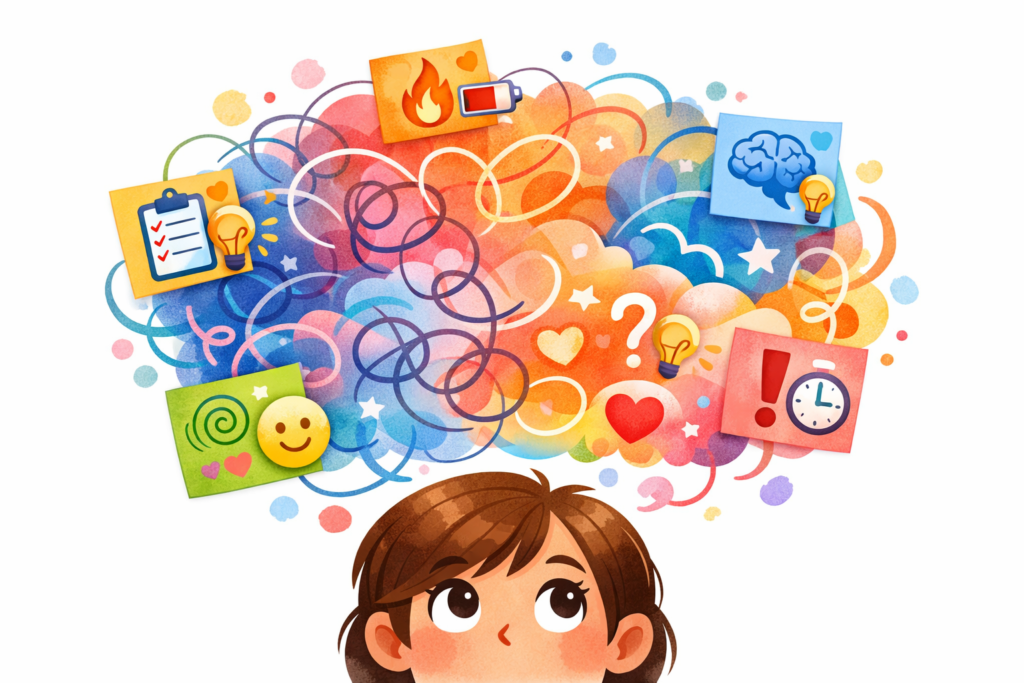
Imagine this: you have been feeling exhausted, frustrated, and plagued by self-doubt for weeks or even months. The days blur together, and you struggle to articulate what is wrong. You might think, ‘Why do I feel this way? What is this?’ However, words continue to elude you.

Then one day, you hear a term, such as burnout, imposter syndrome, gaslighting, or overthinking, and suddenly, everything shifts. That nebulous, tangled feeling suddenly has a shape, a name. The chaos in your mind condenses into a concept you can grasp.

Why English Is So Good at Naming Problems Read More »

English and the Disappearing Body: Why the Language Prefers Minds Over Flesh

Imagine a typical conversation, whether in a clinic, a classroom, or a casual chat. We often hear expressions such as  ‘I’m stressed,’ ‘I feel anxious,’ or ‘I have a headache.’ Notice, however, that we do not usually say, ‘My heart is tight,’ ‘My chest feels heavy,’ or ‘My stomach is knotted.’  

The body lurks in the background of our language — present, yet often silent. It is as if the flesh and bones that house our experience have been politely asked to step aside or, perhaps, invisibly excised from our linguistic landscape.

This raises a central question: why does English so frequently report and describe human experience from the head, the mind, rather than from the flesh and bones?

English and the Disappearing Body: Why the Language Prefers Minds Over Flesh Read More »

English and the Fear of Excess: Why the Language Keeps Cutting Itself Short

Imagine a conversation where every compliment is softly hedged, every emotion is gently tempered, and every assertion is carefully nuanced. English speakers frequently employ phrases such as ‘not bad’, ‘a bit’, or ‘just’ to soften statements and often apologise even when no real fault exists. For example, someone might say, ‘Sorry to bother you,’ even when they are not inconveniencing anyone. This tendency is not merely cultural politeness; it reflects a deeper linguistic habit, one that subtly signals a reluctance to fully express excess or intensity.

English and the Fear of Excess: Why the Language Keeps Cutting Itself Short Read More »

Why English Loves Straight Lines: How the Language Trains Us to Think Clearly — and Coldly

Imagine reading a sentence in English. It begins with a subject, then a verb, then an object — straightforward, unambiguous, progressing in a single direction. From the earliest lessons in school, we learn that sentences should flow from beginning to middle to end, each part building upon the last in a neat, linear fashion. This structural simplicity makes English remarkably efficient for communication: ideas are presented in an order that clarifies cause and effect, responsibility, and progression.

But what if this architectural elegance of English extends beyond grammar and vocabulary? What if the very way the language is built influences not just how we communicate but how we think, shaping our perceptions of time, responsibility, emotion, and connection?

Why English Loves Straight Lines: How the Language Trains Us to Think Clearly — and Coldly Read More »