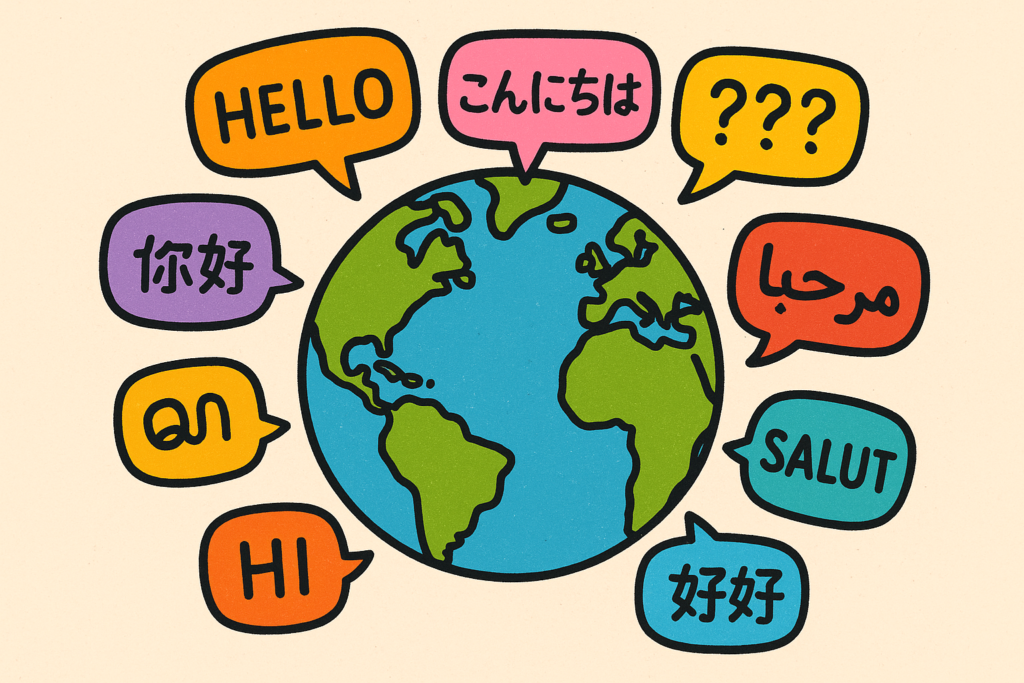
Imagine this: you are sitting in a bustling café, sipping your favourite chai, and a friend excitedly exclaims, ‘I was so schadenfreude when I saw my rival trip over his shoelaces!’ You nod but secretly wonder: what exactly is ‘schadenfreude’? It is a German word that English has borrowed; yet it still feels like a foreign concept. But here is a twist: English itself, despite being the global lingua franca, is not immune to ‘gaps’, untranslatable words, or concepts that slip through its vocabulary cracks.
Yes, the myth of English as a ‘complete’ language is just that — a myth. While English’s rich history of borrowing has made it remarkably adaptable, it still cannot perfectly encapsulate every nuance of human emotion, culture, or worldview. In this post, we will explore the fascinating realm of untranslatable words within English itself and what they reveal about language, culture, and the art of communication.
The Myth of English as ‘Complete’
For centuries, many have held the misconception that English is the ‘world’s language’, a comprehensive vessel capable of expressing anything. This belief stems partly from English’s extensive vocabulary, which has over a million words according to some estimates, and its history of borrowing from Latin, French, Hindi, Swahili, and countless other tongues.
However, no language, no matter how expansive, is truly ‘complete’. Every language, including English, has its blind spots, concepts it struggles to define with a single word or even a phrase. These gaps often emerge when trying to distil complex feelings, cultural values, or social phenomena into language.
For example, consider the phrase ‘the calm before the storm’. While English can describe this situation, it is a phrase rather than a single word, highlighting how languages often need to use combinations of words to convey layered meanings.
English’s Borrowings as Evidence of Gaps
English’s history of borrowing — think of words such as kindergarten (German), bungalow (Hindi/Bengali), or ballet (French) — demonstrates that even this ‘global’ language has needed outsiders’ words to fill its expressive gaps. Borrowings are not just linguistic imports; they are cultural exchanges that enrich our vocabulary, yet also serve as a reminder that no language is self-sufficient.
Famous Untranslatables in Other Languages
Before diving into English’s ‘untranslatables’, it is worth noting that many languages are famous for words that defy exact translation. These words often capture a cultural essence that cannot be fully expressed in another tongue. Take a look at the following examples:
—Saudade (Portuguese): A deep, nostalgic longing for something or someone that may never return. It is more than just ‘homesickness’; it is a complex mix of love, loss, and hope.
—Ikigai (Japanese): One’s reason for being; the joy of waking up each morning with purpose.
—Ubuntu (Nguni Bantu languages): ‘I am because we are’, a philosophy emphasising community, interconnectedness, and shared humanity.
These words are celebrated because they encapsulate cultural values and emotional states that are often difficult to pin down in a single English word. Their fame has sparked global interest in linguistic and cultural diversity.
When English Falls Short
Now, let us turn the spotlight inwards. Despite its vast vocabulary, English sometimes struggles to provide a concise, precise term for certain feelings or ideas. Here are a few examples:
1. Déjà Vu — But for Feelings
Many learners know ‘déjà vu’ as a French loanword meaning ‘already seen’, but what about the feeling of ‘anticipation mixed with nostalgia’? English needs a phrase: ‘A feeling that I have experienced this before, even though I know I have not.’
2. Schadenfreude — The Joy of Others’ Misfortune
Borrowed from German, ‘schadenfreude’ describes that peculiar pleasure when witnessing someone else’s mishap. English has adopted it, but we often need a phrase to express the same feeling: ‘That guilty pleasure I feel when someone else trips.’
3. L’appel du vide — The Call of the Void
French has ‘l’appel du vide’, literally ‘the call of the void’, referring to the inexplicable urge to jump from high places. English lacks a succinct equivalent, so we resort to descriptive sentences: ‘That sudden intrusive thought of jumping off a cliff.’
4. Kama Muta — The ‘Moved’ Feeling
A relatively new term from linguistic research, describing the feeling of being emotionally ‘moved’ or touched, such as when witnessing kindness or beauty. English uses ‘being moved’, but the precision of ‘kama muta’ captures a universal, shared emotional experience.
What This Teaches Learners
So, what is the bigger lesson for language learners here? It is that language learning is not just about memorising vocabulary; it is about immersing yourself in ways of thinking and feeling. We realise that words perhaps represent more than their definitions.
Words Are Windows Into Culture
Untranslatable words reflect cultural priorities. For example, the Japanese ‘wabi-sabi’ celebrates imperfection and transience, revealing a worldview that values fleeting beauty. When learners understand these words, they gain insight into the cultural ethos behind them.
Language Shapes Thought
The Sapir–Whorf hypothesis suggests that the language you speak influences how you perceive the world. English’s gaps remind us that sometimes, we need more than words to express our inner worlds. Developing new vocabulary, whether through borrowing or coining, expands our mental horizons.
Expressing Nuance Requires Creativity
When English falls short, speakers get creative, using metaphors, idioms, or longer descriptions. This flexibility is a strength, encouraging learners to think beyond single words and embrace nuance in communication.
The Future of Borrowing and Gaps
As our world becomes increasingly interconnected — through globalisation, social media, and technology — English continues to evolve. It absorbs new words from every corner of the globe, filling its gaps with fresh vocabulary.
Will English absorb more ‘gaps’ from other languages? Absolutely. Words such as hygge (Danish), sisu (Finnish), and tarab (Arabic) are already making their way into English usage, often with slight adaptations.
Moreover, as we develop a deeper understanding of human emotion and experience through science and cross-cultural exchange, new words and concepts will emerge to capture these nuances. The language of the future will likely be a vibrant mosaic: an ongoing project of filling gaps and creating new pathways for expression.
Final Thoughts: Embrace the Gaps
Language is not a static, perfect tool; it is a living, breathing reflection of human complexity. Recognising that English, like all languages, has its gaps and untranslatables helps us appreciate the richness of linguistic diversity and the importance of cultural humility.
For learners, this means embracing the quirks and gaps of English as opportunities for deeper understanding. When you encounter a word or phrase that does not translate easily, see it as a doorway into someone else’s worldview, a reminder that language is a shared human adventure.
Remember: in the end, language is less about perfect translation and more about connection. So, keep exploring; keep questioning; and keep celebrating the beautiful gaps that make communication an art form.
Discover more from Methods and Musings
Subscribe to get the latest posts sent to your email.