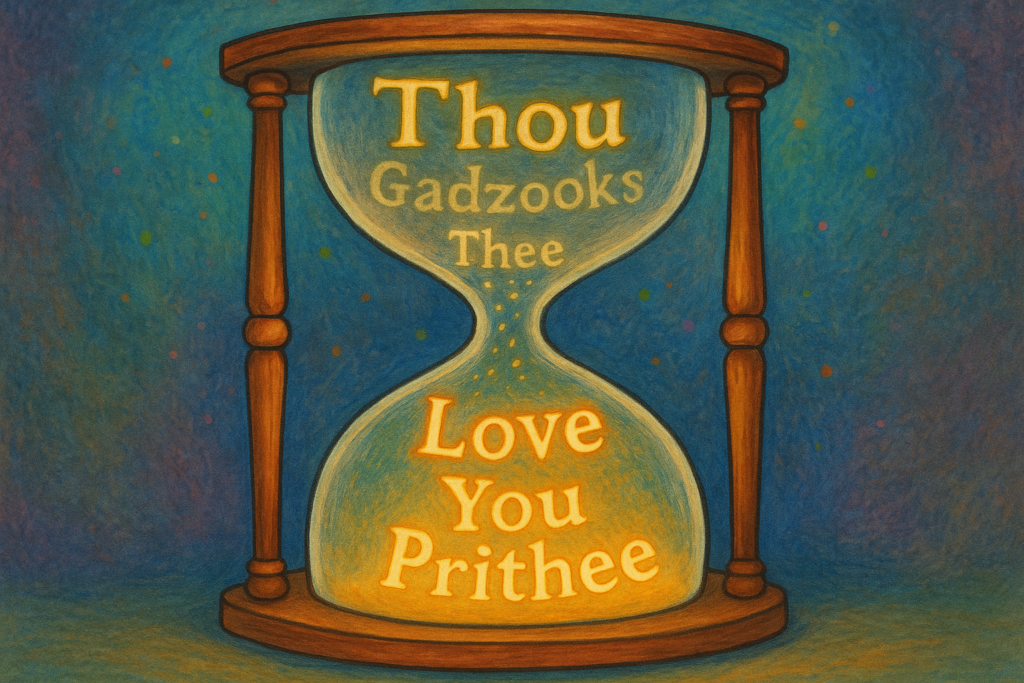
Language is a living, breathing entity that is constantly evolving, adapting, and reshaping itself over time. Just as species in nature have lifespans, so do the words we use to communicate. Some words fade into obscurity, like ancient relics, while others remain as vital today as they were centuries ago. This fascinating dynamic raises an intriguing question: what determines the ‘half-life’ of a word? Why do some disappear entirely, some linger in fixed expressions, and others persist across generations?
In this blog post, we will explore this linguistic phenomenon through an engaging metaphor borrowed from physics: the concept of ‘half-life’. We will examine the life cycle of English words, from their rise and fall to their potential resurrection. Whether you are a language learner, a linguist, or simply a curious reader, understanding why words come and go can deepen your appreciation of the English language and help you become a more conscious communicator.
What Is a Word’s Half-Life?
Imagine a radioactive element, such as uranium, that decays over time at a predictable rate. Its ‘half-life’ is the time it takes for half of the original amount to transform into something else. Now, apply this analogy to words: a word’s half-life can be thought of as the average time during which it remains in widespread use before fading away or becoming obsolete.
For example, some words, such as thou or yclept, were commonplace in Shakespeare’s time but are now mostly extinct. Others, such as love or time, have been part of English for centuries and are still used daily. Then there are fads and slang, which are words that burst onto the scene, only to vanish within a few years.
Why Use the Half-Life Metaphor?
Using the half-life metaphor helps us understand that words, like radioactive particles, have a natural lifespan. Some decay rapidly; others last a long time; and a few seem virtually immortal. This perspective shifts our view of language from static to dynamic, emphasising that change is inevitable and ongoing.
Words That Faded Away: The Vanishing Vocabulary of Old
Language change is a natural process driven by social, cultural, and technological shifts. Over centuries, many words have fallen out of favour, their usage fading into history.
Examples of Obsolete Words
—Yclept
Meaning ‘called’ or ‘named’, this Old English term was common in medieval texts but is rarely seen today.
—Forsooth
An archaic synonym for ‘indeed’ or ‘truly’, it is often associated with Shakespearean or biblical language.
—Wrought
The past tense of ‘work’, it is still used in phrases such as ‘wrought iron’ is but now largely replaced by ‘worked’.
—Betwixt
An old-fashioned word for ‘between’, it still found in poetic or stylistic contexts but has largely fallen out of everyday speech.
—Gadzooks
An exclamation of surprise, it is now considered quaint or humorous.
Causes of Word Extinction
1. Technological and Cultural Shifts: As society evolves, new inventions and ideas replace old terms. For example, ‘telegraph’ replaced ‘telegram’, and ‘automobile’ replaced ‘horseless carriage’.
2. Language Standardisation: The development of dictionaries and grammar rules often favour certain words over others, leading to the decline of less standard forms.
3. Social Attitudes: Words associated with outdated social hierarchies or prejudices often fall out of favour.
Zombie Words: Lingering in Fixed Phrases
Some words survive not because they are actively used in modern conversation but because they are embedded in fixed expressions or historical texts. These ‘zombie words’ are like the undead: they appear to be gone but still haunt the language in special contexts.
Examples of Zombie Words
—Gallows
Historically, it meant the place of execution, now mostly used in phrases such as ‘going to the gallows’, though rarely in everyday speech.
—Betwixt
As mentioned earlier, it means ‘between’ in poetic or literary settings.
—Wrought
It is used mainly in phrases such as ‘wrought iron’, giving it a fixed, almost fossilised role.
—Thou/Thee/Thy
Second-person singular pronouns from early modern English, these are now mostly found in Shakespearean plays, religious texts, or poetic language.
Why Do These Words Persist?
Because they are tied to cultural or poetic traditions, these words survive in fixed phrases or specific contexts. They evoke a sense of history or formality, making them useful for stylistic purposes.
Immortal Words: The Core Vocabulary That Endures
At the heart of the language lie words that have proven remarkably resilient over centuries. These are the ‘core vocabulary’, or in other words the basic, high-frequency words that form the foundation of communication.
Examples of Immortal Words
—Love
It expresses one of the most fundamental human emotions, unchanged for thousands of years.
—Time
This is a universal concept central to human experience.
—Eat/Drink
These are basic actions vital to survival, consistently used across all cultures and eras.
—Mother/Father/Child
These words represent family terms that are part of every language and culture.
—Sun/Moon/Water/Fire
These are elements of daily life, essential and enduring.
Why Do These Words Survive?
The universality and fundamental importance of these words to human life ensure their survival. They are learned early, used constantly, and are resistant to change because they are embedded in our most basic experiences.
What It Means for Learners
Understanding the half-life of words has practical implications for language learners. Recognising which words are ‘durable’ can guide your vocabulary focus, while understanding that slang and fad words are temporary can help you avoid confusion later.
Learning Durable, High-Frequency Words
Focusing on core vocabulary, such as ‘love’, ‘time’, ‘eat’, ‘see’, ‘go’, builds a solid foundation for communication that lasts. These words are the building blocks of everyday conversation and academic language.
The Short Shelf Life of Slang and Fads
While slang can be fun and culturally insightful, it often has a fleeting lifespan. Words such as ‘lit’, ‘yeet’, or ‘duck face’ may be popular now but could be obsolete in a few years. As a learner, balancing the study of enduring vocabulary with curiosity about contemporary slang can be both practical and engaging.
The Value of Historical and Literary Words
Old-fashioned words and fixed expressions add depth and style to your language. They can help you appreciate literary texts, historical documents, and poetic language. Knowing that ‘thou’ or ‘wrought’ are mostly historical can prevent confusion, but recognising their roots enriches your understanding.
The Dynamic Life Cycle of Words: A Summary
To recap, words in English have a kind of half-life:
—Extinct Words: Those that have completely fallen out of use (‘yclept’, ‘forsooth’). Their ‘half-life’ has expired.
—Zombie Words: Words that survive only in fixed phrases or archaic contexts (‘gallows’, ‘betwixt’). Their half-life is effectively indefinite but limited to specific niches.
—Enduring Words: Core vocabulary that remains vital for centuries (‘love’, ‘time’, ‘eat’). Their half-life approaches infinity.
This cycle reflects the natural evolution of language driven by social change, technological innovation, and cultural shifts.
Final Thoughts: Embrace the Change
Language is a mirror of society: its shifts show us what we value, fear, or forget. As learners and speakers, understanding the ‘half-life’ of words can make us more conscious communicators. We can appreciate the rich history woven into the language and be adaptable enough to embrace new expressions while cherishing the classics.
So, the next time you stumble upon an archaic word such as ‘yclept’ or a phrase such as ‘by and by’, remember: these words are like old friends from the past, waiting to possibly make a comeback; or they are there to remind us of where we come from.
Discover more from Methods and Musings
Subscribe to get the latest posts sent to your email.