Communication

Structure Before Style: Why Most Writing Advice Starts at the Wrong End

Good writing is not how you phrase ideas. It is how you organise them.

Many writers and communicators obsess over style. They are told to ‘improve their writing style’, ‘make it more engaging’, ‘use better words’, or ‘polish the language’. The focus seems to be on how the writing sounds: on surface-level polish and aesthetic appeal. And while style can lend clarity and flair, most of the common advice targets the wrong problem. It is easy to see why. Style is visible, teachable, and feels fixable. It is the surface we can easily manipulate.

Structure Before Style: Why Most Writing Advice Starts at the Wrong End Read More »

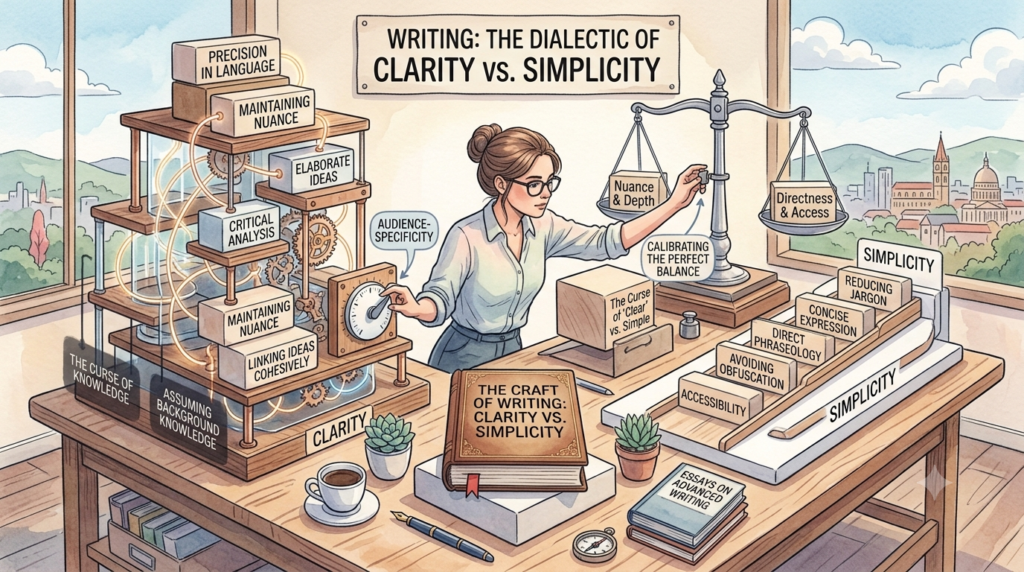
Most Writing Advice Is Anti-Intellectual: Why Simplifying Too Early Weakens Your Thinking

In the world of writing and communication, there is a pervasive mantra: ‘Keep it simple.’ It is everywhere, from advice columns to executive coaching, from classroom lectures to LinkedIn posts. The message feels intuitive: clarity comes from brevity, from stripping away complexity, from making ideas accessible. But what if this well-intentioned guidance is actually doing more harm than good?

Most Writing Advice Is Anti-Intellectual: Why Simplifying Too Early Weakens Your Thinking Read More »

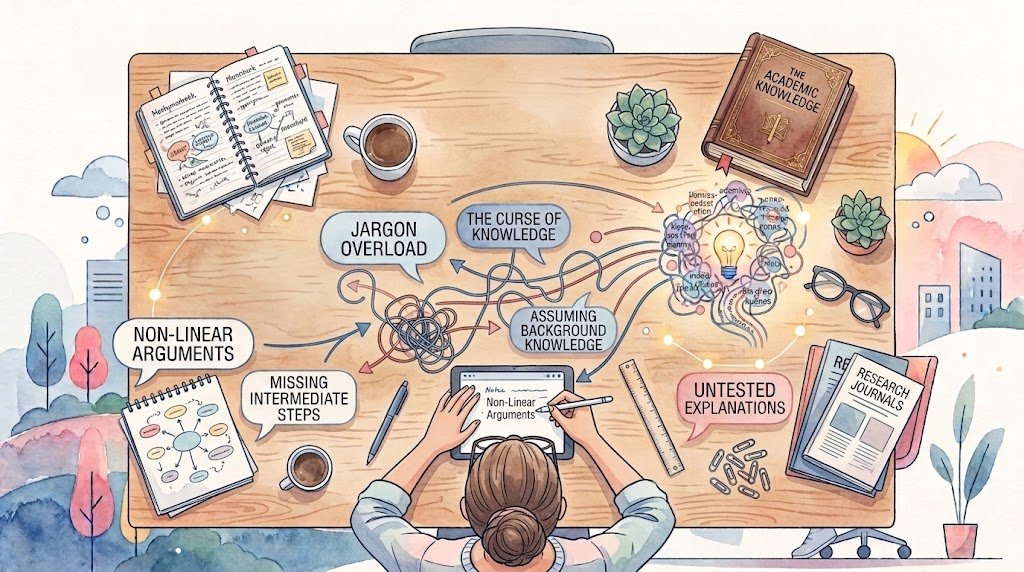
Your Problem Is Not That You Cannot Explain It. It Is That You Have Not Decided What It Is.

Have you ever found yourself saying:

— ‘I’m struggling to explain this.’

— ‘I know what I mean, but I can’t say it properly.’

— ‘Let me try that again . . . ‘

And then, after a few attempts, you feel frustrated, as if the words are just out of reach. Most of us assume that this is a communication problem. That if only we could find the right words, everything would be clear. However, here is the surprising truth: most of the time, the problem is not communication; it is decision. It is not a failure of language. It is a lack of definition.

Your Problem Is Not That You Cannot Explain It. It Is That You Have Not Decided What It Is. Read More »

Clarity Is Not a Writing Skill. It Is a Strategic Advantage.

Most people treat clarity as a peripheral skill, something to tidy up after you have finished your message. It is often seen as a writing skill, a communication preference, or a ‘nice-to-have’ finishing touch.

Many approach clarity as a superficial layer, an editing task to be polished at the end, rather than a fundamental strategic lever. However, here is the truth: in high-stakes work, clarity is not a finishing touch. It is a strategic advantage.

Clarity Is Not a Writing Skill. It Is a Strategic Advantage. Read More »

Your Organisation Does Not Have a Writing Problem: It Has a Thinking Problem

‘We need better writing.’

It is one of the most common, and often the most frustrating, complaints inside organisations today. Leaders, managers, and teams alike seem convinced that the root of their communication woes is a lack of polish, clarity, or style. The typical fix? Hire a writer. Or bring in an editor. Polish the words until they shine.

But what if that is not the real problem?

Your Organisation Does Not Have a Writing Problem: It Has a Thinking Problem Read More »