Language

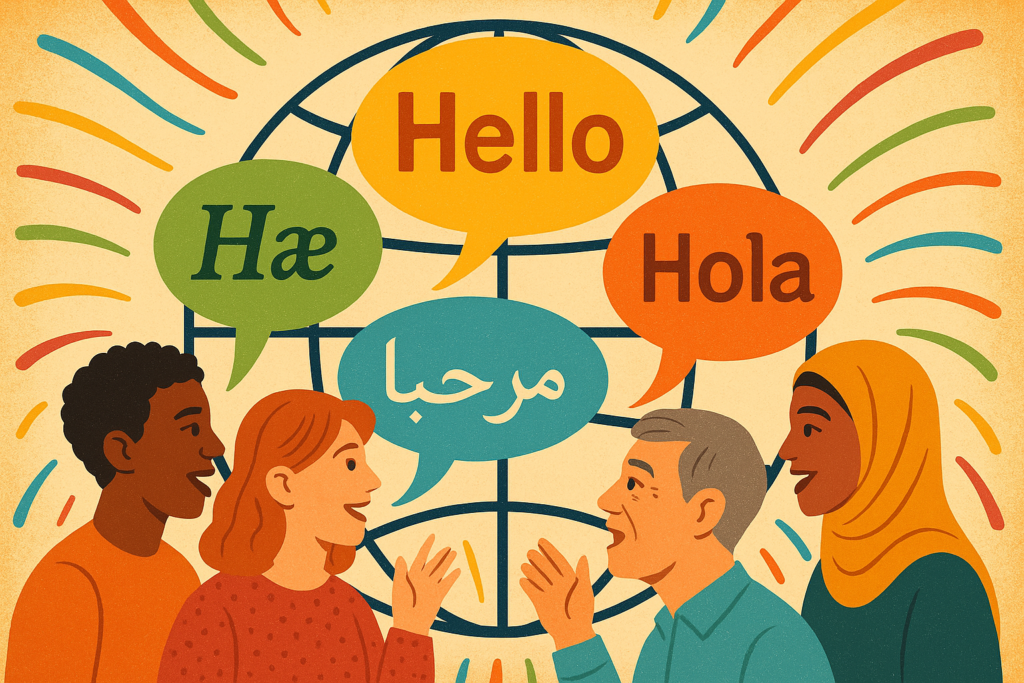
A flat-style digital illustration featuring four diverse human profiles inside colourful speech bubbles, symbolising the power of language in shaping identity and perception. The background is light beige, and the title 'The Power of Words' is displayed in bold navy blue text.

The Power of Words: How Language Shapes Perception and Identity

Language is more than a mere instrument for communication; it serves as a lens through which we interpret the world around us. The words we choose, the accents we bear, and even the dialects we adopt encapsulate our cultural backgrounds, our personal narratives, and our societal standing. Language not only reflects our identity but also shapes our perception of reality, influencing the way we think and interact with one another. This blog post will delve into the multifaceted relationship between language, identity, thought processes, and social relationships, shedding light on its significance in various contexts, both globally and within specific cultures such as India.

The Power of Words: How Language Shapes Perception and Identity Read More »

Academic Englisg

Unlocking Academic English: Mastering Formal Writing and Critical Thinking

In an increasingly globalised world, the ability to communicate effectively in English opens doors to numerous opportunities, particularly in academic and professional settings. Whether you’re preparing for a university application or advancing your career, mastering formal writing and critical thinking is crucial. This blog post will cover essential skills in academic English, focusing on structuring arguments, using hedging language, expanding your vocabulary, and honing your analytical skills.

Unlocking Academic English: Mastering Formal Writing and Critical Thinking Read More »

Think in English: The Secret to Faster Fluency and Natural Conversations

In the realm of language acquisition, the journey from knowing vocabulary and grammar to achieving fluency can often seem daunting. Many language learners grapple with the challenge of how to express thoughts seamlessly in English, oscillating between their native tongue and English. Yet, one fundamental concept serves as the bridge to fluency: thinking in English. This mental shift can transform your learning experience, honing your ability to converse naturally and confidently. In this blog post, we will explore the benefits of thinking in English and present actionable strategies to improve your English thinking skills.

Think in English: The Secret to Faster Fluency and Natural Conversations Read More »

Mastering the Rhythm of English: How Stress and Intonation Shape Meaning

When we think of learning a new language, our minds often gravitate toward vocabulary and grammar. However, mastering a language goes well beyond mere words — it encompasses how we deliver those words. In English, the interplay of rhythm, stress, and intonation can dramatically shape the meaning of what we say. This rich musicality of the language not only defines our speech patterns but also enhances clarity, fluency, and confidence in conversations.

Mastering the Rhythm of English: How Stress and Intonation Shape Meaning Read More »

The Power of Non-Verbal Communication: How Body Language Shapes English Conversations

Communication is not limited to words alone. In fact, research suggests that a significant portion of our communication is non-verbal — estimated at around 70 to 93% of the meaning behind our interactions. Non-verbal communication encompasses a range of cues, including facial expressions, gestures, posture, and even eye contact. While these non-verbal signals can enhance conversation, they can also lead to misunderstandings, especially in cross-cultural contexts. This blog post explores the intricate dynamics of non-verbal communication, particularly in English conversations, shedding light on how body language shapes our interactions and its implications for English language learners.

The Power of Non-Verbal Communication: How Body Language Shapes English Conversations Read More »

The Joy of ‘Wordplay’: How Puns and Playful Language Can Boost Your English Skills

As language learners, we’re always on the lookout for ways to improve our skills and enhance our understanding of the English language. While grammar rules and vocabulary lists can be helpful, we often overlook one of the most powerful tools in the language learner’s toolkit: wordplay.

From puns and double meanings to clever turns of phrase, wordplay isn’t just a humorous distraction. It’s a dynamic way to stretch our creative muscles, grasp new idioms, and sharpen our understanding of the English syntax.

In this blog post, we will explore how wordplay can help language learners in a fun and interactive way. We will examine examples from pop culture, literature, and everyday conversation to show how wordplay can be used to convey meaning, build relationships, and even make complex ideas more accessible.

The Joy of ‘Wordplay’: How Puns and Playful Language Can Boost Your English Skills Read More »

How Pop Culture Shapes the English Language: The Impact of Music, Movies, and Viral Memes

Language is a living entity, evolving and morphing with the ebb and flow of culture, society, and technology. In today’s interconnected world, English has not only emerged as a global lingua franca but also as a canvas for contemporary pop culture, which significantly influences its lexicon, grammar, and usage. From the catchy hooks of pop songs to the quotable lines from blockbuster films, and the chaotic spontaneity of viral memes, pop culture acts as a catalyst for linguistic change. This blog post delves into how music, movies, and memes shape the English language, with examples from both global contexts and unique instances from India.

How Pop Culture Shapes the English Language: The Impact of Music, Movies, and Viral Memes Read More »

Language Learning in the Age of Globalisation: Embracing English as a Bridge, Not a Barrier

In a world that has become increasingly interconnected through technology, commerce, and travel, the question of language takes on unprecedented significance. As we traverse borders, share ideas across cultures, and engage with a diverse tapestry of people, English has emerged as a prominent global lingua franca. The rise of English as an international language does not come without its complexities, especially when we consider the nuances of regional dialects, local languages, and cultural identity. Consequently, the challenge for language learners today is to embrace English not as a singular standardised system but as a bridge that connects disparate cultures, while also honouring and preserving their native tongues.

Language Learning in the Age of Globalisation: Embracing English as a Bridge, Not a Barrier Read More »

Unlocking the Local: Understanding Regional Variations in English around the World

As English language learners, we often focus on mastering the standard, ‘neutral’ accent and vocabulary of English as a global language. However, English is not a monolithic entity but a diverse and dynamic language that has evolved over centuries through contact with various cultures and societies around the world. Understanding these regional variations can enhance our language skills and deepen our connection with the cultures behind the words.

Unlocking the Local: Understanding Regional Variations in English around the World Read More »

Breaking Barriers: The Role of Technology in Language Learning and Cross-Cultural Communication

In an increasingly interconnected world, the inability to communicate across language barriers can be both a personal and a professional hindrance. As globalisation continues to shape our interactions, the importance of mastering languages is becoming paramount. Thankfully, we live in an age where technology is reshaping the landscape of language learning and cross-cultural communication in unprecedented ways. This blog post delves into how technology serves not only as an enabler of language acquisition but also as a facilitator of intercultural dialogue, effectively ‘breaking barriers’ that once seemed insurmountable.

Breaking Barriers: The Role of Technology in Language Learning and Cross-Cultural Communication Read More »