Vocabulary

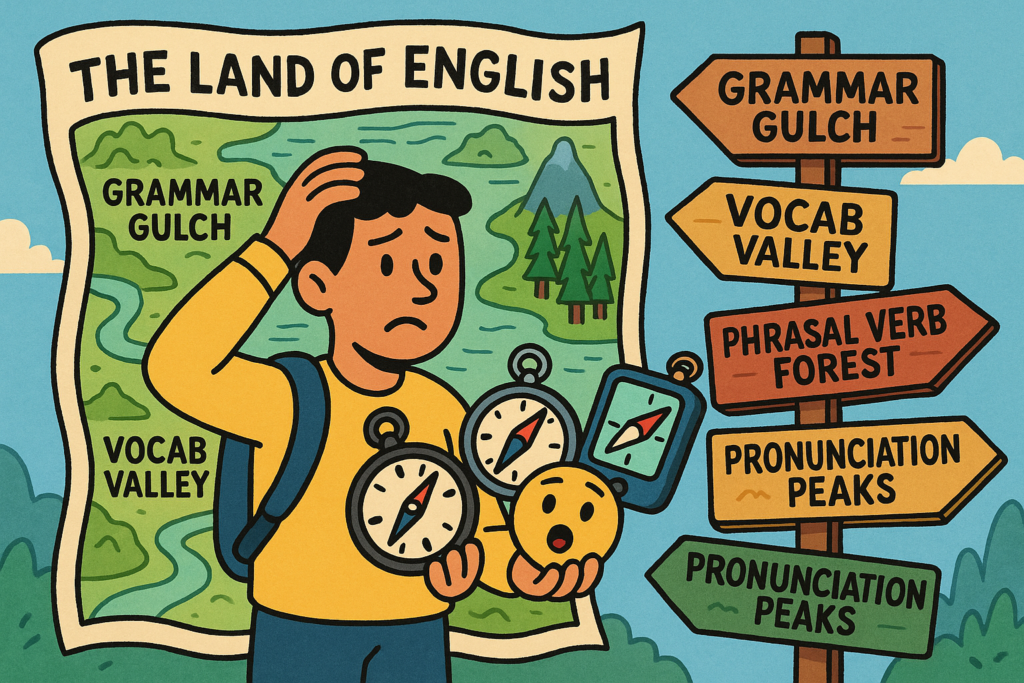
Language as a Map: Why You Are Not Lost; You Are Just Reading the Wrong Compass

Imagine standing in the middle of a vast, unfamiliar city. You want to find your way to a famous monument, but all you have is a map that seems to show only narrow alleyways and distant landmarks. Frustrated, you might feel you are simply not cut out for navigation or perhaps the city is too complex. But what if the problem is not your ability to find your way? What if it is that you are reading the wrong map or using the wrong compass?
This metaphor captures a profound truth about language learning: it is not about climbing a mountain or conquering a peak; it is about exploring a vast, intricate landscape. If you feel lost in learning English, it is not because of a personal failure; it is because your mental map might not match the terrain you are trying to navigate.

Language as a Map: Why You Are Not Lost; You Are Just Reading the Wrong Compass Read More »

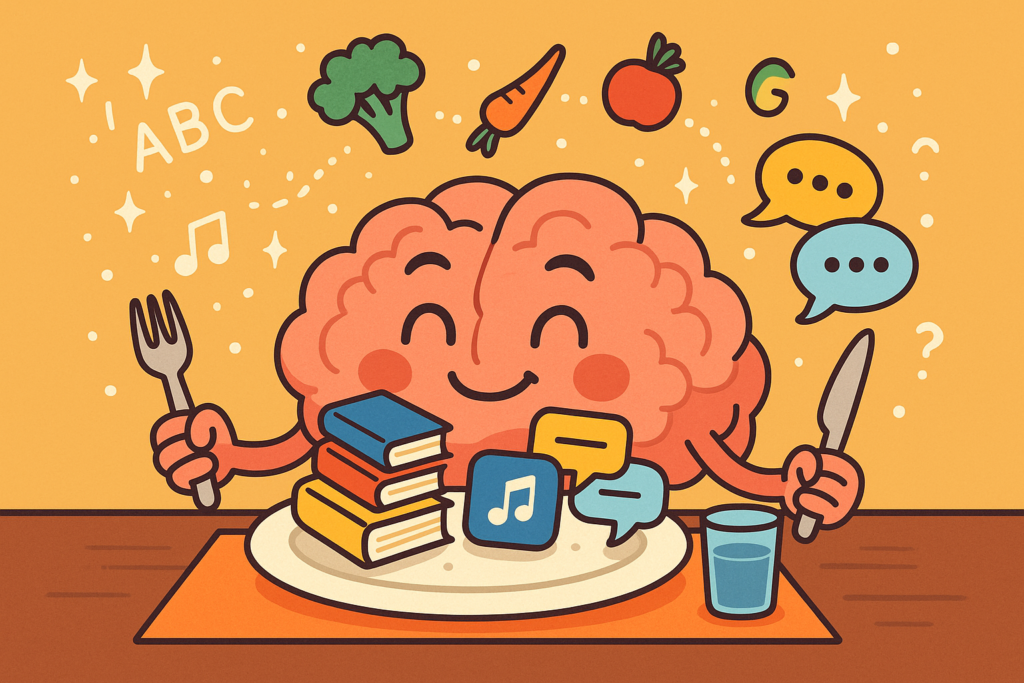
Grammar of the Gut: What Digestion Can Teach Us About Learning English

Imagine your body digesting a hearty meal. The process is seamless, often unnoticed, yet profoundly complex — an intricate dance of enzymes, gut flora, and nutrient absorption that sustains life. Now, what if I told you that learning a language, especially English, mirrors this biological process? That understanding the mechanics of digestion can shed light on how we acquire, internalise, and eventually fluently use a language?
In this blog post, we explore the idea that grammar is the ‘gut flora’ of language learning and that the entire process of acquiring English can be viewed through the lens of digestion. This metaphor is not just playful; it is rooted in cognitive science, educational theory, and real-world language learning experiences.

Grammar of the Gut: What Digestion Can Teach Us About Learning English Read More »

What If Shakespeare Had ChatGPT? Language Learning in Parallel Universes

Imagine for a moment that William Shakespeare, the quintessential bard of the English language, had access to a modern AI assistant, say, ChatGPT, during his lifetime. Would his mastery of words have deepened? Would his sonnets have evolved into new forms of expression? Or picture a young English learner in a post-apocalyptic world, where printed books and digital archives are relics of a bygone era. How would they navigate the complex terrain of language without the vast repositories of knowledge we take for granted today?

What If Shakespeare Had ChatGPT? Language Learning in Parallel Universes Read More »

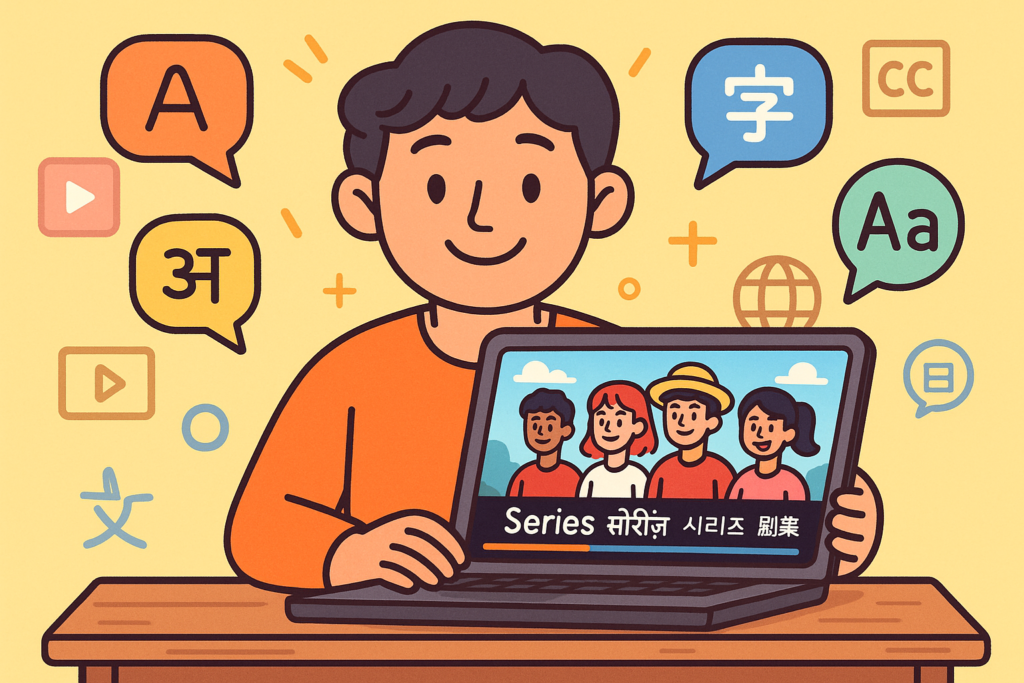
What Your Netflix Subtitles Are Teaching You (and What They’re Getting Totally Wrong)

In an era where streaming platforms such as Netflix, Amazon Prime, and Disney+ have become the primary sources of visual entertainment, the way we consume content has radically transformed. Streaming services have democratised access to a multitude of cultures, languages, and storytelling styles, making the world more accessible than ever before. 

One of the most subtle yet influential features of this digital revolution is subtitles — the textual translations that appear at the bottom of your screen. Whether you are a casual viewer, a language learner, or a linguistic researcher, subtitles have become an integral part of the viewing experience. But have you ever paused to think about what your subtitles are teaching you? Are they accurate representations of the original dialogue? And, more importantly, what are they ‘getting wrong’?

What Your Netflix Subtitles Are Teaching You (and What They’re Getting Totally Wrong) Read More »

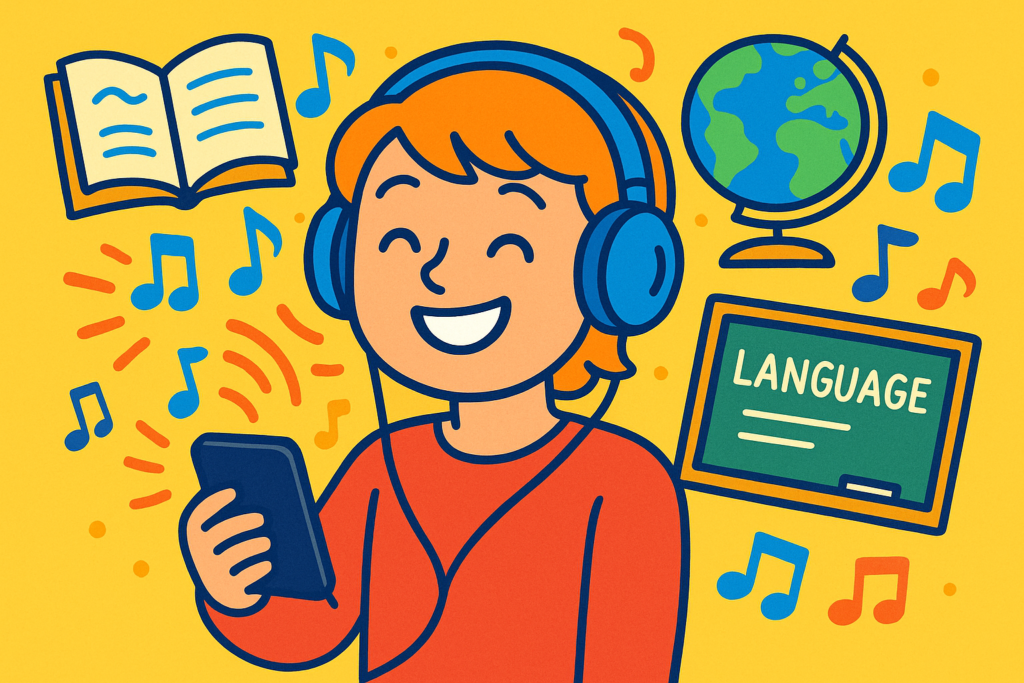
English by Ear: What Musicians Know About Language That Learners Often Don’t

What do rappers, jazz artists, and classical musicians have in common with great English speakers? More than you’d think.
Language learning is often approached as a visual, grammatical, and vocabulary-based pursuit. Textbooks, vocabulary lists, grammar rules, and pronunciation drills form the core of most curricula. While these components are undeniably vital, an often-overlooked aspect of language acquisition is the auditory experience — specifically, the ability to ‘hear’ and process language in its natural, musical form.

English by Ear: What Musicians Know About Language That Learners Often Don’t Read More »

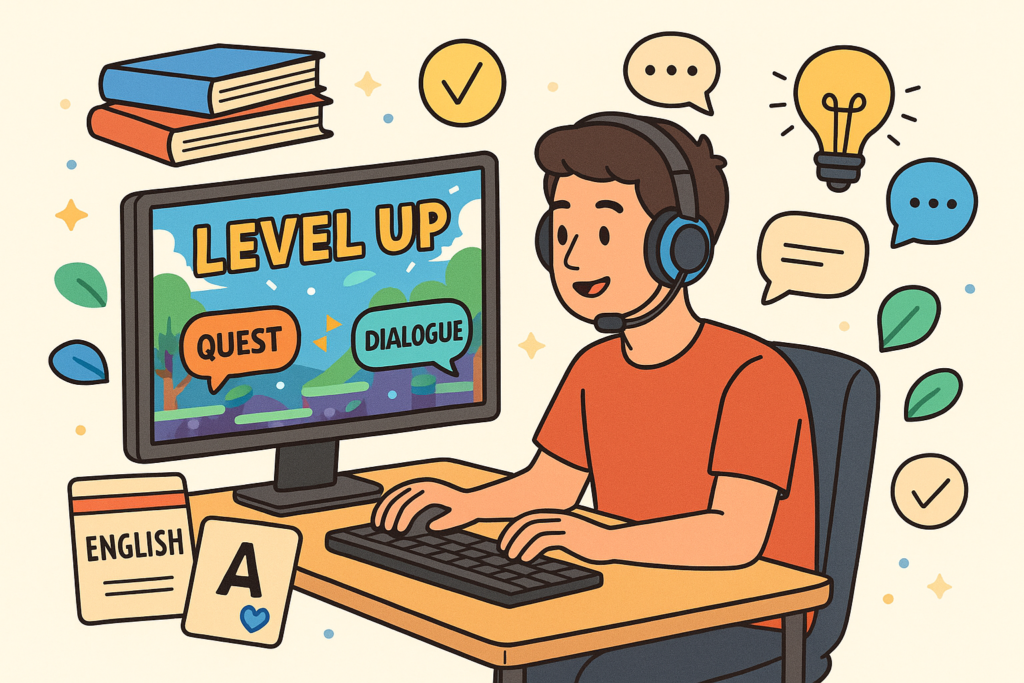
Level Up Your English: How Video Games Can Boost Your Language Skills

Video games can be powerful, engaging tools for language learning — especially English, the global lingua franca. With the rise of digital entertainment, millions of gamers worldwide are learning English informally, often without realising it. Whether through immersive storytelling, social interaction, or casual exposure, video games offer a dynamic environment that complements traditional language learning methods.

Level Up Your English: How Video Games Can Boost Your Language Skills Read More »

Learning Through Play: How Playfulness Supercharges English Language Acquisition

What if your best English lesson didn’t feel like a lesson at all? Imagine a classroom where children giggle while practising vocabulary, or adults confidently improvise dialogues in a fun game rather than rote memorisation. This isn’t just a utopian dream; it’s a reflection of how ‘learning through play’ can transform the way we acquire a new language.

Learning Through Play: How Playfulness Supercharges English Language Acquisition Read More »

The Sounds of Silence: Teaching Pause, Intonation, and Rhythm in English

Imagine a conversation where every word is perfect, but the speaker’s voice sounds flat and monotonous. How does that affect your understanding? Surprisingly, research by Derwing and Munro in 2017 reveals that ‘listeners often perceive speakers with accurate prosody — meaning their intonation, rhythm, and pauses – as more fluent than those who speak grammatically correct but with a flat, unvaried tone’.
This finding shifts the common focus from just accuracy to the musicality of speech. It suggests that mastering how we say things, not just what we say, is crucial in effective communication. For language teachers and learners alike, this is a game changer: the sounds of silence — pauses, intonation, and rhythm — are just as vital as vocabulary and grammar.

The Sounds of Silence: Teaching Pause, Intonation, and Rhythm in English Read More »

Code-Switching and Social Adaptation: How Language Shifts Shape Who We Are

In a world where communication is increasingly transcending borders, the tendency to switch between languages or dialects — known as code-switching — has become a ubiquitous part of many multilingual or multicultural experiences. Understanding code-switching is particularly crucial for English learners as it highlights the importance of being aware of one’s audience, mastering the appropriateness of language, and developing linguistic flexibility.

Code-Switching and Social Adaptation: How Language Shifts Shape Who We Are Read More »

Illustration showing four diverse individuals each wearing a label on their clothing with words like 'LAZY', 'NERD', 'IMMIGRANT', and 'BOSSY'. Above them is the text: 'Labels and Power – How Words Shape Social Perceptions'. The image highlights how language can influence identity and social perception.

Labels and Power: How Words Shape the Way We See Ourselves and Others

This blog post will explore how labels shape individual and group identities, fuel biases, and influence power dynamics in society. We will examine the psychology behind labels, explore the societal implications of who gets to define labels, analyse the stereotypes reinforced by language, and discuss the evolution of politically correct language. Furthermore, we will delve into the intersection of labels and identity, internalisation, resistance, and the importance of language awareness in promoting empathy.

Labels and Power: How Words Shape the Way We See Ourselves and Others Read More »