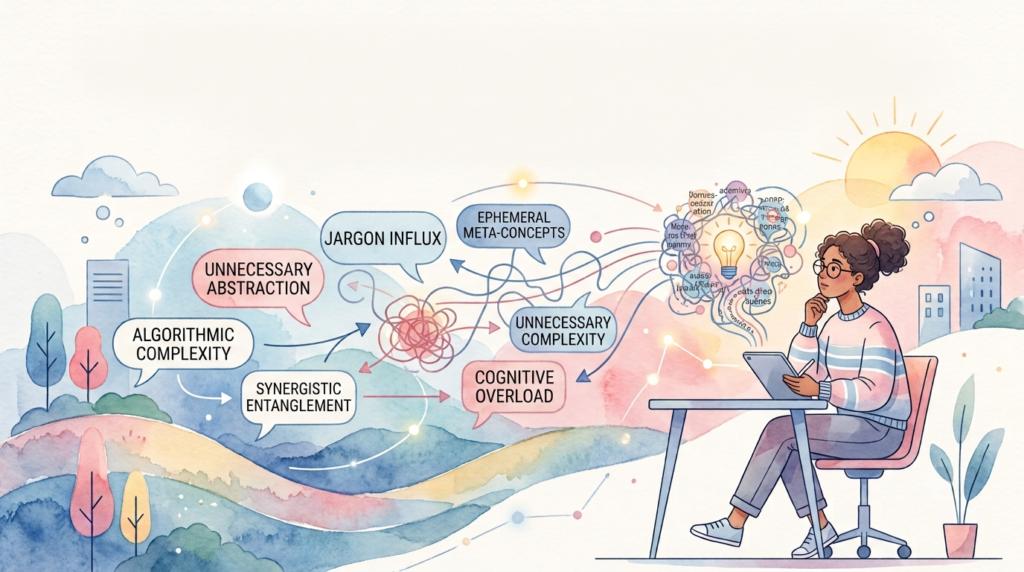
One of the strangest things about intelligent people is that they sometimes make their ideas harder to understand precisely because they understand them so well. The more someone knows about a subject, the more connections they can see. They understand the exceptions, the dependencies, the historical context, the competing explanations, and the implications that most people have not even considered.
And sometimes, they try to communicate all of it. That is where things get interesting. Because what is intellectually rich inside someone’s head can become almost impossible to follow once it comes out of their mouth or appears on the page. This phenomenon raises an intriguing question: why do highly intelligent individuals sometimes make their ideas harder to grasp?
While some may think that understanding this paradox is merely an academic exercise, this understanding is essential for industry leaders, entrepreneurs, and thought innovators who seek to influence, inspire, and drive change. In this post, we explore the underlying reasons behind this tendency, dissect its implications, and offer insights into how such communication patterns can be navigated or even harnessed for strategic advantage.
The Cognitive Foundations: Complexity as a Byproduct of Deep Thinking
The Depth of Thought and Its Communication Challenges
Intelligent individuals often operate at the cutting edge of their fields, engaging with complex problems that require nuanced understanding. Deep cognition involves processing multiple layers of abstraction, integrating diverse knowledge domains, and contemplating scenarios that are far removed from everyday experience.
This depth of thought naturally leads to complexity in ideas. When someone grasps intricate concepts holistically, they may struggle to distil these insights into simple language. Their mental models are multi-dimensional, which makes it difficult to convey the full richness of the ideas without losing essential nuances.
The Limitations of Language and Expressive Precision
Language, despite its expressive power, is inherently limited. For highly nuanced ideas, words can often act as imperfect vessels, risking oversimplification or misinterpretation. In fact, the more complex the idea, the more challenging it becomes to find the precise language that captures its essence without ambiguity.
Intelligent thinkers often recognise these limitations and may resort to specialised jargon or layered explanations that are clear to insiders but unintelligible to outsiders. This reliance on technical language can inadvertently create barriers to understanding.
The Intellectual Ego and the Perception of Expertise
The Desire to Demonstrate Mastery
Intellectual confidence can sometimes, and often does, manifest as a desire to showcase one’s expertise. When discussing complex ideas, some individuals may intentionally or subconsciously use sophisticated language or elaborate explanations to reinforce their authority.
This tendency, which is rooted in a form of intellectual ego, can make their ideas seem more formidable and less accessible. The risk here is that the message becomes more about signalling intelligence rather than genuinely communicating insights.
The Fear of Oversimplification
Another facet of this is the fear of losing credibility through oversimplification. Highly intelligent individuals may worry that reducing their ideas to simple terms would diminish their value or undermine their authority. As a result, they lean towards elaboration and complexity as a safeguard against perceived superficiality.
The Strategic Use of Complexity: Filtering and Differentiation
Differentiation in a Crowded Market of Ideas
Complexity is not always accidental. The intellectual landscape is quite competitive, and complexity can serve as a strategic differentiator in this landscape. Unique ideas that are hard to understand are often perceived as more innovative or groundbreaking. This ‘mystique’ can attract a niche audience or signal that the thinker possesses rare insights. Now whether this belief is correct or not is a different matter and perhaps a topic for a future blog post; however, the fact that it exists and affects communication is true.
Creating a Barrier to Entry
Complexity can also act as a gatekeeper, deterring casual audiences or less committed thinkers from engaging. This filtering effect ensures that only those willing to invest effort can access the full value of the ideas, thus preserving the exclusivity and perceived prestige of the thinker’s insights.
The Risks and Rewards of Opaqueness
The Dangers of Obscurity
While complexity can confer certain strategic advantages, it also carries some risks. Ideas that are too convoluted risk alienating audiences, diluting influence, or giving rise to misunderstandings that hinder practical implementation. Overly complex communication can sometimes create barriers to collaboration and slow the dissemination of valuable insights.
The Power of Strategic Ambiguity
All of the above aside, when wielded purposefully, complexity can also be a tool for strategic ambiguity by allowing thinkers to explore multiple interpretations, adapt messages to different audiences, and even protect proprietary insights from easy replication.
Navigating the Complexity: How Industry Leaders Can Communicate Effectively
Embrace Layered Communication
One approach to navigating this is to adopt layered communication strategies; that is, presenting core ideas in a simple manner at first glance and then offering deeper layers for those willing to delve further. This respects the audience’s varied expertise and fosters inclusivity without sacrificing depth.
Develop a Shared Vocabulary
Building a common language with peers and stakeholders can mitigate misunderstandings. Now this might sound like a whole task in itself, but it is fairly simple. It involves translating complex insights into accessible narratives without sacrificing nuance, thus bridging the gap between brilliance and clarity.
Cultivate Self-Awareness and Intent
Leaders should be mindful of their motives: are they communicating to inform, to influence, or to impress? Recognising this can help them calibrate their language appropriately, ensuring that their ideas are accessible without compromising the integrity of those ideas. Plus, as leaders it is our responsibility to see that our intent gets translated for the audience.
Conclusion: Striking the Balance Between Depth and Clarity
To sum up, the tendency of highly intelligent individuals to make their ideas harder to understand is rooted in a complex interplay of cognitive depth, language limitations, ego, and strategic positioning. While this can serve as a powerful tool for differentiation and safeguarding insights, it also risks alienating audiences and hampering impact.
Ultimately, the most influential thought leaders are those who master the art of balancing depth with clarity, in order to craft messages that are rich enough to convey complexity but accessible enough to inspire action. In doing so, they elevate not only their ideas but also their influence in shaping industry and society.
Discover more from Methods and Musings
Subscribe to get the latest posts sent to your email.