Community

Why English Is Awkward About Praise (And What That Says About Us)

Imagine a typical scene: a colleague or friend offers you a compliment. Perhaps they say, ‘That was a fantastic presentation,’ or ‘You did a great job on that project.’ What is your instinctive response? Do you accept it graciously, or do you find yourself quickly dismissing it?

More often than not, many of us instinctively deflect praise with expressions such as ‘Oh, it was nothing,’ ‘I just got lucky,’ or ‘Anyone could have done it.’

This reflexive tendency to downplay positive feedback is so common that it borders on a social script. While we enjoy receiving praise inwardly, since everyone appreciates a kind word, we often find it uncomfortable or awkward to accept compliments outwardly.

This leads us to a paradox: we like being praised, but we do not like receiving praise. 

The central question then arises: is this cultural modesty, or something deeper rooted in the very structure of the English language?

Why English Is Awkward About Praise (And What That Says About Us) Read More »

English and the Fear of Excess: Why the Language Keeps Cutting Itself Short

Imagine a conversation where every compliment is softly hedged, every emotion is gently tempered, and every assertion is carefully nuanced. English speakers frequently employ phrases such as ‘not bad’, ‘a bit’, or ‘just’ to soften statements and often apologise even when no real fault exists. For example, someone might say, ‘Sorry to bother you,’ even when they are not inconveniencing anyone. This tendency is not merely cultural politeness; it reflects a deeper linguistic habit, one that subtly signals a reluctance to fully express excess or intensity.

English and the Fear of Excess: Why the Language Keeps Cutting Itself Short Read More »

Why English Loves Straight Lines: How the Language Trains Us to Think Clearly — and Coldly

Imagine reading a sentence in English. It begins with a subject, then a verb, then an object — straightforward, unambiguous, progressing in a single direction. From the earliest lessons in school, we learn that sentences should flow from beginning to middle to end, each part building upon the last in a neat, linear fashion. This structural simplicity makes English remarkably efficient for communication: ideas are presented in an order that clarifies cause and effect, responsibility, and progression.

But what if this architectural elegance of English extends beyond grammar and vocabulary? What if the very way the language is built influences not just how we communicate but how we think, shaping our perceptions of time, responsibility, emotion, and connection?

Why English Loves Straight Lines: How the Language Trains Us to Think Clearly — and Coldly Read More »

The Loneliness of English: Why the Language Prefers Separation Over Connection

English is often celebrated for its precision, efficiency, and clarity. It allows us to articulate complex ideas with a straightforwardness that many other languages envy. Yet, beneath its polished veneer lies a peculiar trait: a sense of emotional distance, a quiet reluctance to fully embrace intimacy. Strangely, English does not seem to just permit distance. It appears to prefer it.

What if this linguistic preference is not accidental? What if the structure and conventions of English are subtly designed, or at least inclined, to foster separation rather than connection? This idea invites us to look beyond superficial fluency and examine the deeper, perhaps more subtle, ways in which the language shapes our relationships with others and ourselves.

The Loneliness of English: Why the Language Prefers Separation Over Connection Read More »

The Untranslatable ‘You’: What English Reveals About the Self

Imagine a language where a single word, you, serves for everyone. No matter if you are addressing your best friend, your boss, your grandmother, or a stranger on the street, the pronoun remains unchanged. This is the reality of English. It is a language that collapses all social relationships into one pronoun, offering simplicity but sacrificing nuance.
What does it say about a language, and by extension, its speakers, when the grammatical structure refuses to mark closeness, distance, or respect explicitly? Does this linguistic choice shape how people perceive relationships, intimacy, and social hierarchy? Or does it merely reflect a cultural tendency towards neutrality?

The Untranslatable ‘You’: What English Reveals About the Self Read More »

The Grammar of Blame: How Syntax Shifts Responsibility

Imagine walking into a room and accidentally knocking over a cherished vase. When you say, ‘I broke the vase,’ the words carry a weight of personal responsibility, guilt, and accountability. The emotional temperature is immediate and intense. Now, if someone else reports, ‘The vase broke,’ the tone shifts. It becomes less confrontational, more detached, almost neutral. The event remains the same, but the way it is framed through language radically alters how we perceive responsibility.

This subtle yet profound difference illustrates a vital question: how does grammar influence our attribution of blame? Beyond mere syntax, language subtly guides our moral judgements, shaping perceptions of intent, culpability, and severity.

The Grammar of Blame: How Syntax Shifts Responsibility Read More »

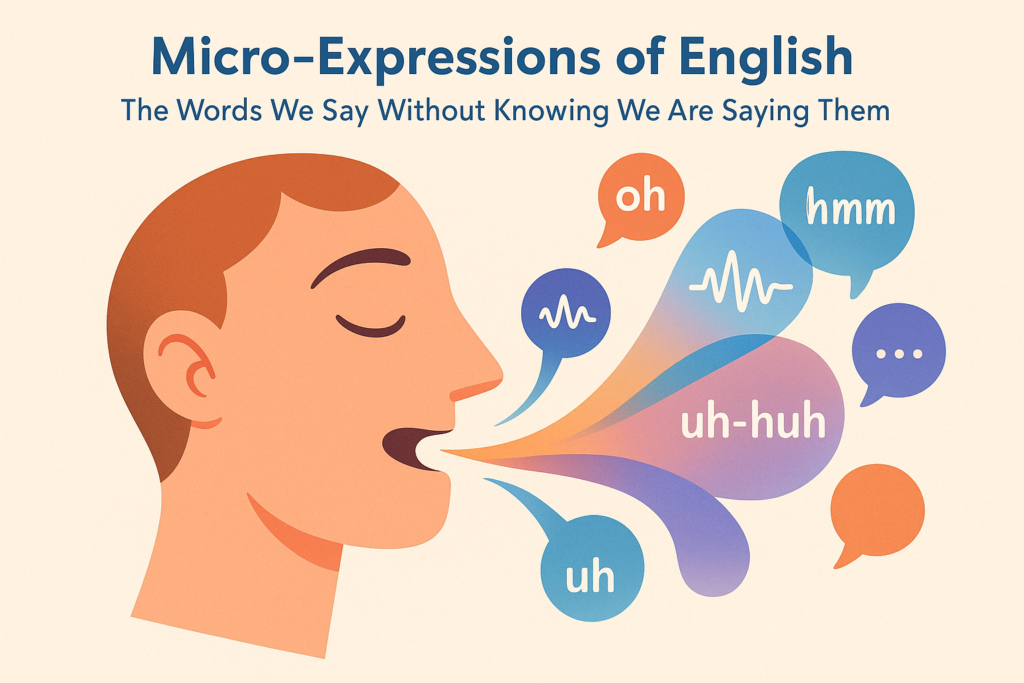
Micro-Expressions of English: The Words We Say Without Knowing We Are Saying Them

Before we speak in full sentences, before we articulate complex thoughts, there exists a subtle layer of communication that often goes unnoticed: the tiny sounds and utterances we produce, those fleeting syllables, sounds, and cues that are so ingrained in our speech that they pass by almost invisibly. These micro-expressions of language form a hidden fabric woven into our everyday conversations, shaping meaning, emotion, and social connection in ways that words alone cannot fully capture.

Micro-Expressions of English: The Words We Say Without Knowing We Are Saying Them Read More »

English After Earth: What Would Our Language Sound Like on Mars?

Imagine standing inside a transparent dome on the red plains of Mars, gazing out at a landscape of rust-coloured rocks and dust storms swirling in the thin atmosphere. Inside, children in space suits sit cross-legged on modular seats, their voices muffled yet eager, reciting words in English that carry a faint, unfamiliar echo, almost like a distant memory. The teacher gestures animatedly, and their speech, though rooted in familiar language, sounds subtly altered by the environment.

This scene, though speculative, prompts a compelling question: if humans colonise other planets, will our language change too? For centuries, linguists and anthropologists have observed how language is inherently intertwined with environment and culture. When a community moves into a new physical space, especially one as radically different as Mars, it is natural to wonder how their language might evolve. Would it remain recognisable, or would it transform into something unrecognisably new?

English After Earth: What Would Our Language Sound Like on Mars? Read More »

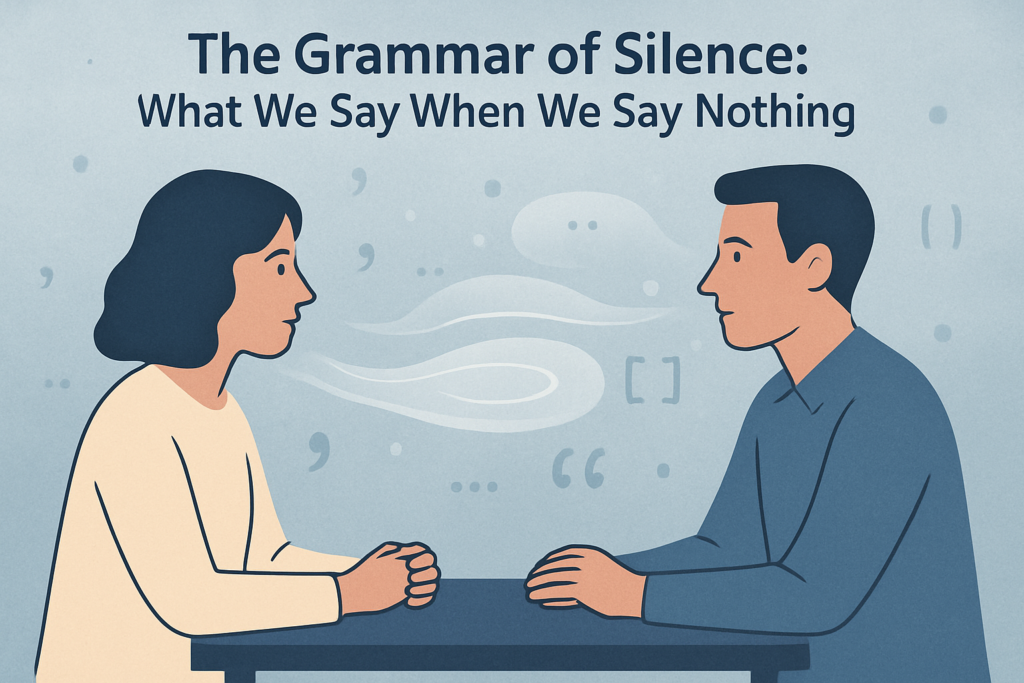
The Grammar of Silence: What We Say When We Say Nothing

Imagine a quiet room where two friends sit in a moment of shared understanding. One has just delivered difficult news, and the other responds not with words but with a gentle gaze and a lingering pause. Or picture a tense courtroom, where a witness’s silence speaks volumes, revealing truths unspoken. In these moments, silence is not mere emptiness; it is a language in its own right, capable of conveying complex, nuanced meaning that words sometimes fail to express.

Silence, in its many forms, shapes our interactions, influences our relationships, and reflects cultural norms. It can be an act of respect, a sign of disagreement, or a display of emotional restraint. But what does silence truly communicate? And how does it function within the broader grammar of human language?

This leads us to a compelling question: if language is how we communicate, what do we make of the moments when we do not speak? The answer lies in exploring what I call the ‘grammar of silence’ — a set of patterns, conventions, and meanings that govern what is left unsaid. Silence is not simply the absence of speech; it is a form of communication rich with intentionality and cultural significance. It follows its own rules, and understanding these rules allows us to listen more deeply to the unspoken stories around us.

The Grammar of Silence: What We Say When We Say Nothing Read More »

Linguistic Loneliness: What Happens When No One Speaks Like You

Imagine entering a room where your voice is familiar, yet suddenly, it feels foreign. You open your mouth, and instantly, the atmosphere shifts. The words that once flowed effortlessly now seem to stumble, and the room’s energy becomes tentative. Your accent, your intonation, the very melody of your speech mark you as different before a single phrase is spoken.
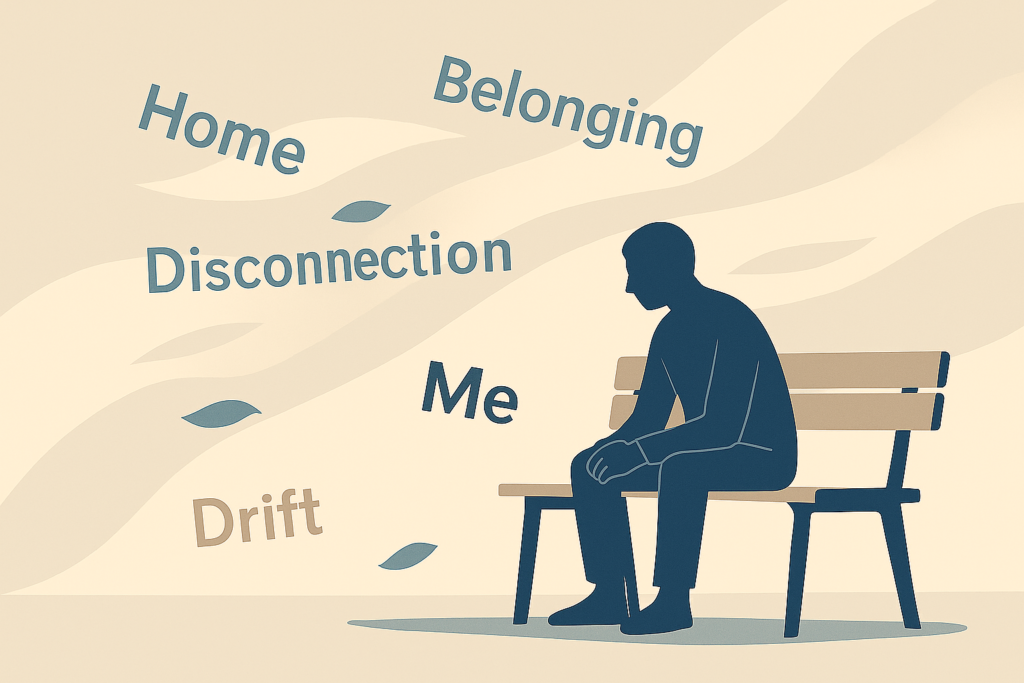
This is the phenomenon I call ‘linguistic loneliness’ — the quiet alienation that surfaces when no one else speaks like you. It is a subtle yet profound experience that touches many, from migrants adapting to new environments to second-language speakers navigating unfamiliar social terrains. In our hyperconnected, globalised world, where English has become a lingua franca, belonging remains more elusive than ever for those whose ways of speaking do not conform to dominant norms.

Linguistic Loneliness: What Happens When No One Speaks Like You Read More »