Competence

The Accent Myth: Why Sounding ‘Native’ Should Not Be Your Goal in English

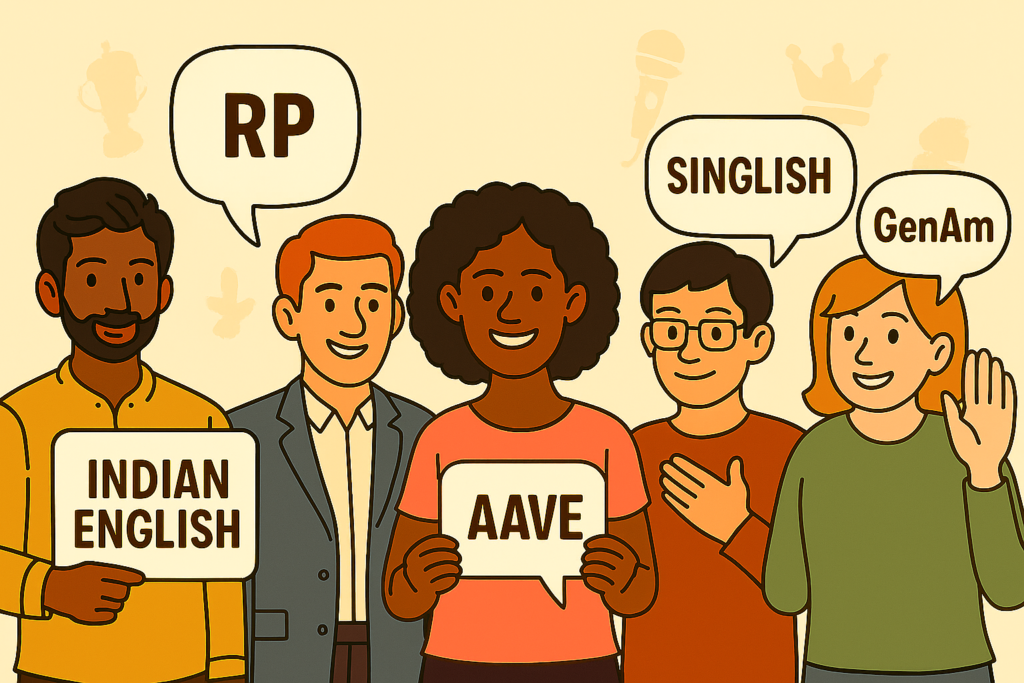
In the global landscape of English language learning, one aspiration remains persistent: the desire to sound ‘native.’ Whether it is the crisp clarity of a BBC presenter, the polished accent of an American professional, or the refined diction of an Oxford scholar, many learners believe that reaching this level of ‘nativeness’ is the ultimate goal. However, what if this pursuit is misguided? What if, in trying to erase our unique voices, we are missing the true essence of effective communication?

The Accent Myth: Why Sounding ‘Native’ Should Not Be Your Goal in English Read More »

Echoes, Shadows, and Parrots: The Hidden Power of Imitation in Learning English

Imagine walking into a bustling street in Mumbai, New York, or Nairobi. Amid the hum of voices, you notice a child mimicking the gestures and intonation of a street performer, or a language learner repeating phrases after a podcast. These acts, so simple, so natural, are often dismissed as mere copying or mimicry. Yet, beneath their surface lies a profound, scientifically supported strategy for mastering English and other languages.

Echoes, Shadows, and Parrots: The Hidden Power of Imitation in Learning English Read More »

Language as a Map: Why You Are Not Lost; You Are Just Reading the Wrong Compass

Imagine standing in the middle of a vast, unfamiliar city. You want to find your way to a famous monument, but all you have is a map that seems to show only narrow alleyways and distant landmarks. Frustrated, you might feel you are simply not cut out for navigation or perhaps the city is too complex. But what if the problem is not your ability to find your way? What if it is that you are reading the wrong map or using the wrong compass?
This metaphor captures a profound truth about language learning: it is not about climbing a mountain or conquering a peak; it is about exploring a vast, intricate landscape. If you feel lost in learning English, it is not because of a personal failure; it is because your mental map might not match the terrain you are trying to navigate.

Language as a Map: Why You Are Not Lost; You Are Just Reading the Wrong Compass Read More »

What Your Netflix Subtitles Are Teaching You (and What They’re Getting Totally Wrong)

In an era where streaming platforms such as Netflix, Amazon Prime, and Disney+ have become the primary sources of visual entertainment, the way we consume content has radically transformed. Streaming services have democratised access to a multitude of cultures, languages, and storytelling styles, making the world more accessible than ever before. 

One of the most subtle yet influential features of this digital revolution is subtitles — the textual translations that appear at the bottom of your screen. Whether you are a casual viewer, a language learner, or a linguistic researcher, subtitles have become an integral part of the viewing experience. But have you ever paused to think about what your subtitles are teaching you? Are they accurate representations of the original dialogue? And, more importantly, what are they ‘getting wrong’?

What Your Netflix Subtitles Are Teaching You (and What They’re Getting Totally Wrong) Read More »

English by Ear: What Musicians Know About Language That Learners Often Don’t

What do rappers, jazz artists, and classical musicians have in common with great English speakers? More than you’d think.
Language learning is often approached as a visual, grammatical, and vocabulary-based pursuit. Textbooks, vocabulary lists, grammar rules, and pronunciation drills form the core of most curricula. While these components are undeniably vital, an often-overlooked aspect of language acquisition is the auditory experience — specifically, the ability to ‘hear’ and process language in its natural, musical form.

English by Ear: What Musicians Know About Language That Learners Often Don’t Read More »

Learning Through Play: How Playfulness Supercharges English Language Acquisition

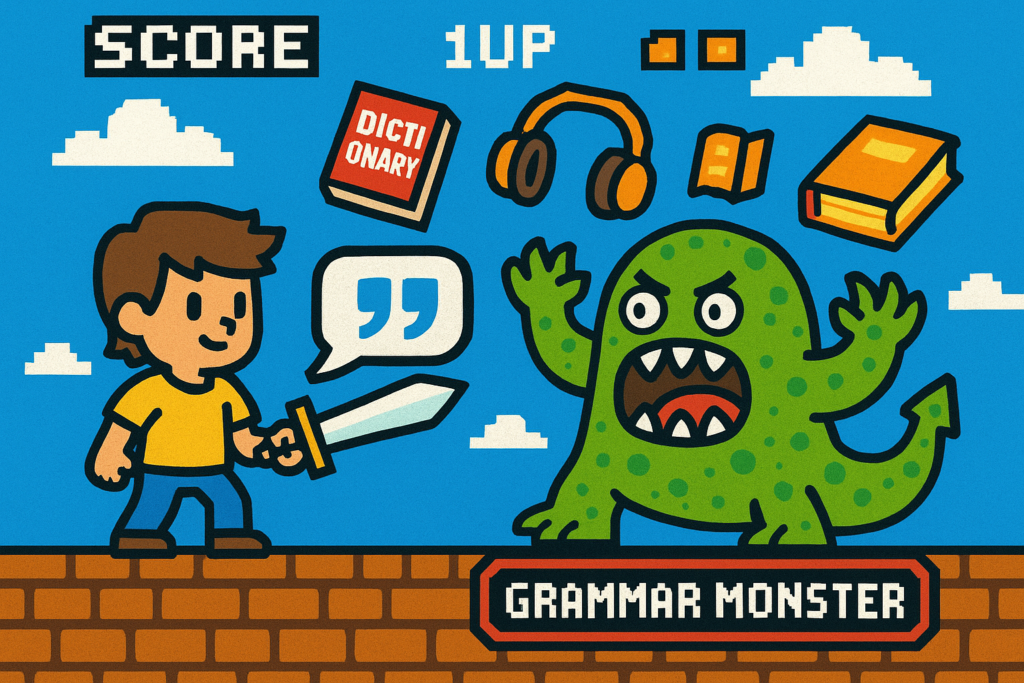
What if your best English lesson didn’t feel like a lesson at all? Imagine a classroom where children giggle while practising vocabulary, or adults confidently improvise dialogues in a fun game rather than rote memorisation. This isn’t just a utopian dream; it’s a reflection of how ‘learning through play’ can transform the way we acquire a new language.

Learning Through Play: How Playfulness Supercharges English Language Acquisition Read More »

English in the Age of AI: What Learners Need to Know (and What Teachers Need to Rethink)

n recent years, the landscape of language learning has undergone a seismic shift. The advent of Artificial Intelligence (AI) tools such as ChatGPT, Grammarly, Duolingo Max, and others has not only made English learning more accessible but also more dynamic. As we stand at this crossroads, it is vital for both learners and teachers to understand how AI is transforming the way we acquire and teach English and, more importantly, how to adapt to this new paradigm effectively.

English in the Age of AI: What Learners Need to Know (and What Teachers Need to Rethink) Read More »

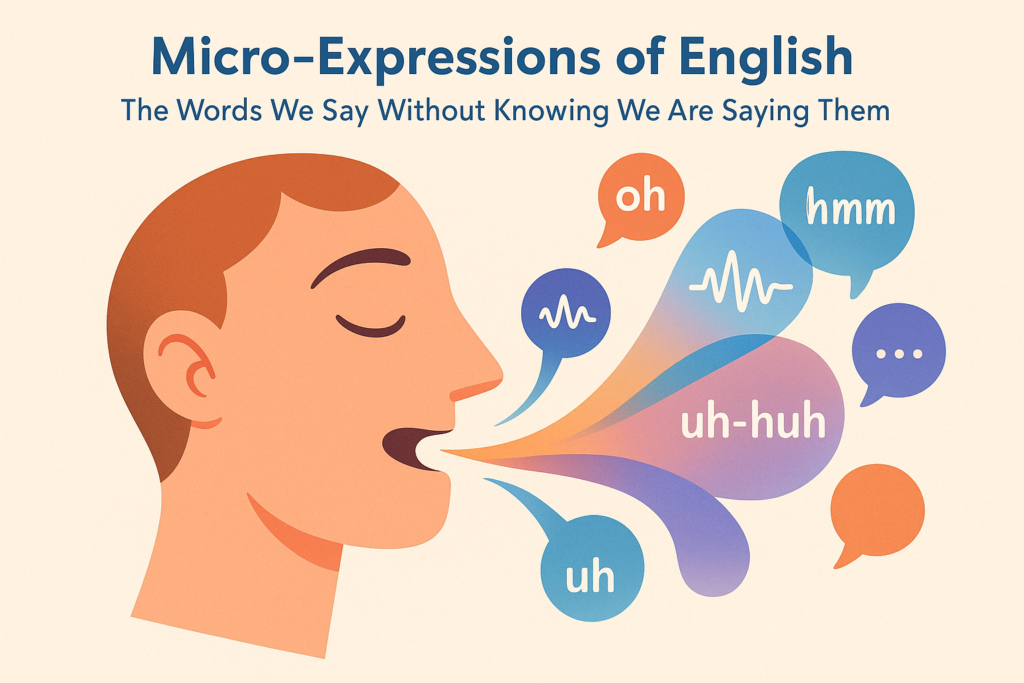
The Sounds of Silence: Teaching Pause, Intonation, and Rhythm in English

Imagine a conversation where every word is perfect, but the speaker’s voice sounds flat and monotonous. How does that affect your understanding? Surprisingly, research by Derwing and Munro in 2017 reveals that ‘listeners often perceive speakers with accurate prosody — meaning their intonation, rhythm, and pauses – as more fluent than those who speak grammatically correct but with a flat, unvaried tone’.
This finding shifts the common focus from just accuracy to the musicality of speech. It suggests that mastering how we say things, not just what we say, is crucial in effective communication. For language teachers and learners alike, this is a game changer: the sounds of silence — pauses, intonation, and rhythm — are just as vital as vocabulary and grammar.

The Sounds of Silence: Teaching Pause, Intonation, and Rhythm in English Read More »

What Is Translanguaging? The Secret Multilinguals Use to Master English

In this post we will explore the concept of translanguaging as a powerful tool in English language teaching. While traditional models often insist on English-only classrooms, translanguaging embraces learners’ full linguistic repertoires. It is not just code-switching — it is an intentional pedagogical approach that validates the use of all languages a learner knows to facilitate learning, foster confidence, and reflect real-world communication. The post will provide a conceptual understanding of translanguaging, distinguish it from code-switching, examine its practical implications in multilingual classrooms (especially in India and other Global South contexts), and offer actionable strategies for educators.

What Is Translanguaging? The Secret Multilinguals Use to Master English Read More »

Code-Switching and Social Adaptation: How Language Shifts Shape Who We Are

In a world where communication is increasingly transcending borders, the tendency to switch between languages or dialects — known as code-switching — has become a ubiquitous part of many multilingual or multicultural experiences. Understanding code-switching is particularly crucial for English learners as it highlights the importance of being aware of one’s audience, mastering the appropriateness of language, and developing linguistic flexibility.

Code-Switching and Social Adaptation: How Language Shifts Shape Who We Are Read More »