Diversity

English Is Addicted to Clarity: What We Lose When Everything Must Be Clear

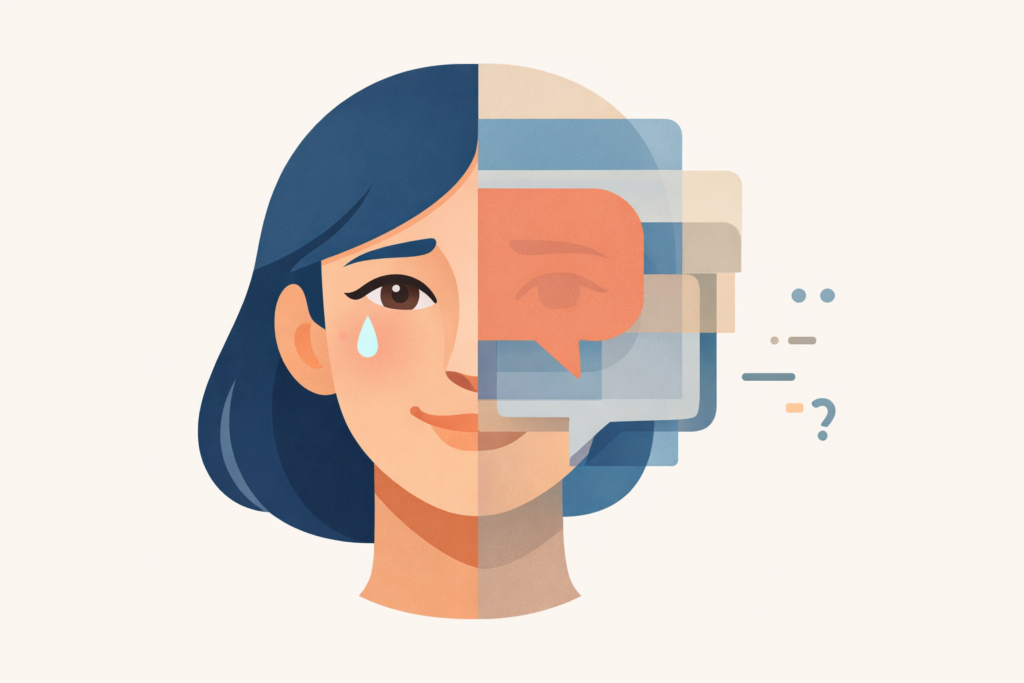
Imagine a familiar scene: a teacher tells a student that their answer is ‘unclear’. A boss tells an employee, ‘I need this to be clearer.’ A friend texts, ‘Just say what you mean.’ These moments are commonplace in everyday communication. Clarity, in these contexts, is not merely a stylistic choice; it is a moral imperative.

In English-speaking cultures, the demand for clarity has become almost sacrosanct. It is as if clarity is the moral currency of honesty, trustworthiness, and competence. But when did this obsession with clarity begin? And what might we be sacrificing in the process? More importantly, when did clarity become a virtue, an ethical obligation of sorts, and ambiguity a flaw?

English Is Addicted to Clarity: What We Lose When Everything Must Be Clear Read More »
English and the Disappearing Body: Why the Language Prefers Minds Over Flesh

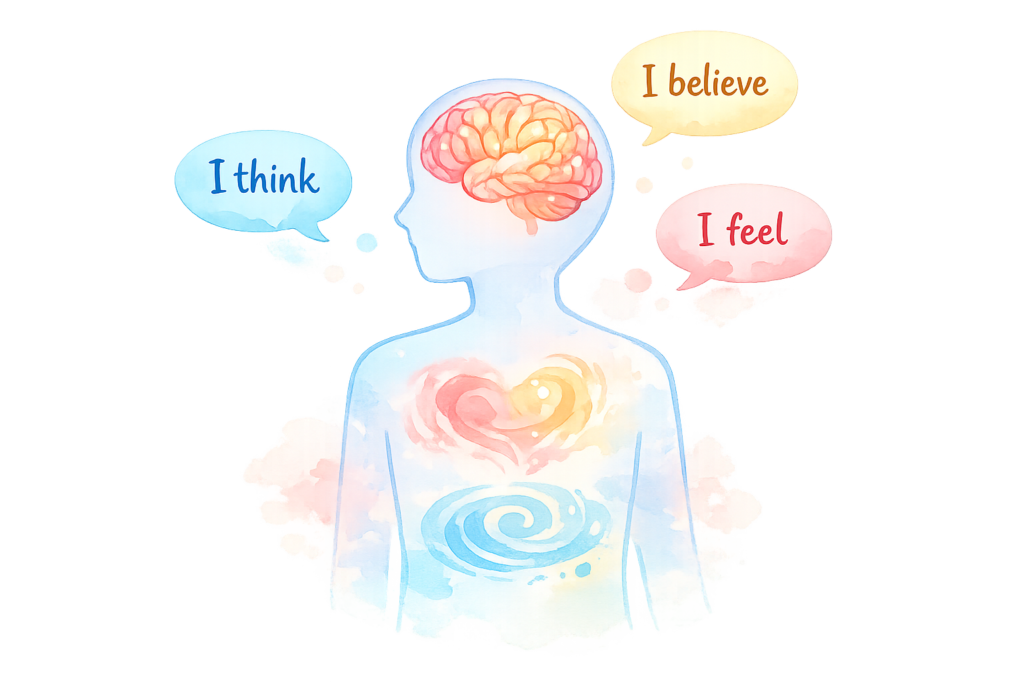
Imagine a typical conversation, whether in a clinic, a classroom, or a casual chat. We often hear expressions such as  ‘I’m stressed,’ ‘I feel anxious,’ or ‘I have a headache.’ Notice, however, that we do not usually say, ‘My heart is tight,’ ‘My chest feels heavy,’ or ‘My stomach is knotted.’  

The body lurks in the background of our language — present, yet often silent. It is as if the flesh and bones that house our experience have been politely asked to step aside or, perhaps, invisibly excised from our linguistic landscape.

This raises a central question: why does English so frequently report and describe human experience from the head, the mind, rather than from the flesh and bones?

English and the Disappearing Body: Why the Language Prefers Minds Over Flesh Read More »

English and the Fear of Excess: Why the Language Keeps Cutting Itself Short

Imagine a conversation where every compliment is softly hedged, every emotion is gently tempered, and every assertion is carefully nuanced. English speakers frequently employ phrases such as ‘not bad’, ‘a bit’, or ‘just’ to soften statements and often apologise even when no real fault exists. For example, someone might say, ‘Sorry to bother you,’ even when they are not inconveniencing anyone. This tendency is not merely cultural politeness; it reflects a deeper linguistic habit, one that subtly signals a reluctance to fully express excess or intensity.

English and the Fear of Excess: Why the Language Keeps Cutting Itself Short Read More »

Why English Loves Straight Lines: How the Language Trains Us to Think Clearly — and Coldly

Imagine reading a sentence in English. It begins with a subject, then a verb, then an object — straightforward, unambiguous, progressing in a single direction. From the earliest lessons in school, we learn that sentences should flow from beginning to middle to end, each part building upon the last in a neat, linear fashion. This structural simplicity makes English remarkably efficient for communication: ideas are presented in an order that clarifies cause and effect, responsibility, and progression.

But what if this architectural elegance of English extends beyond grammar and vocabulary? What if the very way the language is built influences not just how we communicate but how we think, shaping our perceptions of time, responsibility, emotion, and connection?

Why English Loves Straight Lines: How the Language Trains Us to Think Clearly — and Coldly Read More »

When English Gets Emotional: How Grammar Expresses (and Hides) Feeling

English has long enjoyed a reputation for being a language of efficiency, logic, and emotional restraint. Unlike some languages that are celebrated for their poetic expressiveness or passionate tone, English often appears to be reserved, even stoic. It is the language of science, technology, business, and diplomacy — domains where clarity and precision are prized over raw emotion.

However, beneath this veneer of rationality lies a complex web of subtle emotional signals. What if the reason English feels so restrained is not because it lacks emotion but because it chooses to hide it, particularly in its grammar? What if the very structures of English serve as a kind of emotional filter, allowing speakers to express feelings carefully, indirectly, or even invisibly?

When English Gets Emotional: How Grammar Expresses (and Hides) Feeling Read More »

The Loneliness of English: Why the Language Prefers Separation Over Connection

English is often celebrated for its precision, efficiency, and clarity. It allows us to articulate complex ideas with a straightforwardness that many other languages envy. Yet, beneath its polished veneer lies a peculiar trait: a sense of emotional distance, a quiet reluctance to fully embrace intimacy. Strangely, English does not seem to just permit distance. It appears to prefer it.

What if this linguistic preference is not accidental? What if the structure and conventions of English are subtly designed, or at least inclined, to foster separation rather than connection? This idea invites us to look beyond superficial fluency and examine the deeper, perhaps more subtle, ways in which the language shapes our relationships with others and ourselves.

The Loneliness of English: Why the Language Prefers Separation Over Connection Read More »

The Untranslatable ‘You’: What English Reveals About the Self

Imagine a language where a single word, you, serves for everyone. No matter if you are addressing your best friend, your boss, your grandmother, or a stranger on the street, the pronoun remains unchanged. This is the reality of English. It is a language that collapses all social relationships into one pronoun, offering simplicity but sacrificing nuance.
What does it say about a language, and by extension, its speakers, when the grammatical structure refuses to mark closeness, distance, or respect explicitly? Does this linguistic choice shape how people perceive relationships, intimacy, and social hierarchy? Or does it merely reflect a cultural tendency towards neutrality?

The Untranslatable ‘You’: What English Reveals About the Self Read More »

The Grammar of Blame: How Syntax Shifts Responsibility

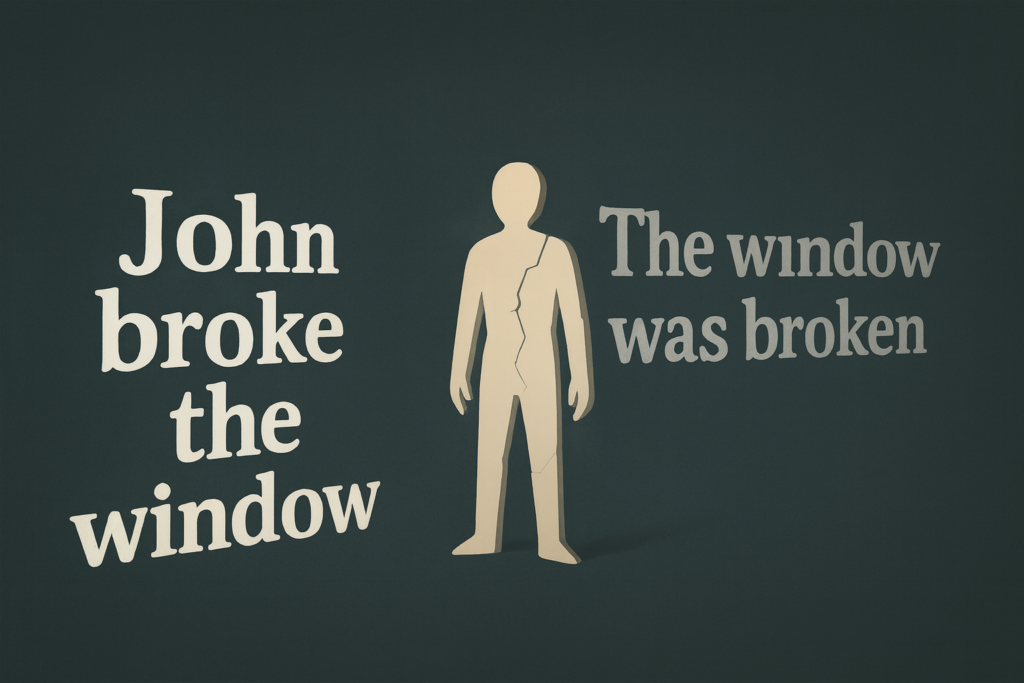
Imagine walking into a room and accidentally knocking over a cherished vase. When you say, ‘I broke the vase,’ the words carry a weight of personal responsibility, guilt, and accountability. The emotional temperature is immediate and intense. Now, if someone else reports, ‘The vase broke,’ the tone shifts. It becomes less confrontational, more detached, almost neutral. The event remains the same, but the way it is framed through language radically alters how we perceive responsibility.

This subtle yet profound difference illustrates a vital question: how does grammar influence our attribution of blame? Beyond mere syntax, language subtly guides our moral judgements, shaping perceptions of intent, culpability, and severity.

The Grammar of Blame: How Syntax Shifts Responsibility Read More »

Why Some Words Feel Heavy: The Psychology of Lexical Weight

Imagine standing at a crossroads of language, holding two words in your mind: ‘I’m sad’ and ‘I’m devastated’. Both express sorrow; yet the second phrase weighs heavier, sinking into your mental landscape with a sense of gravity and depth. The difference is not just in the dictionary definition but in the subtle emotional and cultural layers that each word evokes.

This phenomenon, where words seem to carry emotional, moral, or cultural weight, is a fascinating aspect of human language. Some words seem to press down on us, resonating with sombre, poetic, or profound tones, whereas others evoke lightness and joy. Why does this happen? How can two words mean roughly the same thing yet feel worlds apart in their emotional heft?

Why Some Words Feel Heavy: The Psychology of Lexical Weight Read More »

Micro-Expressions of English: The Words We Say Without Knowing We Are Saying Them

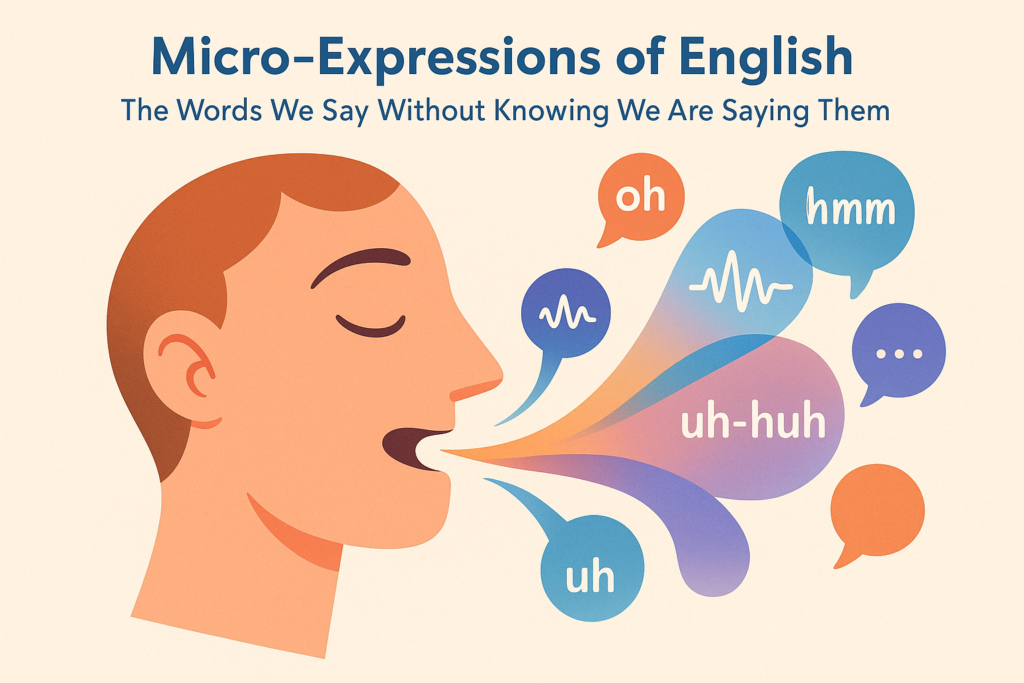
Before we speak in full sentences, before we articulate complex thoughts, there exists a subtle layer of communication that often goes unnoticed: the tiny sounds and utterances we produce, those fleeting syllables, sounds, and cues that are so ingrained in our speech that they pass by almost invisibly. These micro-expressions of language form a hidden fabric woven into our everyday conversations, shaping meaning, emotion, and social connection in ways that words alone cannot fully capture.

Micro-Expressions of English: The Words We Say Without Knowing We Are Saying Them Read More »