Diversity

The Future Tense: What Our Grammar Reveals About How We See Time

Some languages place the future far away. Others fold it neatly into the present.

Can the way we talk about time change the way we think about it?

This question invites us into a fascinating realm where language, cognition, and culture intersect. Our grammar — the structures we use to organise our thoughts — may do more than simply describe reality. It might shape how we perceive and engage with the future. From the way we plan our careers to how we approach climate change, the language patterns embedded in our speech subtly influence our decisions.

In this post, we will explore how different languages conceptualise time, what scientific research suggests about the relationship between language and thought, and why understanding these patterns matters in our interconnected, rapidly changing world.

The Future Tense: What Our Grammar Reveals About How We See Time Read More »

Linguistic Loneliness: What Happens When No One Speaks Like You

Imagine entering a room where your voice is familiar, yet suddenly, it feels foreign. You open your mouth, and instantly, the atmosphere shifts. The words that once flowed effortlessly now seem to stumble, and the room’s energy becomes tentative. Your accent, your intonation, the very melody of your speech mark you as different before a single phrase is spoken.
This is the phenomenon I call ‘linguistic loneliness’ — the quiet alienation that surfaces when no one else speaks like you. It is a subtle yet profound experience that touches many, from migrants adapting to new environments to second-language speakers navigating unfamiliar social terrains. In our hyperconnected, globalised world, where English has become a lingua franca, belonging remains more elusive than ever for those whose ways of speaking do not conform to dominant norms.

Linguistic Loneliness: What Happens When No One Speaks Like You Read More »

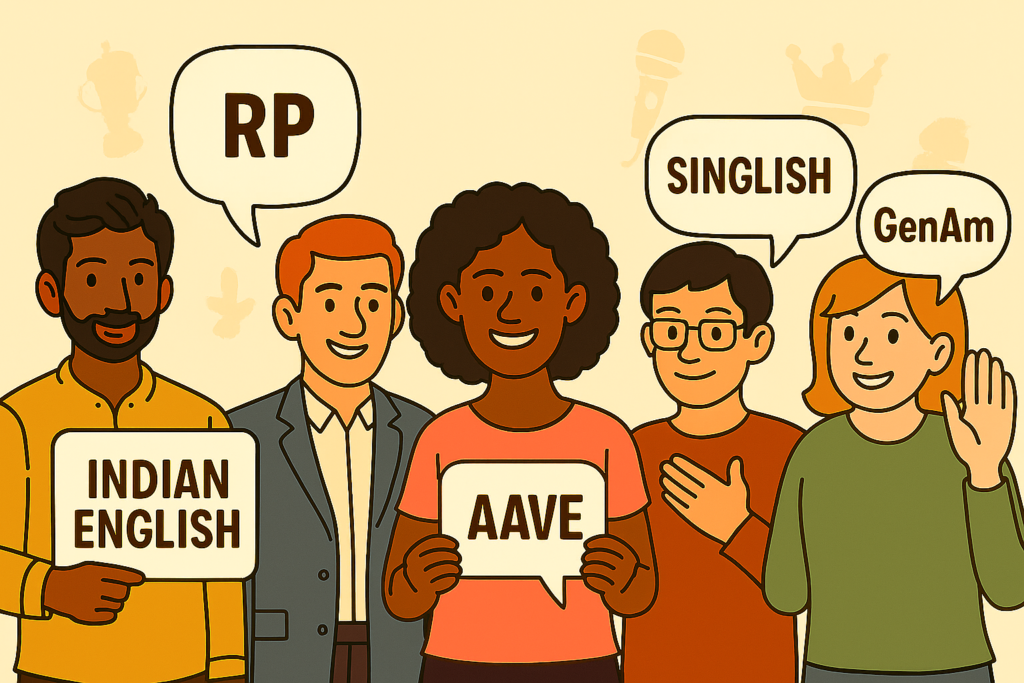
Language Prestige and Power: Why Some Englishes Are Heard — And Others Ignored

Language is more than just a means of communication; it is a vessel of identity, culture, history, and social power. Among the myriad languages spoken worldwide, English holds a unique position, serving as a global lingua franca, a symbol of modernity, and a marker of social status. However, within the vast spectrum of English varieties, certain accents, dialects, and pronunciations are considered more ‘prestigious’ than others. This hierarchy of English varieties influences social mobility, professional opportunities, and cultural perceptions across the globe.

In this blog post, we delve into the fascinating dynamics of language prestige and power, exploring why some Englishes are heard and valued more than others. We will examine the historical roots of these hierarchies, their impact on speakers, and the ongoing shifts driven by globalisation and social change.

Language Prestige and Power: Why Some Englishes Are Heard — And Others Ignored Read More »

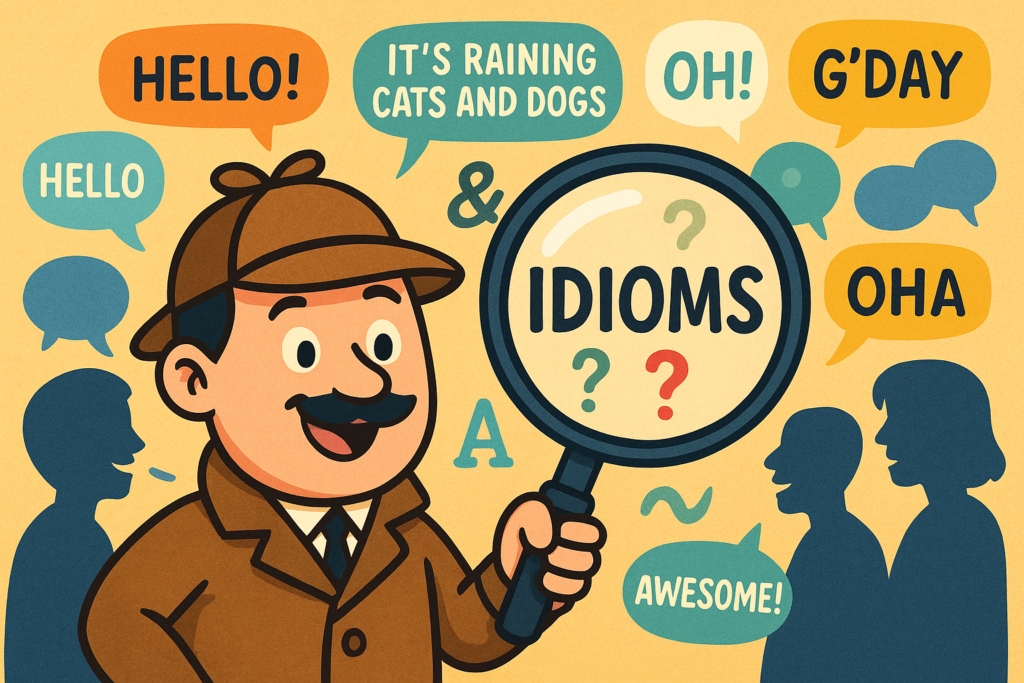
The Secret Life of Idioms: How English Hides History in Everyday Phrases

Language is a living, breathing tapestry woven from the threads of history, culture, and human experience. Among the most fascinating aspects of any language are idioms, those colourful, often perplexing expressions that pepper our daily conversations. Everyone uses idioms; yet few pause to consider their origins. Have you ever wondered why we say ‘bite the bullet’ or ‘break the ice’? What stories are hidden behind these phrases? In this blog post, we will explore the intriguing world of idioms, especially how they serve as cultural fossils, preserving centuries-old histories and traditions. Understanding these idiomatic expressions not only enriches your vocabulary but also offers a glimpse into the fascinating past of the English language.

The Secret Life of Idioms: How English Hides History in Everyday Phrases Read More »

Lost in Translation: The English Words We Cannot Translate (And Why That Matters)

Imagine this: you are sitting in a bustling café, sipping your favourite chai, and a friend excitedly exclaims, ‘I was so schadenfreude when I saw my rival trip over his shoelaces!’ You nod but secretly wonder: what exactly is ‘schadenfreude’? It is a German word that English has borrowed; yet it still feels like a foreign concept. But here is a twist: English itself, despite being the global lingua franca, is not immune to ‘gaps’, untranslatable words, or concepts that slip through its vocabulary cracks. 

Yes, the myth of English as a ‘complete’ language is just that — a myth. While English’s rich history of borrowing has made it remarkably adaptable, it still cannot perfectly encapsulate every nuance of human emotion, culture, or worldview. In this post, we will explore the fascinating realm of untranslatable words within English itself and what they reveal about language, culture, and the art of communication.

Lost in Translation: The English Words We Cannot Translate (And Why That Matters) Read More »

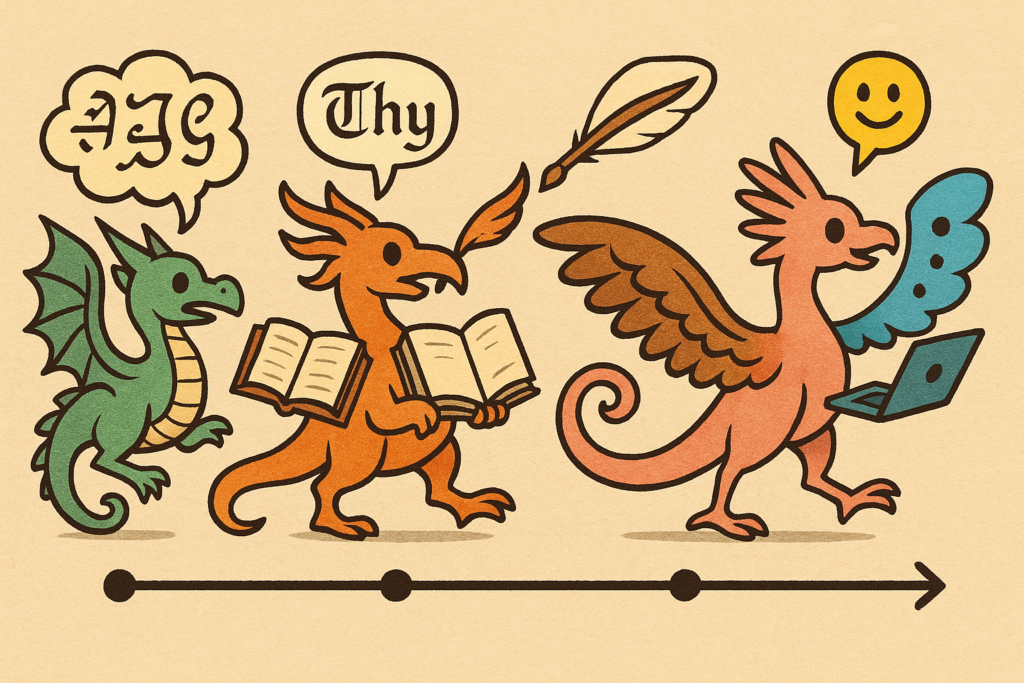
If English Were a Living Creature: How the Language Evolves, Adapts, and Mutates

Imagine, for a moment, that English is not just a language, or a mere tool for communication, but a living, breathing organism. It moves, changes, and adapts in response to its environment, much like a creature in the wild. This playful analogy is not just a whimsical thought experiment; it is rooted in robust scholarly ideas from historical linguistics, memetics, and evolutionary theory. In this post, we will explore how English, as a linguistic living entity, has evolved from its embryonic origins to its current dynamic state and, crucially, how it might continue to evolve in the future.

If English Were a Living Creature: How the Language Evolves, Adapts, and Mutates Read More »

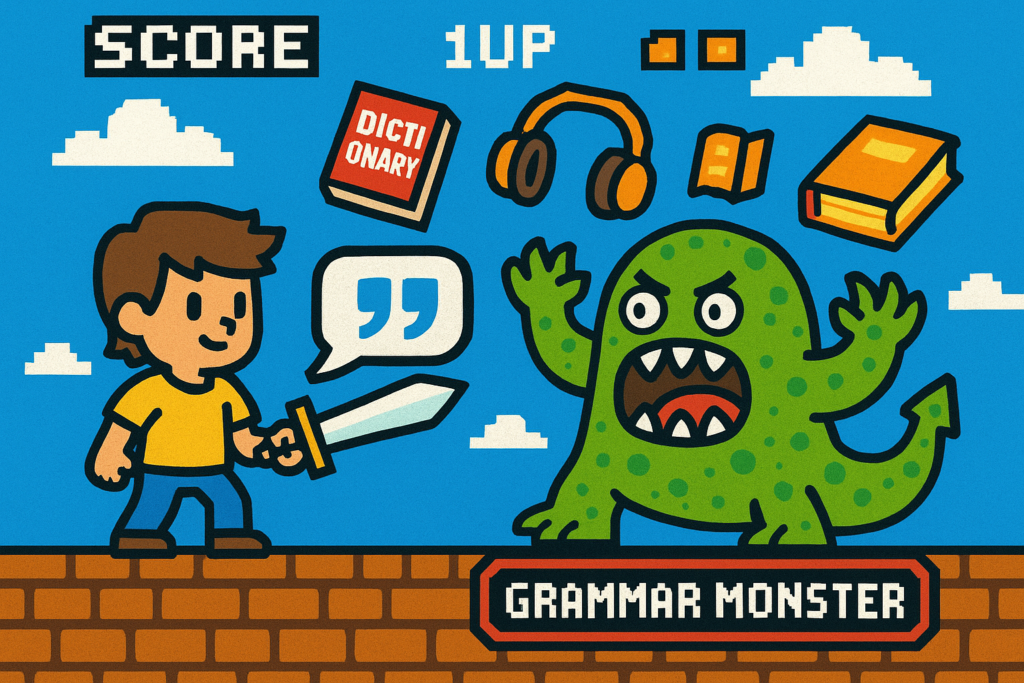
If English Were a Video Game: Levels, Power-Ups, and Hidden Bosses

Imagine stepping into a sprawling, vibrant world — an expansive universe teeming with quests, allies, hidden secrets, and formidable foes. Now picture this universe as the journey of learning English. Whether you are a novice just starting your quest or a seasoned explorer aiming for mastery, understanding this journey as a game can make your learning experience not only more engaging but also strategically rewarding.

In this blog post, we will treat English learning as if it were a captivating video game. We will map out levels of proficiency, highlight the ‘boss battles’ that challenge your skills, and reveal the power-ups that can boost your progress. So, gear up, hero! Your adventure in mastering the English language awaits.

If English Were a Video Game: Levels, Power-Ups, and Hidden Bosses Read More »

Linguistic Detectives: How to ‘Read’ People by the English They Use

Imagine walking into a room and overhearing a conversation. The words, tone, and rhythm immediately give you hints about the speakers’ backgrounds, feelings, and intentions, even if you do not understand every word. What if you could sharpen that skill? What if, as a language learner or teacher, you could become a ‘linguistic detective’, noticing subtle clues that reveal more than just the literal meaning of words?

Linguistic Detectives: How to ‘Read’ People by the English They Use Read More »

The Accent Myth: Why Sounding ‘Native’ Should Not Be Your Goal in English

In the global landscape of English language learning, one aspiration remains persistent: the desire to sound ‘native.’ Whether it is the crisp clarity of a BBC presenter, the polished accent of an American professional, or the refined diction of an Oxford scholar, many learners believe that reaching this level of ‘nativeness’ is the ultimate goal. However, what if this pursuit is misguided? What if, in trying to erase our unique voices, we are missing the true essence of effective communication?

The Accent Myth: Why Sounding ‘Native’ Should Not Be Your Goal in English Read More »

Echoes, Shadows, and Parrots: The Hidden Power of Imitation in Learning English

Imagine walking into a bustling street in Mumbai, New York, or Nairobi. Amid the hum of voices, you notice a child mimicking the gestures and intonation of a street performer, or a language learner repeating phrases after a podcast. These acts, so simple, so natural, are often dismissed as mere copying or mimicry. Yet, beneath their surface lies a profound, scientifically supported strategy for mastering English and other languages.

Echoes, Shadows, and Parrots: The Hidden Power of Imitation in Learning English Read More »