Life Skills

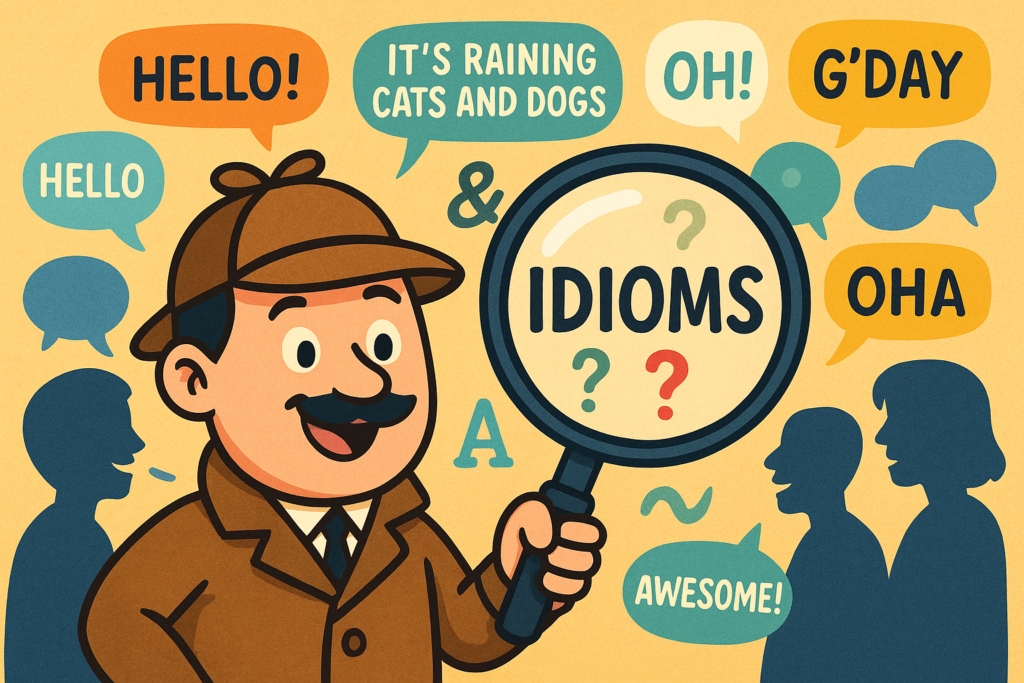
Linguistic Detectives: How to ‘Read’ People by the English They Use

Imagine walking into a room and overhearing a conversation. The words, tone, and rhythm immediately give you hints about the speakers’ backgrounds, feelings, and intentions, even if you do not understand every word. What if you could sharpen that skill? What if, as a language learner or teacher, you could become a ‘linguistic detective’, noticing subtle clues that reveal more than just the literal meaning of words?

Linguistic Detectives: How to ‘Read’ People by the English They Use Read More »

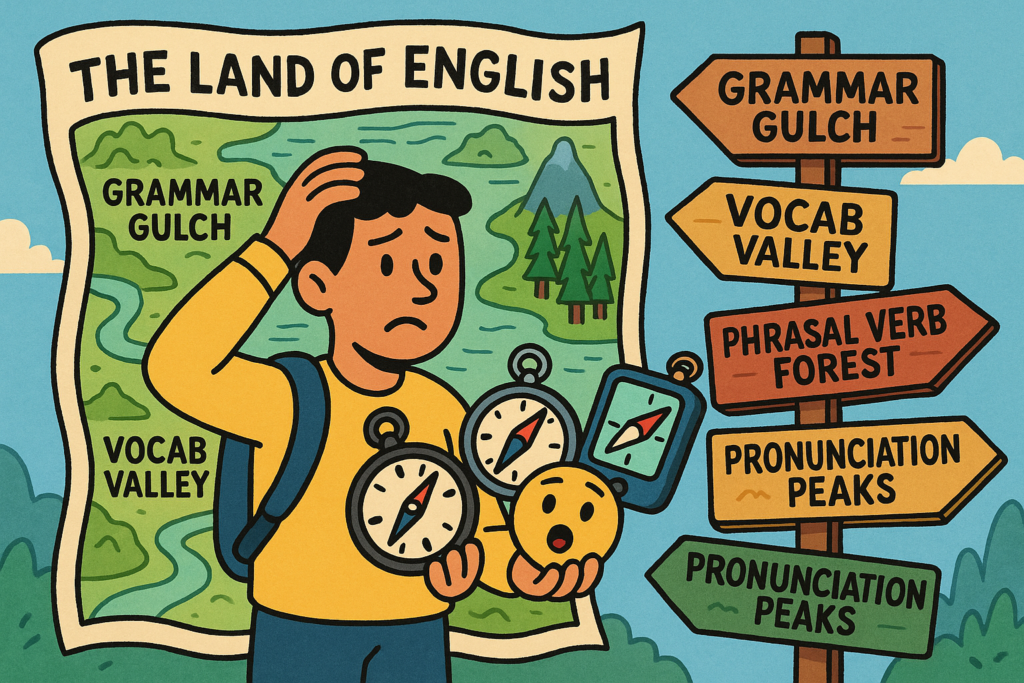
Language as a Map: Why You Are Not Lost; You Are Just Reading the Wrong Compass

Imagine standing in the middle of a vast, unfamiliar city. You want to find your way to a famous monument, but all you have is a map that seems to show only narrow alleyways and distant landmarks. Frustrated, you might feel you are simply not cut out for navigation or perhaps the city is too complex. But what if the problem is not your ability to find your way? What if it is that you are reading the wrong map or using the wrong compass?
This metaphor captures a profound truth about language learning: it is not about climbing a mountain or conquering a peak; it is about exploring a vast, intricate landscape. If you feel lost in learning English, it is not because of a personal failure; it is because your mental map might not match the terrain you are trying to navigate.

Language as a Map: Why You Are Not Lost; You Are Just Reading the Wrong Compass Read More »

What If Shakespeare Had ChatGPT? Language Learning in Parallel Universes

Imagine for a moment that William Shakespeare, the quintessential bard of the English language, had access to a modern AI assistant, say, ChatGPT, during his lifetime. Would his mastery of words have deepened? Would his sonnets have evolved into new forms of expression? Or picture a young English learner in a post-apocalyptic world, where printed books and digital archives are relics of a bygone era. How would they navigate the complex terrain of language without the vast repositories of knowledge we take for granted today?

What If Shakespeare Had ChatGPT? Language Learning in Parallel Universes Read More »

Code-Switching and Social Adaptation: How Language Shifts Shape Who We Are

In a world where communication is increasingly transcending borders, the tendency to switch between languages or dialects — known as code-switching — has become a ubiquitous part of many multilingual or multicultural experiences. Understanding code-switching is particularly crucial for English learners as it highlights the importance of being aware of one’s audience, mastering the appropriateness of language, and developing linguistic flexibility.

Code-Switching and Social Adaptation: How Language Shifts Shape Who We Are Read More »

Illustration showing four diverse individuals each wearing a label on their clothing with words like 'LAZY', 'NERD', 'IMMIGRANT', and 'BOSSY'. Above them is the text: 'Labels and Power – How Words Shape Social Perceptions'. The image highlights how language can influence identity and social perception.

Labels and Power: How Words Shape the Way We See Ourselves and Others

This blog post will explore how labels shape individual and group identities, fuel biases, and influence power dynamics in society. We will examine the psychology behind labels, explore the societal implications of who gets to define labels, analyse the stereotypes reinforced by language, and discuss the evolution of politically correct language. Furthermore, we will delve into the intersection of labels and identity, internalisation, resistance, and the importance of language awareness in promoting empathy.

Labels and Power: How Words Shape the Way We See Ourselves and Others Read More »

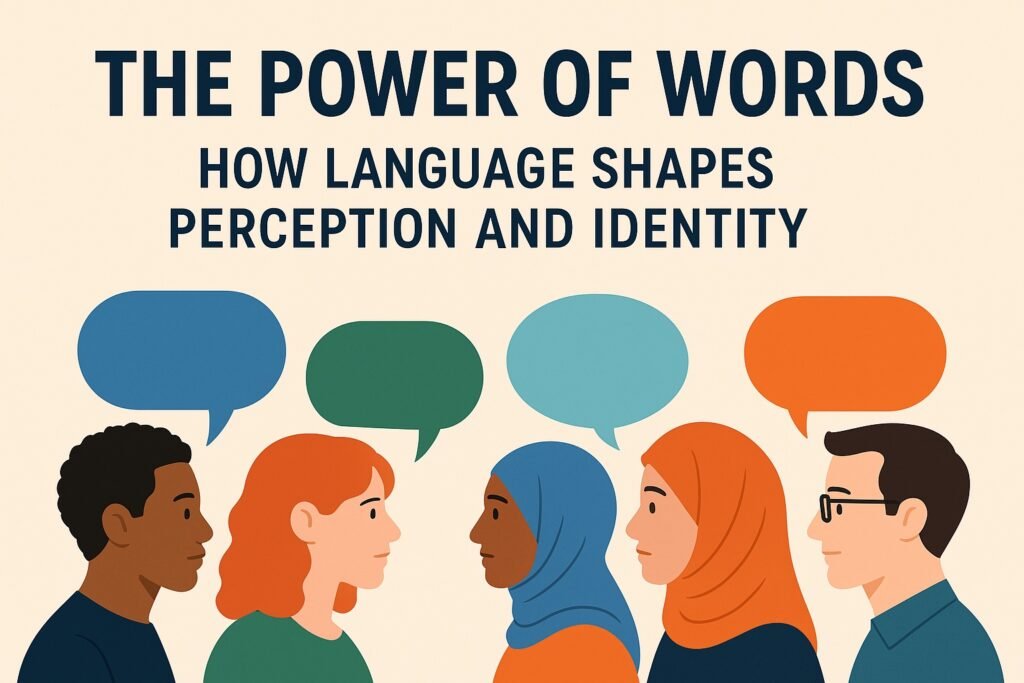
A flat-style digital illustration featuring four diverse human profiles inside colourful speech bubbles, symbolising the power of language in shaping identity and perception. The background is light beige, and the title 'The Power of Words' is displayed in bold navy blue text.

The Power of Words: How Language Shapes Perception and Identity

Language is more than a mere instrument for communication; it serves as a lens through which we interpret the world around us. The words we choose, the accents we bear, and even the dialects we adopt encapsulate our cultural backgrounds, our personal narratives, and our societal standing. Language not only reflects our identity but also shapes our perception of reality, influencing the way we think and interact with one another. This blog post will delve into the multifaceted relationship between language, identity, thought processes, and social relationships, shedding light on its significance in various contexts, both globally and within specific cultures such as India.

The Power of Words: How Language Shapes Perception and Identity Read More »

Think in English: The Secret to Faster Fluency and Natural Conversations

In the realm of language acquisition, the journey from knowing vocabulary and grammar to achieving fluency can often seem daunting. Many language learners grapple with the challenge of how to express thoughts seamlessly in English, oscillating between their native tongue and English. Yet, one fundamental concept serves as the bridge to fluency: thinking in English. This mental shift can transform your learning experience, honing your ability to converse naturally and confidently. In this blog post, we will explore the benefits of thinking in English and present actionable strategies to improve your English thinking skills.

Think in English: The Secret to Faster Fluency and Natural Conversations Read More »

Mastering the Rhythm of English: How Stress and Intonation Shape Meaning

When we think of learning a new language, our minds often gravitate toward vocabulary and grammar. However, mastering a language goes well beyond mere words — it encompasses how we deliver those words. In English, the interplay of rhythm, stress, and intonation can dramatically shape the meaning of what we say. This rich musicality of the language not only defines our speech patterns but also enhances clarity, fluency, and confidence in conversations.

Mastering the Rhythm of English: How Stress and Intonation Shape Meaning Read More »

The Power of Non-Verbal Communication: How Body Language Shapes English Conversations

Communication is not limited to words alone. In fact, research suggests that a significant portion of our communication is non-verbal — estimated at around 70 to 93% of the meaning behind our interactions. Non-verbal communication encompasses a range of cues, including facial expressions, gestures, posture, and even eye contact. While these non-verbal signals can enhance conversation, they can also lead to misunderstandings, especially in cross-cultural contexts. This blog post explores the intricate dynamics of non-verbal communication, particularly in English conversations, shedding light on how body language shapes our interactions and its implications for English language learners.

The Power of Non-Verbal Communication: How Body Language Shapes English Conversations Read More »

The Joy of ‘Wordplay’: How Puns and Playful Language Can Boost Your English Skills

As language learners, we’re always on the lookout for ways to improve our skills and enhance our understanding of the English language. While grammar rules and vocabulary lists can be helpful, we often overlook one of the most powerful tools in the language learner’s toolkit: wordplay.

From puns and double meanings to clever turns of phrase, wordplay isn’t just a humorous distraction. It’s a dynamic way to stretch our creative muscles, grasp new idioms, and sharpen our understanding of the English syntax.

In this blog post, we will explore how wordplay can help language learners in a fun and interactive way. We will examine examples from pop culture, literature, and everyday conversation to show how wordplay can be used to convey meaning, build relationships, and even make complex ideas more accessible.

The Joy of ‘Wordplay’: How Puns and Playful Language Can Boost Your English Skills Read More »