Life Skills

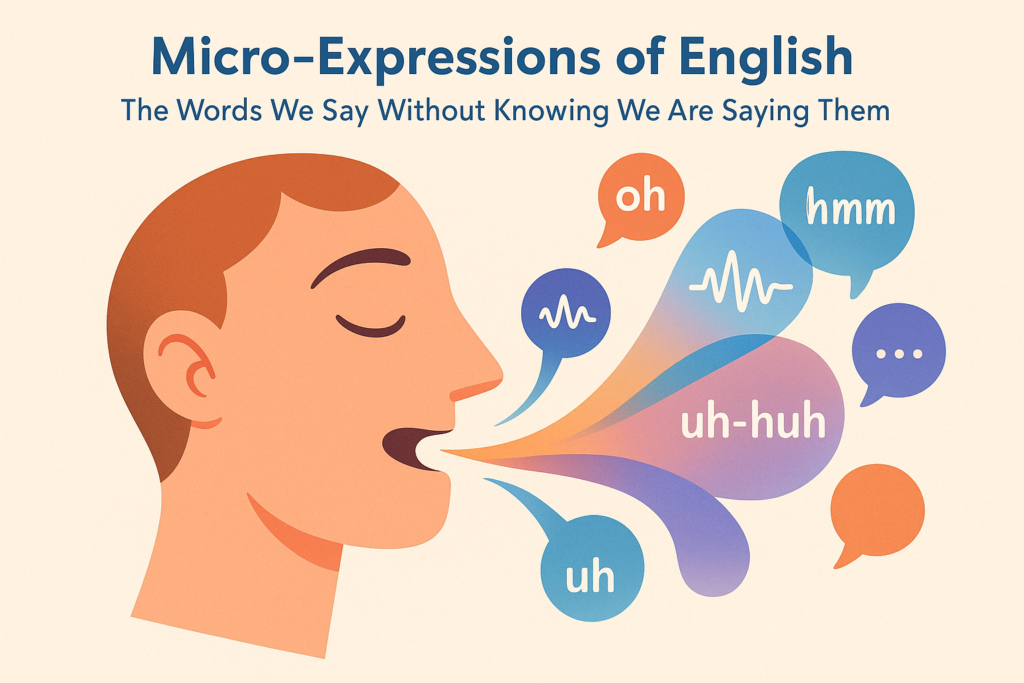
Micro-Expressions of English: The Words We Say Without Knowing We Are Saying Them

Before we speak in full sentences, before we articulate complex thoughts, there exists a subtle layer of communication that often goes unnoticed: the tiny sounds and utterances we produce, those fleeting syllables, sounds, and cues that are so ingrained in our speech that they pass by almost invisibly. These micro-expressions of language form a hidden fabric woven into our everyday conversations, shaping meaning, emotion, and social connection in ways that words alone cannot fully capture.

Micro-Expressions of English: The Words We Say Without Knowing We Are Saying Them Read More »

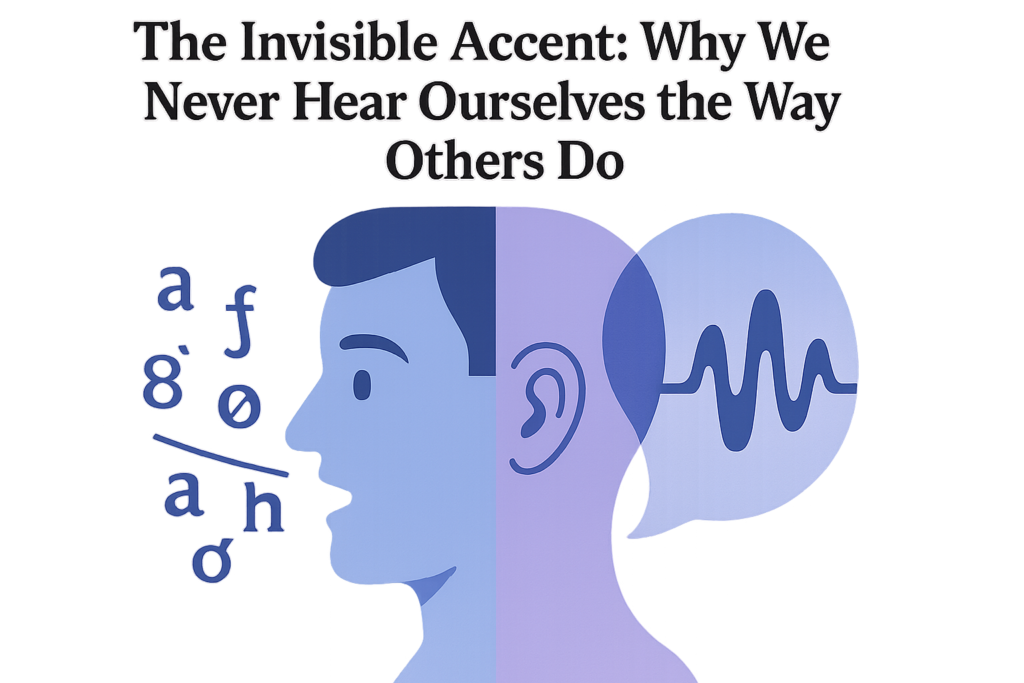
The Invisible Accent: Why We Never Hear Ourselves the Way Others Do

Imagine this: you record a voice message or listen to a video of yourself speaking. Instantly, you notice something strange. You sound different from what you thought you sounded like. Maybe your voice sounds nasal, nasal, or foreign. Perhaps you are surprised at the accent that emerges, one you have never consciously noticed before. This experience is universal. Most of us believe we have no accent, until we hear ourselves objectively, and suddenly, everything sounds different.

This paradox is rooted in a fascinating linguistic and psychological phenomenon: ‘everyone has an accent’, yet most individuals perceive theirs as ‘neutral’ or ‘standard’. It is as if our own voice and speech are invisible, hidden behind a mental veil that filters how we perceive ourselves versus how others perceive us. The question then arises: why does our brain treat our own accent differently from how others hear it?

The Invisible Accent: Why We Never Hear Ourselves the Way Others Do Read More »

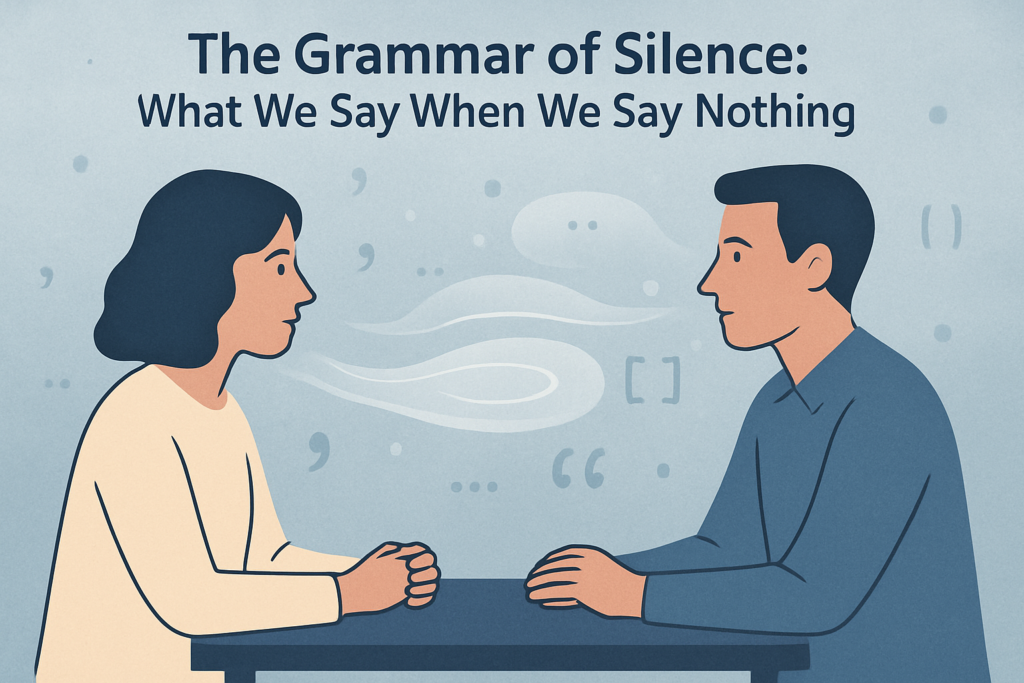
The Grammar of Silence: What We Say When We Say Nothing

Imagine a quiet room where two friends sit in a moment of shared understanding. One has just delivered difficult news, and the other responds not with words but with a gentle gaze and a lingering pause. Or picture a tense courtroom, where a witness’s silence speaks volumes, revealing truths unspoken. In these moments, silence is not mere emptiness; it is a language in its own right, capable of conveying complex, nuanced meaning that words sometimes fail to express.

Silence, in its many forms, shapes our interactions, influences our relationships, and reflects cultural norms. It can be an act of respect, a sign of disagreement, or a display of emotional restraint. But what does silence truly communicate? And how does it function within the broader grammar of human language?

This leads us to a compelling question: if language is how we communicate, what do we make of the moments when we do not speak? The answer lies in exploring what I call the ‘grammar of silence’ — a set of patterns, conventions, and meanings that govern what is left unsaid. Silence is not simply the absence of speech; it is a form of communication rich with intentionality and cultural significance. It follows its own rules, and understanding these rules allows us to listen more deeply to the unspoken stories around us.

The Grammar of Silence: What We Say When We Say Nothing Read More »

The Confidence Gap: Why Many English Learners Know the Rules But Do Not Speak Up

Imagine a classroom where students eagerly demonstrate their understanding of grammar rules, vocabulary, and pronunciation; yet, when the moment comes to speak, they freeze. They know the words, but they cannot quite find their voice. This paradox is a common phenomenon among English learners worldwide: the ‘knowers’ who struggle to ‘do’. It is a psychological, social, and cultural puzzle that cuts across borders, ages, and proficiency levels. 

In this blog post, we explore the intriguing phenomenon of the confidence gap in language learning: why learners often possess the linguistic knowledge but lack the courage or comfort to speak.

The Confidence Gap: Why Many English Learners Know the Rules But Do Not Speak Up Read More »

Why English Feels Easy One Day and Impossible the Next

Imagine this: you are confidently chatting in English, perhaps telling a funny story or expressing your thoughts with ease. The words flow; your pronunciation feels natural; and you are riding high on a linguistic wave of accomplishment. Then, suddenly, the next day, or even just a few hours later, you find yourself staring blankly at a sentence, struggling to recall simple vocabulary, and feeling like your brain has hit a brick wall. Welcome to the wild, unpredictable rollercoaster of learning English.

If this scenario sounds familiar, you are not alone. The emotional highs and lows of acquiring a second language are universal, often leaving learners feeling both frustrated and strangely hopeful. But what is really happening beneath the surface? Why does English sometimes feel like an effortless breeze and other times a daunting mountain? In this blog post, we will explore the fascinating science and psychology behind this phenomenon, along with practical strategies to ride the rollercoaster with confidence.

Why English Feels Easy One Day and Impossible the Next Read More »

Linguistic Detectives: How to ‘Read’ People by the English They Use

Imagine walking into a room and overhearing a conversation. The words, tone, and rhythm immediately give you hints about the speakers’ backgrounds, feelings, and intentions, even if you do not understand every word. What if you could sharpen that skill? What if, as a language learner or teacher, you could become a ‘linguistic detective’, noticing subtle clues that reveal more than just the literal meaning of words?

Linguistic Detectives: How to ‘Read’ People by the English They Use Read More »

Language as a Map: Why You Are Not Lost; You Are Just Reading the Wrong Compass

Imagine standing in the middle of a vast, unfamiliar city. You want to find your way to a famous monument, but all you have is a map that seems to show only narrow alleyways and distant landmarks. Frustrated, you might feel you are simply not cut out for navigation or perhaps the city is too complex. But what if the problem is not your ability to find your way? What if it is that you are reading the wrong map or using the wrong compass?
This metaphor captures a profound truth about language learning: it is not about climbing a mountain or conquering a peak; it is about exploring a vast, intricate landscape. If you feel lost in learning English, it is not because of a personal failure; it is because your mental map might not match the terrain you are trying to navigate.

Language as a Map: Why You Are Not Lost; You Are Just Reading the Wrong Compass Read More »

What If Shakespeare Had ChatGPT? Language Learning in Parallel Universes

Imagine for a moment that William Shakespeare, the quintessential bard of the English language, had access to a modern AI assistant, say, ChatGPT, during his lifetime. Would his mastery of words have deepened? Would his sonnets have evolved into new forms of expression? Or picture a young English learner in a post-apocalyptic world, where printed books and digital archives are relics of a bygone era. How would they navigate the complex terrain of language without the vast repositories of knowledge we take for granted today?

What If Shakespeare Had ChatGPT? Language Learning in Parallel Universes Read More »

Code-Switching and Social Adaptation: How Language Shifts Shape Who We Are

In a world where communication is increasingly transcending borders, the tendency to switch between languages or dialects — known as code-switching — has become a ubiquitous part of many multilingual or multicultural experiences. Understanding code-switching is particularly crucial for English learners as it highlights the importance of being aware of one’s audience, mastering the appropriateness of language, and developing linguistic flexibility.

Code-Switching and Social Adaptation: How Language Shifts Shape Who We Are Read More »

Illustration showing four diverse individuals each wearing a label on their clothing with words like 'LAZY', 'NERD', 'IMMIGRANT', and 'BOSSY'. Above them is the text: 'Labels and Power – How Words Shape Social Perceptions'. The image highlights how language can influence identity and social perception.

Labels and Power: How Words Shape the Way We See Ourselves and Others

This blog post will explore how labels shape individual and group identities, fuel biases, and influence power dynamics in society. We will examine the psychology behind labels, explore the societal implications of who gets to define labels, analyse the stereotypes reinforced by language, and discuss the evolution of politically correct language. Furthermore, we will delve into the intersection of labels and identity, internalisation, resistance, and the importance of language awareness in promoting empathy.

Labels and Power: How Words Shape the Way We See Ourselves and Others Read More »