Practice

The Confidence Gap: Why Many English Learners Know the Rules But Do Not Speak Up

Imagine a classroom where students eagerly demonstrate their understanding of grammar rules, vocabulary, and pronunciation; yet, when the moment comes to speak, they freeze. They know the words, but they cannot quite find their voice. This paradox is a common phenomenon among English learners worldwide: the ‘knowers’ who struggle to ‘do’. It is a psychological, social, and cultural puzzle that cuts across borders, ages, and proficiency levels. 

In this blog post, we explore the intriguing phenomenon of the confidence gap in language learning: why learners often possess the linguistic knowledge but lack the courage or comfort to speak.

The Confidence Gap: Why Many English Learners Know the Rules But Do Not Speak Up Read More »

Why English Feels Easy One Day and Impossible the Next

Imagine this: you are confidently chatting in English, perhaps telling a funny story or expressing your thoughts with ease. The words flow; your pronunciation feels natural; and you are riding high on a linguistic wave of accomplishment. Then, suddenly, the next day, or even just a few hours later, you find yourself staring blankly at a sentence, struggling to recall simple vocabulary, and feeling like your brain has hit a brick wall. Welcome to the wild, unpredictable rollercoaster of learning English.

If this scenario sounds familiar, you are not alone. The emotional highs and lows of acquiring a second language are universal, often leaving learners feeling both frustrated and strangely hopeful. But what is really happening beneath the surface? Why does English sometimes feel like an effortless breeze and other times a daunting mountain? In this blog post, we will explore the fascinating science and psychology behind this phenomenon, along with practical strategies to ride the rollercoaster with confidence.

Why English Feels Easy One Day and Impossible the Next Read More »

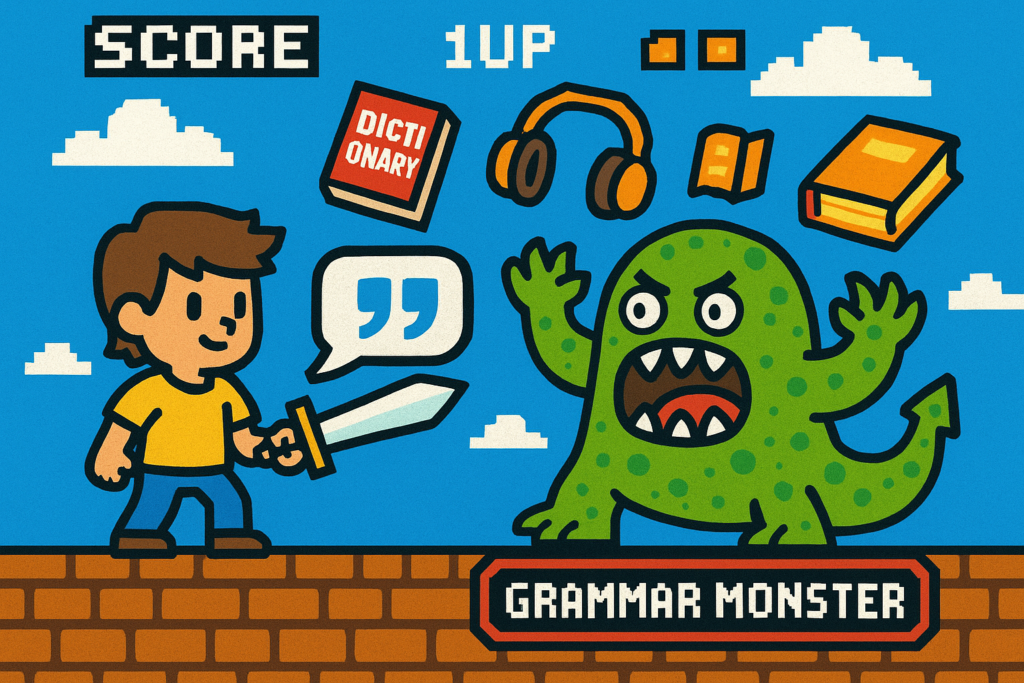
If English Were a Video Game: Levels, Power-Ups, and Hidden Bosses

Imagine stepping into a sprawling, vibrant world — an expansive universe teeming with quests, allies, hidden secrets, and formidable foes. Now picture this universe as the journey of learning English. Whether you are a novice just starting your quest or a seasoned explorer aiming for mastery, understanding this journey as a game can make your learning experience not only more engaging but also strategically rewarding.

In this blog post, we will treat English learning as if it were a captivating video game. We will map out levels of proficiency, highlight the ‘boss battles’ that challenge your skills, and reveal the power-ups that can boost your progress. So, gear up, hero! Your adventure in mastering the English language awaits.

If English Were a Video Game: Levels, Power-Ups, and Hidden Bosses Read More »

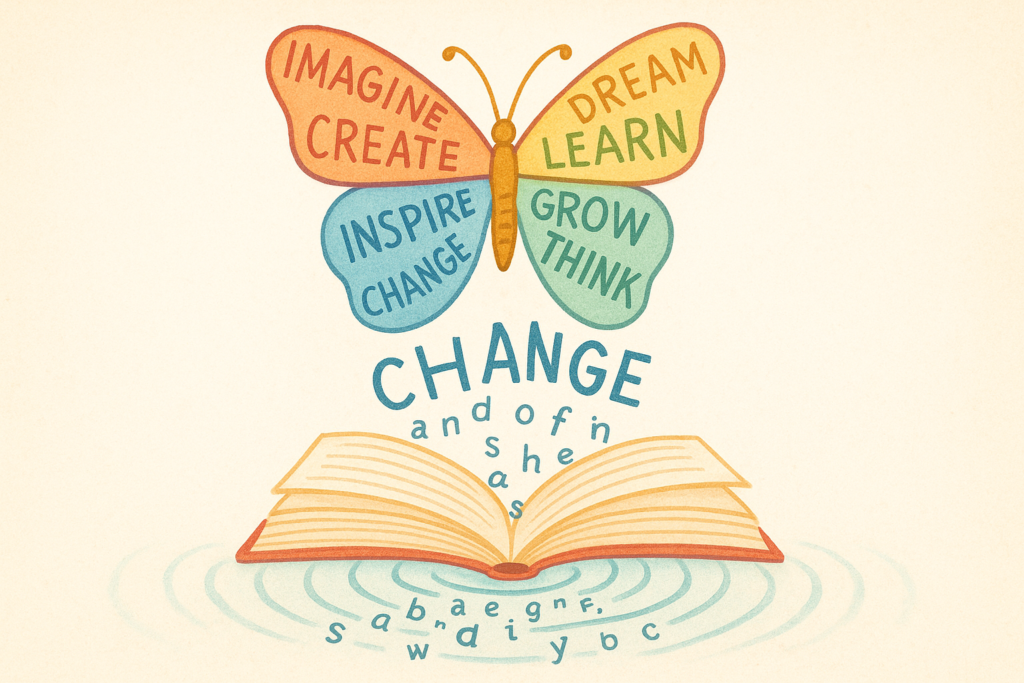
The Butterfly Effect in Language Learning: How Tiny Habits Change Everything

Imagine a tiny butterfly flapping its wings in a distant part of the world, setting off a chain of atmospheric events that culminate in a storm on the other side of the globe. This is the essence of the ‘butterfly effect’, a concept from chaos theory illustrating how small actions can lead to massive, unpredictable outcomes. Now, what if I told you that this same principle applies to learning a language? That seemingly insignificant daily habits can transform your English skills over time? 

In this blog post, we will explore how tiny, consistent actions, such as noticing one new word a day or speaking a single sentence aloud, can create monumental shifts in your fluency and confidence. This post combines psychology, habit formation, and linguistics to reveal practical strategies that turn small efforts into big results. Whether you are an aspiring learner from India, the United States, or anywhere around the world, understanding this principle can empower you to harness the power of tiny habits and revolutionise your language journey.

The Butterfly Effect in Language Learning: How Tiny Habits Change Everything Read More »

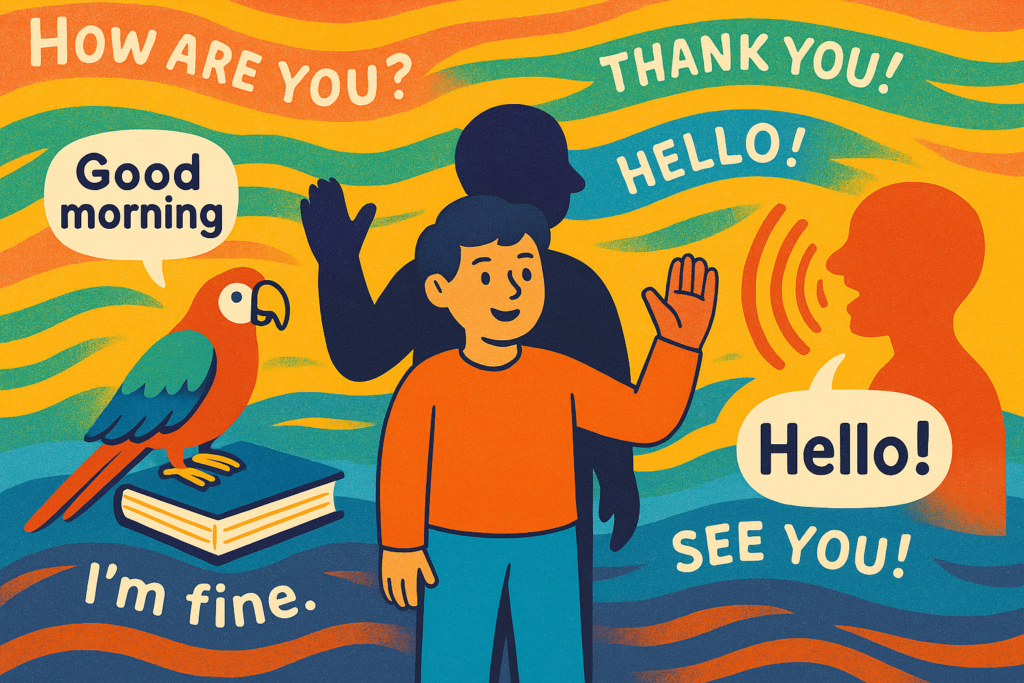
Echoes, Shadows, and Parrots: The Hidden Power of Imitation in Learning English

Imagine walking into a bustling street in Mumbai, New York, or Nairobi. Amid the hum of voices, you notice a child mimicking the gestures and intonation of a street performer, or a language learner repeating phrases after a podcast. These acts, so simple, so natural, are often dismissed as mere copying or mimicry. Yet, beneath their surface lies a profound, scientifically supported strategy for mastering English and other languages.

Echoes, Shadows, and Parrots: The Hidden Power of Imitation in Learning English Read More »

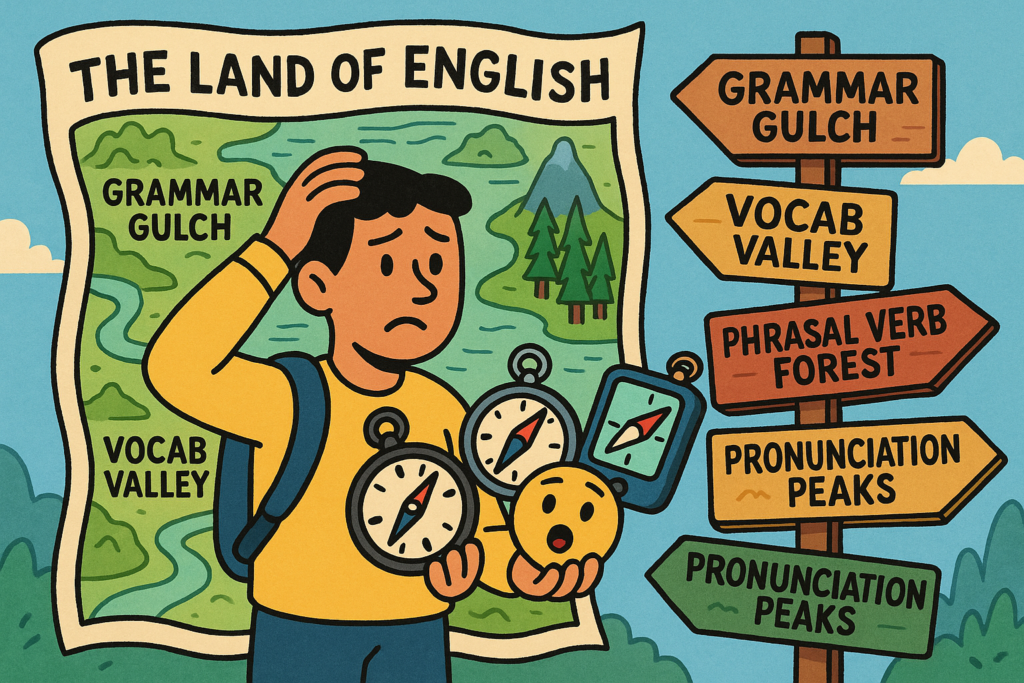
Language as a Map: Why You Are Not Lost; You Are Just Reading the Wrong Compass

Imagine standing in the middle of a vast, unfamiliar city. You want to find your way to a famous monument, but all you have is a map that seems to show only narrow alleyways and distant landmarks. Frustrated, you might feel you are simply not cut out for navigation or perhaps the city is too complex. But what if the problem is not your ability to find your way? What if it is that you are reading the wrong map or using the wrong compass?
This metaphor captures a profound truth about language learning: it is not about climbing a mountain or conquering a peak; it is about exploring a vast, intricate landscape. If you feel lost in learning English, it is not because of a personal failure; it is because your mental map might not match the terrain you are trying to navigate.

Language as a Map: Why You Are Not Lost; You Are Just Reading the Wrong Compass Read More »

Grammar of the Gut: What Digestion Can Teach Us About Learning English

Imagine your body digesting a hearty meal. The process is seamless, often unnoticed, yet profoundly complex — an intricate dance of enzymes, gut flora, and nutrient absorption that sustains life. Now, what if I told you that learning a language, especially English, mirrors this biological process? That understanding the mechanics of digestion can shed light on how we acquire, internalise, and eventually fluently use a language?
In this blog post, we explore the idea that grammar is the ‘gut flora’ of language learning and that the entire process of acquiring English can be viewed through the lens of digestion. This metaphor is not just playful; it is rooted in cognitive science, educational theory, and real-world language learning experiences.

Grammar of the Gut: What Digestion Can Teach Us About Learning English Read More »

What Your Netflix Subtitles Are Teaching You (and What They’re Getting Totally Wrong)

In an era where streaming platforms such as Netflix, Amazon Prime, and Disney+ have become the primary sources of visual entertainment, the way we consume content has radically transformed. Streaming services have democratised access to a multitude of cultures, languages, and storytelling styles, making the world more accessible than ever before. 

One of the most subtle yet influential features of this digital revolution is subtitles — the textual translations that appear at the bottom of your screen. Whether you are a casual viewer, a language learner, or a linguistic researcher, subtitles have become an integral part of the viewing experience. But have you ever paused to think about what your subtitles are teaching you? Are they accurate representations of the original dialogue? And, more importantly, what are they ‘getting wrong’?

What Your Netflix Subtitles Are Teaching You (and What They’re Getting Totally Wrong) Read More »

English by Ear: What Musicians Know About Language That Learners Often Don’t

What do rappers, jazz artists, and classical musicians have in common with great English speakers? More than you’d think.
Language learning is often approached as a visual, grammatical, and vocabulary-based pursuit. Textbooks, vocabulary lists, grammar rules, and pronunciation drills form the core of most curricula. While these components are undeniably vital, an often-overlooked aspect of language acquisition is the auditory experience — specifically, the ability to ‘hear’ and process language in its natural, musical form.

English by Ear: What Musicians Know About Language That Learners Often Don’t Read More »

Level Up Your English: How Video Games Can Boost Your Language Skills

Video games can be powerful, engaging tools for language learning — especially English, the global lingua franca. With the rise of digital entertainment, millions of gamers worldwide are learning English informally, often without realising it. Whether through immersive storytelling, social interaction, or casual exposure, video games offer a dynamic environment that complements traditional language learning methods.

Level Up Your English: How Video Games Can Boost Your Language Skills Read More »