Speaking

When English Gets Emotional: How Grammar Expresses (and Hides) Feeling

English has long enjoyed a reputation for being a language of efficiency, logic, and emotional restraint. Unlike some languages that are celebrated for their poetic expressiveness or passionate tone, English often appears to be reserved, even stoic. It is the language of science, technology, business, and diplomacy — domains where clarity and precision are prized over raw emotion.

However, beneath this veneer of rationality lies a complex web of subtle emotional signals. What if the reason English feels so restrained is not because it lacks emotion but because it chooses to hide it, particularly in its grammar? What if the very structures of English serve as a kind of emotional filter, allowing speakers to express feelings carefully, indirectly, or even invisibly?

When English Gets Emotional: How Grammar Expresses (and Hides) Feeling Read More »

The Loneliness of English: Why the Language Prefers Separation Over Connection

English is often celebrated for its precision, efficiency, and clarity. It allows us to articulate complex ideas with a straightforwardness that many other languages envy. Yet, beneath its polished veneer lies a peculiar trait: a sense of emotional distance, a quiet reluctance to fully embrace intimacy. Strangely, English does not seem to just permit distance. It appears to prefer it.

What if this linguistic preference is not accidental? What if the structure and conventions of English are subtly designed, or at least inclined, to foster separation rather than connection? This idea invites us to look beyond superficial fluency and examine the deeper, perhaps more subtle, ways in which the language shapes our relationships with others and ourselves.

The Loneliness of English: Why the Language Prefers Separation Over Connection Read More »

The Grammar of Blame: How Syntax Shifts Responsibility

Imagine walking into a room and accidentally knocking over a cherished vase. When you say, ‘I broke the vase,’ the words carry a weight of personal responsibility, guilt, and accountability. The emotional temperature is immediate and intense. Now, if someone else reports, ‘The vase broke,’ the tone shifts. It becomes less confrontational, more detached, almost neutral. The event remains the same, but the way it is framed through language radically alters how we perceive responsibility.

This subtle yet profound difference illustrates a vital question: how does grammar influence our attribution of blame? Beyond mere syntax, language subtly guides our moral judgements, shaping perceptions of intent, culpability, and severity.

The Grammar of Blame: How Syntax Shifts Responsibility Read More »

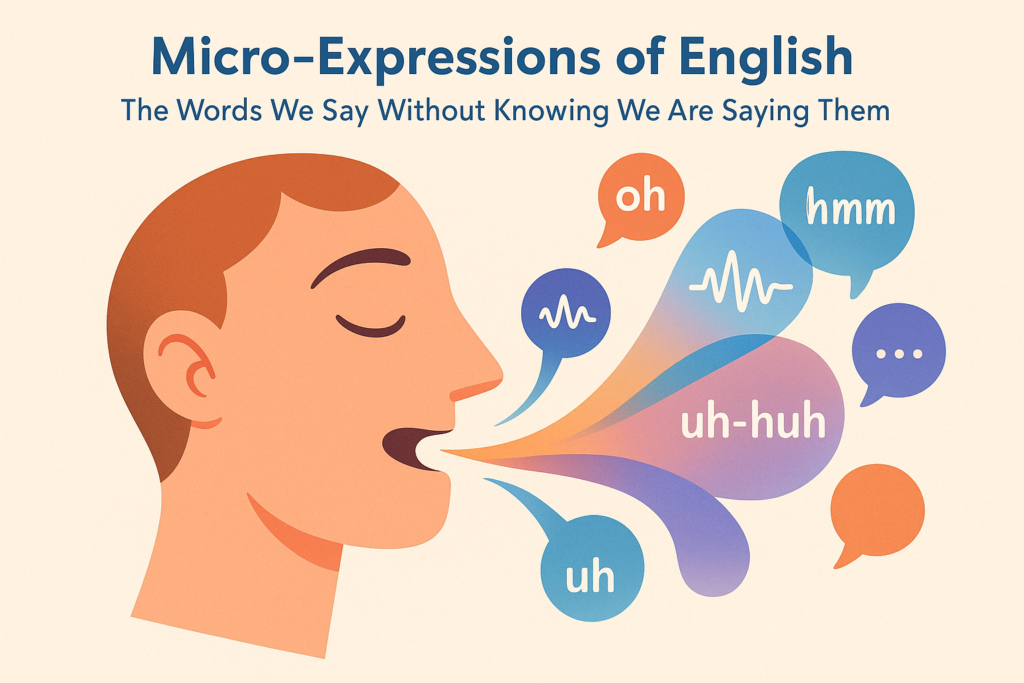
Micro-Expressions of English: The Words We Say Without Knowing We Are Saying Them

Before we speak in full sentences, before we articulate complex thoughts, there exists a subtle layer of communication that often goes unnoticed: the tiny sounds and utterances we produce, those fleeting syllables, sounds, and cues that are so ingrained in our speech that they pass by almost invisibly. These micro-expressions of language form a hidden fabric woven into our everyday conversations, shaping meaning, emotion, and social connection in ways that words alone cannot fully capture.

Micro-Expressions of English: The Words We Say Without Knowing We Are Saying Them Read More »

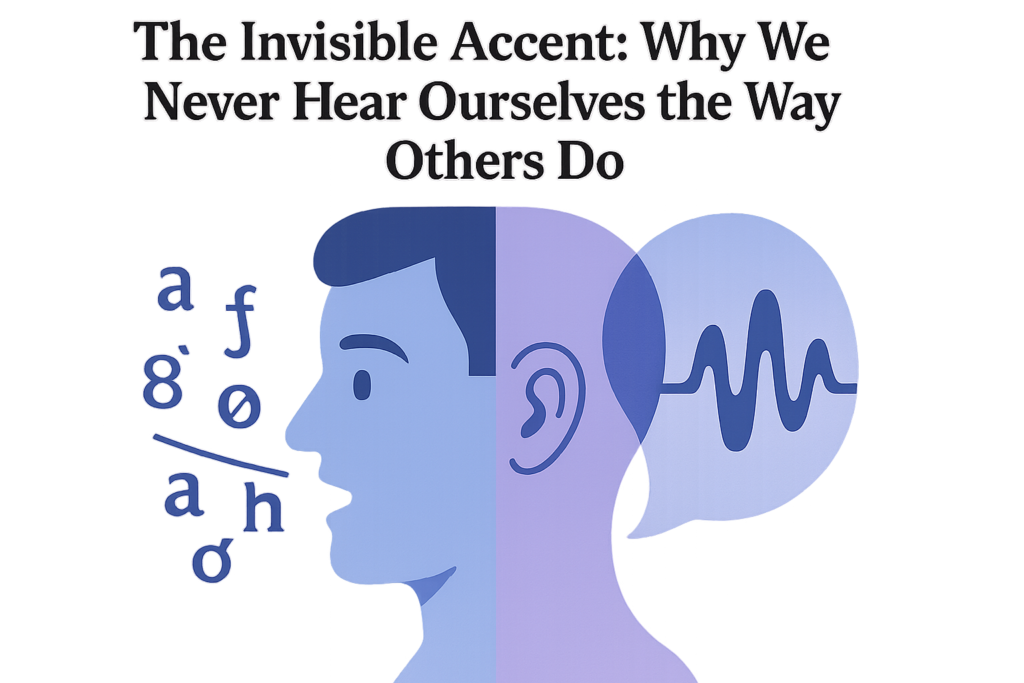
The Invisible Accent: Why We Never Hear Ourselves the Way Others Do

Imagine this: you record a voice message or listen to a video of yourself speaking. Instantly, you notice something strange. You sound different from what you thought you sounded like. Maybe your voice sounds nasal, nasal, or foreign. Perhaps you are surprised at the accent that emerges, one you have never consciously noticed before. This experience is universal. Most of us believe we have no accent, until we hear ourselves objectively, and suddenly, everything sounds different.

This paradox is rooted in a fascinating linguistic and psychological phenomenon: ‘everyone has an accent’, yet most individuals perceive theirs as ‘neutral’ or ‘standard’. It is as if our own voice and speech are invisible, hidden behind a mental veil that filters how we perceive ourselves versus how others perceive us. The question then arises: why does our brain treat our own accent differently from how others hear it?

The Invisible Accent: Why We Never Hear Ourselves the Way Others Do Read More »

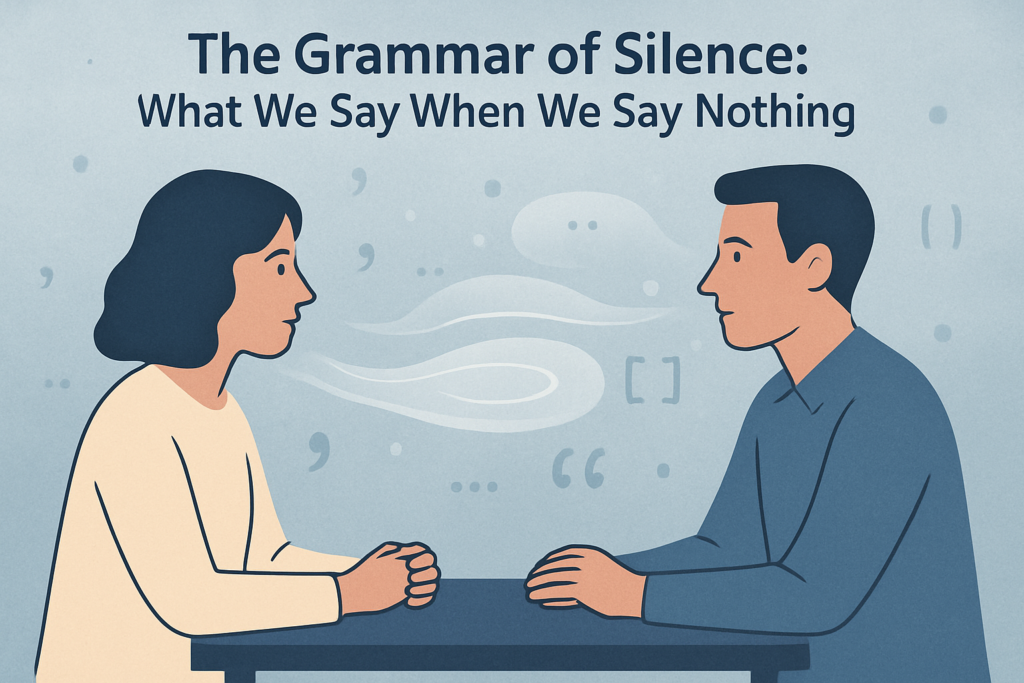
The Grammar of Silence: What We Say When We Say Nothing

Imagine a quiet room where two friends sit in a moment of shared understanding. One has just delivered difficult news, and the other responds not with words but with a gentle gaze and a lingering pause. Or picture a tense courtroom, where a witness’s silence speaks volumes, revealing truths unspoken. In these moments, silence is not mere emptiness; it is a language in its own right, capable of conveying complex, nuanced meaning that words sometimes fail to express.

Silence, in its many forms, shapes our interactions, influences our relationships, and reflects cultural norms. It can be an act of respect, a sign of disagreement, or a display of emotional restraint. But what does silence truly communicate? And how does it function within the broader grammar of human language?

This leads us to a compelling question: if language is how we communicate, what do we make of the moments when we do not speak? The answer lies in exploring what I call the ‘grammar of silence’ — a set of patterns, conventions, and meanings that govern what is left unsaid. Silence is not simply the absence of speech; it is a form of communication rich with intentionality and cultural significance. It follows its own rules, and understanding these rules allows us to listen more deeply to the unspoken stories around us.

The Grammar of Silence: What We Say When We Say Nothing Read More »

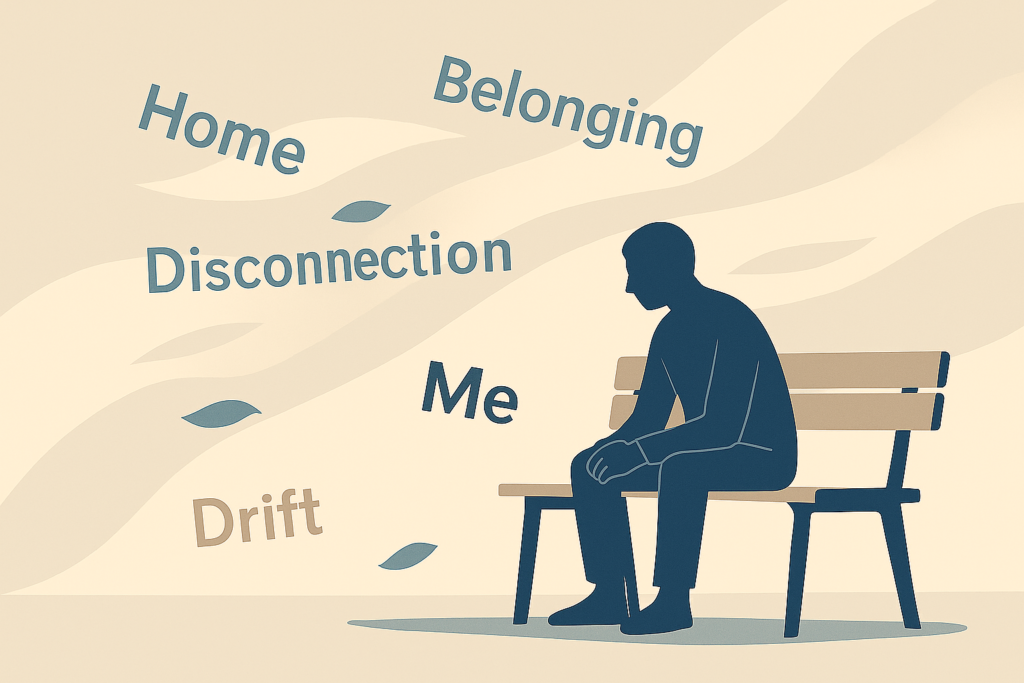
Linguistic Loneliness: What Happens When No One Speaks Like You

Imagine entering a room where your voice is familiar, yet suddenly, it feels foreign. You open your mouth, and instantly, the atmosphere shifts. The words that once flowed effortlessly now seem to stumble, and the room’s energy becomes tentative. Your accent, your intonation, the very melody of your speech mark you as different before a single phrase is spoken.
This is the phenomenon I call ‘linguistic loneliness’ — the quiet alienation that surfaces when no one else speaks like you. It is a subtle yet profound experience that touches many, from migrants adapting to new environments to second-language speakers navigating unfamiliar social terrains. In our hyperconnected, globalised world, where English has become a lingua franca, belonging remains more elusive than ever for those whose ways of speaking do not conform to dominant norms.

Linguistic Loneliness: What Happens When No One Speaks Like You Read More »

Language Prestige and Power: Why Some Englishes Are Heard — And Others Ignored

Language is more than just a means of communication; it is a vessel of identity, culture, history, and social power. Among the myriad languages spoken worldwide, English holds a unique position, serving as a global lingua franca, a symbol of modernity, and a marker of social status. However, within the vast spectrum of English varieties, certain accents, dialects, and pronunciations are considered more ‘prestigious’ than others. This hierarchy of English varieties influences social mobility, professional opportunities, and cultural perceptions across the globe.

In this blog post, we delve into the fascinating dynamics of language prestige and power, exploring why some Englishes are heard and valued more than others. We will examine the historical roots of these hierarchies, their impact on speakers, and the ongoing shifts driven by globalisation and social change.

Language Prestige and Power: Why Some Englishes Are Heard — And Others Ignored Read More »

The Confidence Gap: Why Many English Learners Know the Rules But Do Not Speak Up

Imagine a classroom where students eagerly demonstrate their understanding of grammar rules, vocabulary, and pronunciation; yet, when the moment comes to speak, they freeze. They know the words, but they cannot quite find their voice. This paradox is a common phenomenon among English learners worldwide: the ‘knowers’ who struggle to ‘do’. It is a psychological, social, and cultural puzzle that cuts across borders, ages, and proficiency levels. 

In this blog post, we explore the intriguing phenomenon of the confidence gap in language learning: why learners often possess the linguistic knowledge but lack the courage or comfort to speak.

The Confidence Gap: Why Many English Learners Know the Rules But Do Not Speak Up Read More »

If English Were a Living Creature: How the Language Evolves, Adapts, and Mutates

Imagine, for a moment, that English is not just a language, or a mere tool for communication, but a living, breathing organism. It moves, changes, and adapts in response to its environment, much like a creature in the wild. This playful analogy is not just a whimsical thought experiment; it is rooted in robust scholarly ideas from historical linguistics, memetics, and evolutionary theory. In this post, we will explore how English, as a linguistic living entity, has evolved from its embryonic origins to its current dynamic state and, crucially, how it might continue to evolve in the future.

If English Were a Living Creature: How the Language Evolves, Adapts, and Mutates Read More »