Vocabulary

When English Gets Emotional: How Grammar Expresses (and Hides) Feeling

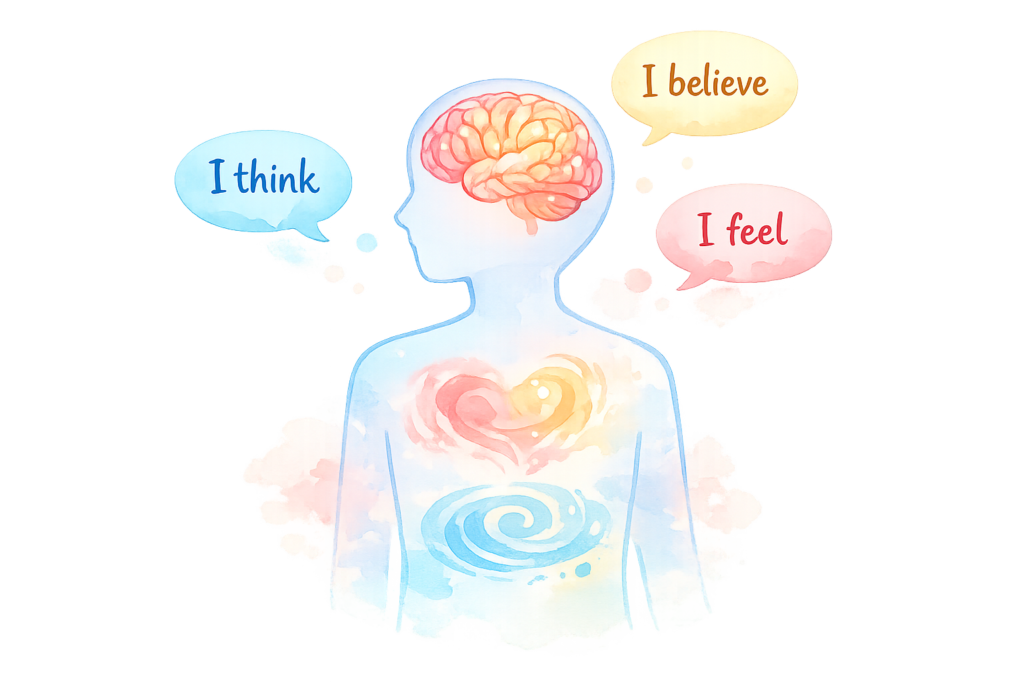
English has long enjoyed a reputation for being a language of efficiency, logic, and emotional restraint. Unlike some languages that are celebrated for their poetic expressiveness or passionate tone, English often appears to be reserved, even stoic. It is the language of science, technology, business, and diplomacy — domains where clarity and precision are prized over raw emotion.

However, beneath this veneer of rationality lies a complex web of subtle emotional signals. What if the reason English feels so restrained is not because it lacks emotion but because it chooses to hide it, particularly in its grammar? What if the very structures of English serve as a kind of emotional filter, allowing speakers to express feelings carefully, indirectly, or even invisibly?

When English Gets Emotional: How Grammar Expresses (and Hides) Feeling Read More »

The Loneliness of English: Why the Language Prefers Separation Over Connection

English is often celebrated for its precision, efficiency, and clarity. It allows us to articulate complex ideas with a straightforwardness that many other languages envy. Yet, beneath its polished veneer lies a peculiar trait: a sense of emotional distance, a quiet reluctance to fully embrace intimacy. Strangely, English does not seem to just permit distance. It appears to prefer it.

What if this linguistic preference is not accidental? What if the structure and conventions of English are subtly designed, or at least inclined, to foster separation rather than connection? This idea invites us to look beyond superficial fluency and examine the deeper, perhaps more subtle, ways in which the language shapes our relationships with others and ourselves.

The Loneliness of English: Why the Language Prefers Separation Over Connection Read More »

The Untranslatable ‘You’: What English Reveals About the Self

Imagine a language where a single word, you, serves for everyone. No matter if you are addressing your best friend, your boss, your grandmother, or a stranger on the street, the pronoun remains unchanged. This is the reality of English. It is a language that collapses all social relationships into one pronoun, offering simplicity but sacrificing nuance.
What does it say about a language, and by extension, its speakers, when the grammatical structure refuses to mark closeness, distance, or respect explicitly? Does this linguistic choice shape how people perceive relationships, intimacy, and social hierarchy? Or does it merely reflect a cultural tendency towards neutrality?

The Untranslatable ‘You’: What English Reveals About the Self Read More »

The Secret Life of Prepositions: The Words That Actually Shape Our Worldview

In the vast landscape of language learning, we often find ourselves captivated by vocabulary lists, grammar rules, and pronunciation drills. We memorise complex verb tenses, master tricky phonemes, and obsess over the meanings of adjectives. Yet, amidst this flurry of focus, one category of words remains remarkably invisible: prepositions.

Prepositions are the silent architects of our sentences. They quietly indicate relationships of space, time, manner, and more.

What if these unassuming words do more than just connect nouns and verbs? What if prepositions are not merely grammatical glue but are, in fact, cognitive lenses that shape how we perceive and understand the world? Could they influence our worldview, our priorities, and even our cultural outlooks?

The Secret Life of Prepositions: The Words That Actually Shape Our Worldview Read More »

The Grammar of Blame: How Syntax Shifts Responsibility

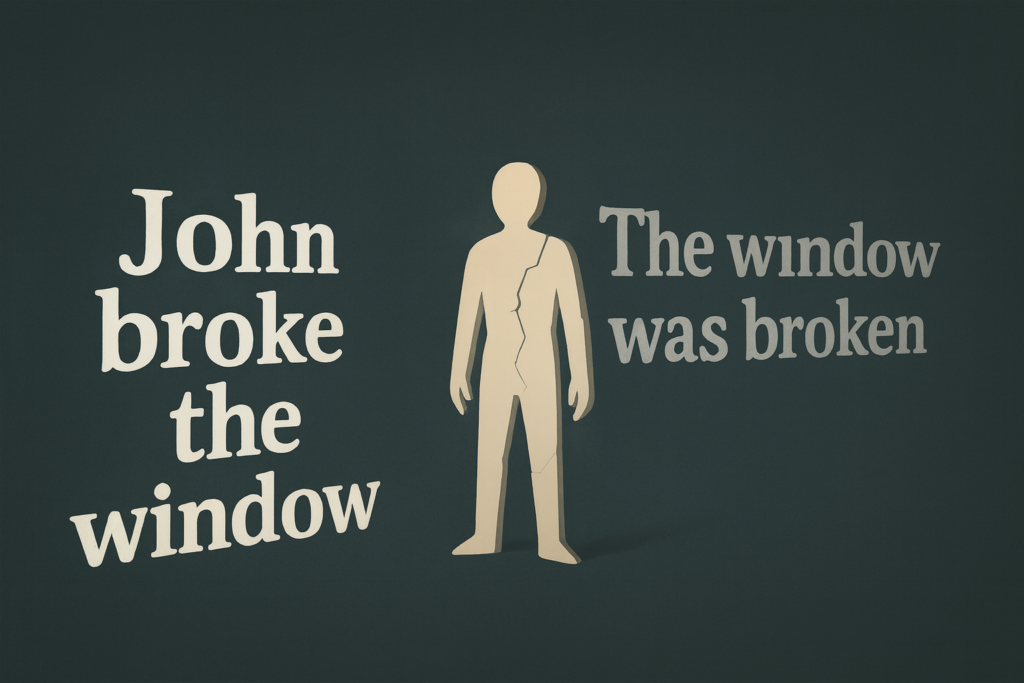
Imagine walking into a room and accidentally knocking over a cherished vase. When you say, ‘I broke the vase,’ the words carry a weight of personal responsibility, guilt, and accountability. The emotional temperature is immediate and intense. Now, if someone else reports, ‘The vase broke,’ the tone shifts. It becomes less confrontational, more detached, almost neutral. The event remains the same, but the way it is framed through language radically alters how we perceive responsibility.

This subtle yet profound difference illustrates a vital question: how does grammar influence our attribution of blame? Beyond mere syntax, language subtly guides our moral judgements, shaping perceptions of intent, culpability, and severity.

The Grammar of Blame: How Syntax Shifts Responsibility Read More »

Why Some Words Feel Heavy: The Psychology of Lexical Weight

Imagine standing at a crossroads of language, holding two words in your mind: ‘I’m sad’ and ‘I’m devastated’. Both express sorrow; yet the second phrase weighs heavier, sinking into your mental landscape with a sense of gravity and depth. The difference is not just in the dictionary definition but in the subtle emotional and cultural layers that each word evokes.

This phenomenon, where words seem to carry emotional, moral, or cultural weight, is a fascinating aspect of human language. Some words seem to press down on us, resonating with sombre, poetic, or profound tones, whereas others evoke lightness and joy. Why does this happen? How can two words mean roughly the same thing yet feel worlds apart in their emotional heft?

Why Some Words Feel Heavy: The Psychology of Lexical Weight Read More »

English After Earth: What Would Our Language Sound Like on Mars?

Imagine standing inside a transparent dome on the red plains of Mars, gazing out at a landscape of rust-coloured rocks and dust storms swirling in the thin atmosphere. Inside, children in space suits sit cross-legged on modular seats, their voices muffled yet eager, reciting words in English that carry a faint, unfamiliar echo, almost like a distant memory. The teacher gestures animatedly, and their speech, though rooted in familiar language, sounds subtly altered by the environment.

This scene, though speculative, prompts a compelling question: if humans colonise other planets, will our language change too? For centuries, linguists and anthropologists have observed how language is inherently intertwined with environment and culture. When a community moves into a new physical space, especially one as radically different as Mars, it is natural to wonder how their language might evolve. Would it remain recognisable, or would it transform into something unrecognisably new?

English After Earth: What Would Our Language Sound Like on Mars? Read More »

The Future Tense: What Our Grammar Reveals About How We See Time

Some languages place the future far away. Others fold it neatly into the present.

Can the way we talk about time change the way we think about it?

This question invites us into a fascinating realm where language, cognition, and culture intersect. Our grammar — the structures we use to organise our thoughts — may do more than simply describe reality. It might shape how we perceive and engage with the future. From the way we plan our careers to how we approach climate change, the language patterns embedded in our speech subtly influence our decisions.

In this post, we will explore how different languages conceptualise time, what scientific research suggests about the relationship between language and thought, and why understanding these patterns matters in our interconnected, rapidly changing world.

The Future Tense: What Our Grammar Reveals About How We See Time Read More »

The Secret Life of Idioms: How English Hides History in Everyday Phrases

Language is a living, breathing tapestry woven from the threads of history, culture, and human experience. Among the most fascinating aspects of any language are idioms, those colourful, often perplexing expressions that pepper our daily conversations. Everyone uses idioms; yet few pause to consider their origins. Have you ever wondered why we say ‘bite the bullet’ or ‘break the ice’? What stories are hidden behind these phrases? In this blog post, we will explore the intriguing world of idioms, especially how they serve as cultural fossils, preserving centuries-old histories and traditions. Understanding these idiomatic expressions not only enriches your vocabulary but also offers a glimpse into the fascinating past of the English language.

The Secret Life of Idioms: How English Hides History in Everyday Phrases Read More »

The Half-Life of Words: Why Some English Words Disappear (And Others Never Die)

Language is a living, breathing entity that is constantly evolving, adapting, and reshaping itself over time. Just as species in nature have lifespans, so do the words we use to communicate. Some words fade into obscurity, like ancient relics, while others remain as vital today as they were centuries ago. This fascinating dynamic raises an intriguing question: what determines the ‘half-life’ of a word? Why do some disappear entirely, some linger in fixed expressions, and others persist across generations?

In this blog post, we will explore this linguistic phenomenon through an engaging metaphor borrowed from physics: the concept of ‘half-life’. We will examine the life cycle of English words, from their rise and fall to their potential resurrection. Whether you are a language learner, a linguist, or simply a curious reader, understanding why words come and go can deepen your appreciation of the English language and help you become a more conscious communicator.

The Half-Life of Words: Why Some English Words Disappear (And Others Never Die) Read More »