Vocabulary

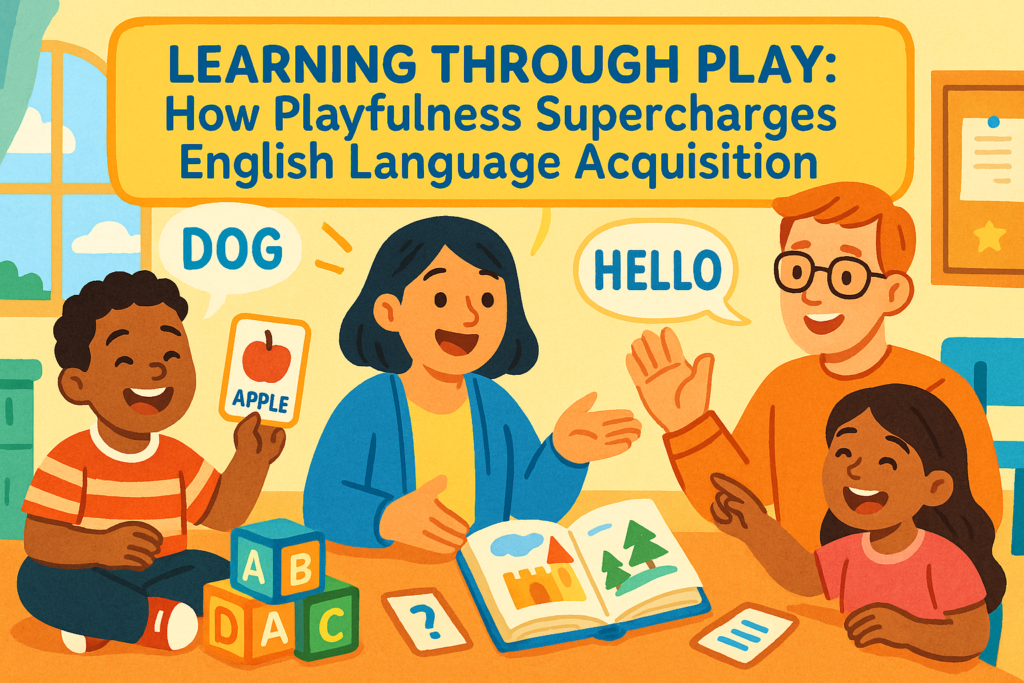
Learning Through Play: How Playfulness Supercharges English Language Acquisition

What if your best English lesson didn’t feel like a lesson at all? Imagine a classroom where children giggle while practising vocabulary, or adults confidently improvise dialogues in a fun game rather than rote memorisation. This isn’t just a utopian dream; it’s a reflection of how ‘learning through play’ can transform the way we acquire a new language.

Learning Through Play: How Playfulness Supercharges English Language Acquisition Read More »

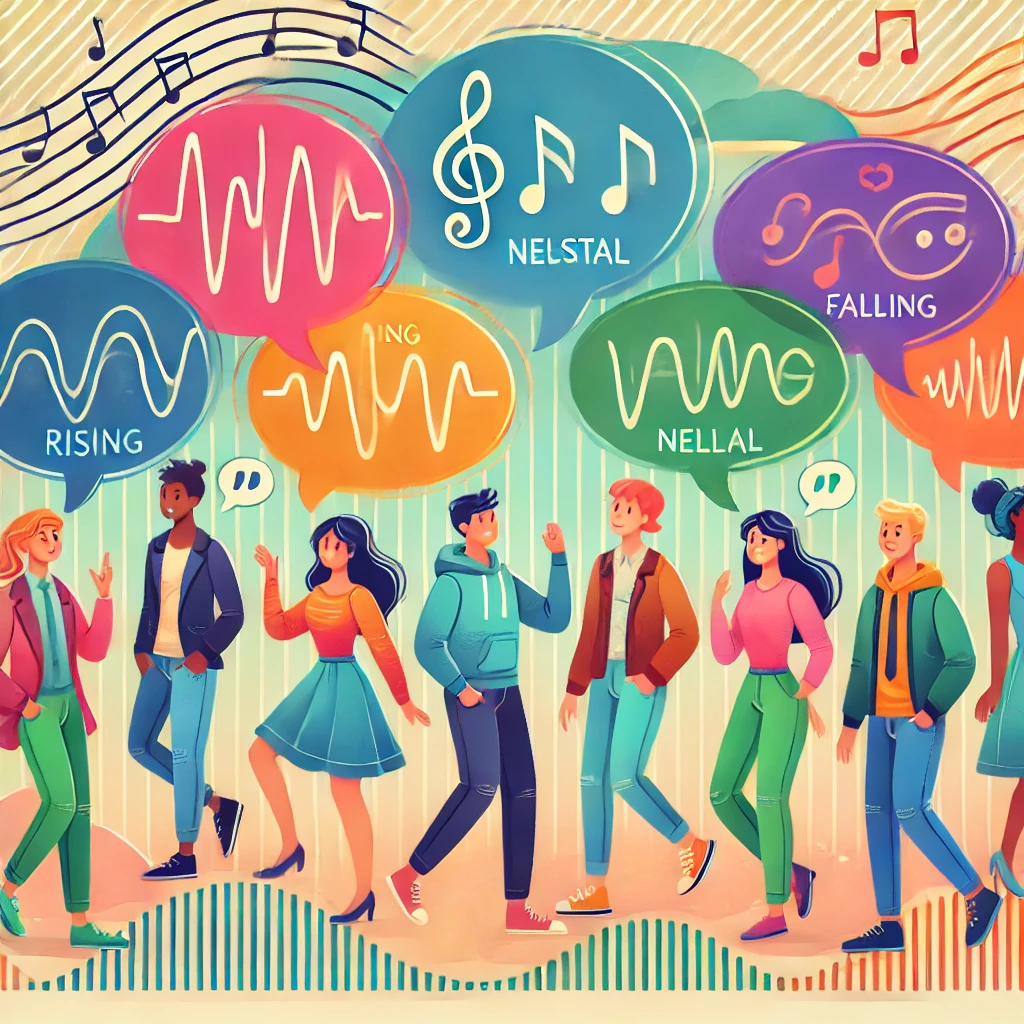
The Sounds of Silence: Teaching Pause, Intonation, and Rhythm in English

Imagine a conversation where every word is perfect, but the speaker’s voice sounds flat and monotonous. How does that affect your understanding? Surprisingly, research by Derwing and Munro in 2017 reveals that ‘listeners often perceive speakers with accurate prosody — meaning their intonation, rhythm, and pauses – as more fluent than those who speak grammatically correct but with a flat, unvaried tone’.
This finding shifts the common focus from just accuracy to the musicality of speech. It suggests that mastering how we say things, not just what we say, is crucial in effective communication. For language teachers and learners alike, this is a game changer: the sounds of silence — pauses, intonation, and rhythm — are just as vital as vocabulary and grammar.

The Sounds of Silence: Teaching Pause, Intonation, and Rhythm in English Read More »

Code-Switching and Social Adaptation: How Language Shifts Shape Who We Are

In a world where communication is increasingly transcending borders, the tendency to switch between languages or dialects — known as code-switching — has become a ubiquitous part of many multilingual or multicultural experiences. Understanding code-switching is particularly crucial for English learners as it highlights the importance of being aware of one’s audience, mastering the appropriateness of language, and developing linguistic flexibility.

Code-Switching and Social Adaptation: How Language Shifts Shape Who We Are Read More »

Illustration showing four diverse individuals each wearing a label on their clothing with words like 'LAZY', 'NERD', 'IMMIGRANT', and 'BOSSY'. Above them is the text: 'Labels and Power – How Words Shape Social Perceptions'. The image highlights how language can influence identity and social perception.

Labels and Power: How Words Shape the Way We See Ourselves and Others

This blog post will explore how labels shape individual and group identities, fuel biases, and influence power dynamics in society. We will examine the psychology behind labels, explore the societal implications of who gets to define labels, analyse the stereotypes reinforced by language, and discuss the evolution of politically correct language. Furthermore, we will delve into the intersection of labels and identity, internalisation, resistance, and the importance of language awareness in promoting empathy.

Labels and Power: How Words Shape the Way We See Ourselves and Others Read More »

Academic Englisg

Unlocking Academic English: Mastering Formal Writing and Critical Thinking

In an increasingly globalised world, the ability to communicate effectively in English opens doors to numerous opportunities, particularly in academic and professional settings. Whether you’re preparing for a university application or advancing your career, mastering formal writing and critical thinking is crucial. This blog post will cover essential skills in academic English, focusing on structuring arguments, using hedging language, expanding your vocabulary, and honing your analytical skills.

Unlocking Academic English: Mastering Formal Writing and Critical Thinking Read More »

Think in English: The Secret to Faster Fluency and Natural Conversations

In the realm of language acquisition, the journey from knowing vocabulary and grammar to achieving fluency can often seem daunting. Many language learners grapple with the challenge of how to express thoughts seamlessly in English, oscillating between their native tongue and English. Yet, one fundamental concept serves as the bridge to fluency: thinking in English. This mental shift can transform your learning experience, honing your ability to converse naturally and confidently. In this blog post, we will explore the benefits of thinking in English and present actionable strategies to improve your English thinking skills.

Think in English: The Secret to Faster Fluency and Natural Conversations Read More »

Mastering the Rhythm of English: How Stress and Intonation Shape Meaning

When we think of learning a new language, our minds often gravitate toward vocabulary and grammar. However, mastering a language goes well beyond mere words — it encompasses how we deliver those words. In English, the interplay of rhythm, stress, and intonation can dramatically shape the meaning of what we say. This rich musicality of the language not only defines our speech patterns but also enhances clarity, fluency, and confidence in conversations.

Mastering the Rhythm of English: How Stress and Intonation Shape Meaning Read More »

The Joy of ‘Wordplay’: How Puns and Playful Language Can Boost Your English Skills

As language learners, we’re always on the lookout for ways to improve our skills and enhance our understanding of the English language. While grammar rules and vocabulary lists can be helpful, we often overlook one of the most powerful tools in the language learner’s toolkit: wordplay.

From puns and double meanings to clever turns of phrase, wordplay isn’t just a humorous distraction. It’s a dynamic way to stretch our creative muscles, grasp new idioms, and sharpen our understanding of the English syntax.

In this blog post, we will explore how wordplay can help language learners in a fun and interactive way. We will examine examples from pop culture, literature, and everyday conversation to show how wordplay can be used to convey meaning, build relationships, and even make complex ideas more accessible.

The Joy of ‘Wordplay’: How Puns and Playful Language Can Boost Your English Skills Read More »

Language Learning in the Age of Globalisation: Embracing English as a Bridge, Not a Barrier

In a world that has become increasingly interconnected through technology, commerce, and travel, the question of language takes on unprecedented significance. As we traverse borders, share ideas across cultures, and engage with a diverse tapestry of people, English has emerged as a prominent global lingua franca. The rise of English as an international language does not come without its complexities, especially when we consider the nuances of regional dialects, local languages, and cultural identity. Consequently, the challenge for language learners today is to embrace English not as a singular standardised system but as a bridge that connects disparate cultures, while also honouring and preserving their native tongues.

Language Learning in the Age of Globalisation: Embracing English as a Bridge, Not a Barrier Read More »

Unlocking the Local: Understanding Regional Variations in English around the World

As English language learners, we often focus on mastering the standard, ‘neutral’ accent and vocabulary of English as a global language. However, English is not a monolithic entity but a diverse and dynamic language that has evolved over centuries through contact with various cultures and societies around the world. Understanding these regional variations can enhance our language skills and deepen our connection with the cultures behind the words.

Unlocking the Local: Understanding Regional Variations in English around the World Read More »