Communication

Why We Argue About Words When We Really Disagree About Ideas

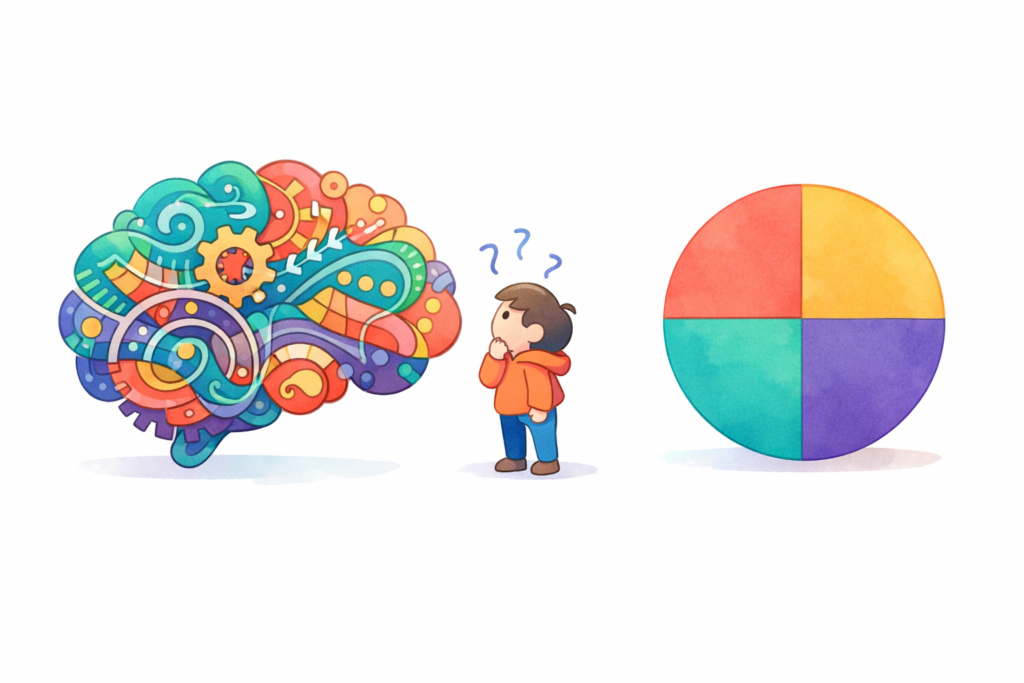
Picture this common scene: two people are debating the meaning of a fundamental concept.

A: That’s not what equality means.

B: That’s exactly what equality means.

At first glance, it seems like they are arguing over a dictionary definition. But is that really the case? Or are they, perhaps, talking past each other, each with a different mental model of what the word means?

This question cuts to the core of human communication. When we argue about the meaning of a word, are we really debating language itself? Or are we, in fact, wrestling with contrasting visions of how the world works? Understanding this distinction reveals much about the nature of disagreement and the role language plays in shaping, and reflecting, our worldview.

Why We Argue About Words When We Really Disagree About Ideas Read More »

The Words We Never Invented: What the Gaps in English Reveal About the Way We Think

Languages are often measured by their vocabulary, the lexicons that enable us to articulate colours, emotions, objects, and abstract ideas. Yet, if we want to understand what a language truly reveals about its speakers, we should look beyond what it can say. The most compelling insights may lie in what it cannot say: those silent gaps, the words that do not exist, the concepts that remain unnamed.

The Words We Never Invented: What the Gaps in English Reveal About the Way We Think Read More »

Why We Notice Some Words and Ignore Others: Attention, Salience, and the Hidden Politics of Language

Imagine this: you have recently learned a new word, say, ‘resilience’, and suddenly, it is everywhere. It pops up in news articles, social media posts, conversations, even billboards. You wonder, ‘Was it always there?’ or ‘Did I just start noticing it?’ This phenomenon is more than coincidence. It is rooted in the complex interplay between language, attention, and perception.

Why We Notice Some Words and Ignore Others: Attention, Salience, and the Hidden Politics of Language Read More »

Why We Mistake Familiarity for Truth: What Language, Repetition, and Cognition Reveal About Belief

In an age inundated with information, where social media feeds, headlines, and viral content compete for our attention, the line between familiarity and truth has blurred dangerously. We are more exposed than ever to repeated messages, shared narratives, and linguistic patterns that reinforce beliefs, not necessarily because they are accurate, but because they feel true. This phenomenon is not accidental; it is rooted deeply in cognitive processes, linguistic cues, and social dynamics that shape our perception of reality.

Why We Mistake Familiarity for Truth: What Language, Repetition, and Cognition Reveal About Belief Read More »

Why Intelligent Writing Often Feels Difficult to Read: Fluency, Friction, and the Psychology of Complex Thought

In an age awash with information, clarity has become a currency of respect, and yet, some of the most intellectually rigorous writing is often perceived as hard to read. Why is it that ideas rooted in complexity, nuance, and depth can feel inaccessible, even to the most engaged readers? The answer lies not just in the content itself but in the subtle dynamics of how our minds process language, ideas, and the very act of understanding.

Why Intelligent Writing Often Feels Difficult to Read: Fluency, Friction, and the Psychology of Complex Thought Read More »

Most People Don’t Revise Their Ideas. They Just Rewrite Their Sentences.

In the age of instant communication and rapid content production, it is tempting to believe that rewriting is the same as revising. We polish sentences, tweak word choices, and adjust style — all in the name of clarity. But beneath this surface-level effort lies a deeper phenomenon: most of us are not revising our ideas. We are merely rewriting our sentences.

This subtle yet profound distinction has enormous implications for how we think, communicate, and, ultimately, how we grow intellectually. Because if we mistake superficial editing for genuine revision, we risk reinforcing our existing assumptions, obscuring our misunderstandings, and missing opportunities for real progress.

Most People Don’t Revise Their Ideas. They Just Rewrite Their Sentences. Read More »

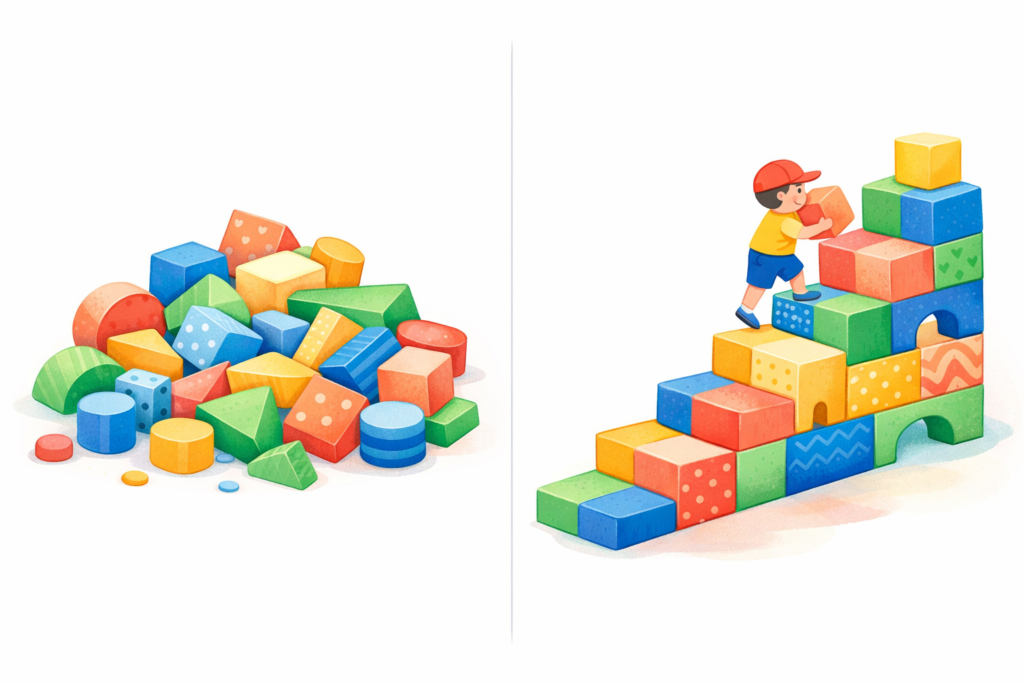
You Do Not Have Too Much to Say. You Have No Centre.

Many writers, whether seasoned or just starting out, often find themselves uttering familiar lines: ‘I have too much to say,’ ‘There’s just so much to include,’ or ‘I don’t know what to leave out.’ These expressions are almost universal in the writing process. They reflect a common feeling, namely overwhelm, a sense that the sheer volume of ideas or information makes clarity impossible. When faced with a blank page or a draft teeming with notes, it is easy to default to the idea that the problem is simply too much content. And in many cases, this is how writers justify their struggles: ‘It’s too crowded. I don’t know how to cut it down.’ 

Then, the typical conclusion follows: the issue must be overload. But this is only half the story.  It is also almost never the real problem.

You Do Not Have Too Much to Say. You Have No Centre. Read More »

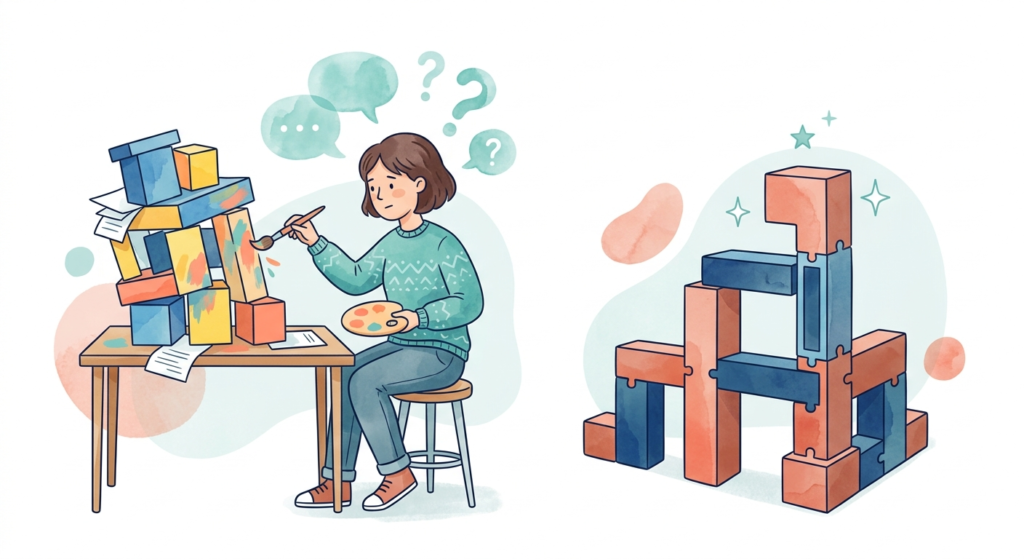
Structure Before Style: Why Most Writing Advice Starts at the Wrong End

Good writing is not how you phrase ideas. It is how you organise them.

Many writers and communicators obsess over style. They are told to ‘improve their writing style’, ‘make it more engaging’, ‘use better words’, or ‘polish the language’. The focus seems to be on how the writing sounds: on surface-level polish and aesthetic appeal. And while style can lend clarity and flair, most of the common advice targets the wrong problem. It is easy to see why. Style is visible, teachable, and feels fixable. It is the surface we can easily manipulate.

Structure Before Style: Why Most Writing Advice Starts at the Wrong End Read More »

Most Writing Advice Is Anti-Intellectual: Why Simplifying Too Early Weakens Your Thinking

In the world of writing and communication, there is a pervasive mantra: ‘Keep it simple.’ It is everywhere, from advice columns to executive coaching, from classroom lectures to LinkedIn posts. The message feels intuitive: clarity comes from brevity, from stripping away complexity, from making ideas accessible. But what if this well-intentioned guidance is actually doing more harm than good?

Most Writing Advice Is Anti-Intellectual: Why Simplifying Too Early Weakens Your Thinking Read More »

Your Problem Is Not That You Cannot Explain It. It Is That You Have Not Decided What It Is.

Have you ever found yourself saying:

— ‘I’m struggling to explain this.’

— ‘I know what I mean, but I can’t say it properly.’

— ‘Let me try that again . . . ‘

And then, after a few attempts, you feel frustrated, as if the words are just out of reach. Most of us assume that this is a communication problem. That if only we could find the right words, everything would be clear. However, here is the surprising truth: most of the time, the problem is not communication; it is decision. It is not a failure of language. It is a lack of definition.

Your Problem Is Not That You Cannot Explain It. It Is That You Have Not Decided What It Is. Read More »