Community

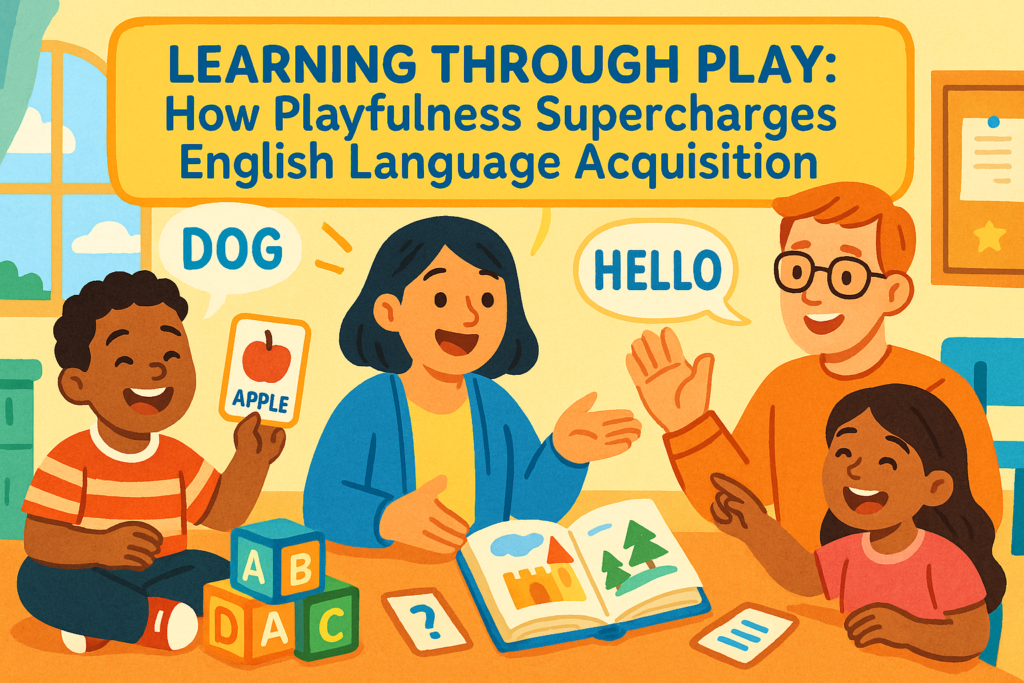
Learning Through Play: How Playfulness Supercharges English Language Acquisition

What if your best English lesson didn’t feel like a lesson at all? Imagine a classroom where children giggle while practising vocabulary, or adults confidently improvise dialogues in a fun game rather than rote memorisation. This isn’t just a utopian dream; it’s a reflection of how ‘learning through play’ can transform the way we acquire a new language.

Learning Through Play: How Playfulness Supercharges English Language Acquisition Read More »

What Is Translanguaging? The Secret Multilinguals Use to Master English

In this post we will explore the concept of translanguaging as a powerful tool in English language teaching. While traditional models often insist on English-only classrooms, translanguaging embraces learners’ full linguistic repertoires. It is not just code-switching — it is an intentional pedagogical approach that validates the use of all languages a learner knows to facilitate learning, foster confidence, and reflect real-world communication. The post will provide a conceptual understanding of translanguaging, distinguish it from code-switching, examine its practical implications in multilingual classrooms (especially in India and other Global South contexts), and offer actionable strategies for educators.

What Is Translanguaging? The Secret Multilinguals Use to Master English Read More »

Shouting Your Way to Fluency: Exploring the ‘Crazy English’ Method

Learning a new language can sometimes feel like navigating a labyrinth — full of twists, turns, and the occasional dead end. Traditional methods often emphasise memorisation, grammar drills, and listening comprehension. While these are undoubtedly vital, they may not always cater to every learner’s needs or preferences. Enter the ‘Crazy English’ method — a bold, unconventional approach that encourages learners to shout their way to fluency. It might sound a bit eccentric, but it raises intriguing questions about how we acquire language, confidence, and even cultural identity. Let’s embark on a journey to understand this method, evaluate its pros and cons, compare it with traditional techniques, and explore how you might incorporate its principles into your own language learning journey.

Shouting Your Way to Fluency: Exploring the ‘Crazy English’ Method Read More »

Code-Switching and Social Adaptation: How Language Shifts Shape Who We Are

In a world where communication is increasingly transcending borders, the tendency to switch between languages or dialects — known as code-switching — has become a ubiquitous part of many multilingual or multicultural experiences. Understanding code-switching is particularly crucial for English learners as it highlights the importance of being aware of one’s audience, mastering the appropriateness of language, and developing linguistic flexibility.

Code-Switching and Social Adaptation: How Language Shifts Shape Who We Are Read More »

A flat-style digital illustration with the title 'Language and Identity' in bold navy blue text on a light beige background. Below the title, two colourful speech bubbles — one blue and one orange — contain simple profile illustrations of a man and a woman facing each other, symbolising communication and cultural identity.

Do We Think in Language? Exploring the Sapir–Whorf Hypothesis

Language is a powerful tool that shapes not only how we communicate but also how we perceive and interact with the world around us. This intricate relationship between language, thought, and culture is encapsulated in the Sapir–Whorf Hypothesis, also known as ‘linguistic relativity’. This concept posits that the structure and vocabulary of our language influence our cognition and worldview. We touched upon this topic in the last blog post. In this blog post, we will delve deep into the nuances of the Sapir–Whorf Hypothesis, exploring its implications through linguistic theory, cross-linguistic studies, and cultural cognition.

Do We Think in Language? Exploring the Sapir–Whorf Hypothesis Read More »

Mastering the Rhythm of English: How Stress and Intonation Shape Meaning

When we think of learning a new language, our minds often gravitate toward vocabulary and grammar. However, mastering a language goes well beyond mere words — it encompasses how we deliver those words. In English, the interplay of rhythm, stress, and intonation can dramatically shape the meaning of what we say. This rich musicality of the language not only defines our speech patterns but also enhances clarity, fluency, and confidence in conversations.

Mastering the Rhythm of English: How Stress and Intonation Shape Meaning Read More »

The Joy of ‘Wordplay’: How Puns and Playful Language Can Boost Your English Skills

As language learners, we’re always on the lookout for ways to improve our skills and enhance our understanding of the English language. While grammar rules and vocabulary lists can be helpful, we often overlook one of the most powerful tools in the language learner’s toolkit: wordplay.

From puns and double meanings to clever turns of phrase, wordplay isn’t just a humorous distraction. It’s a dynamic way to stretch our creative muscles, grasp new idioms, and sharpen our understanding of the English syntax.

In this blog post, we will explore how wordplay can help language learners in a fun and interactive way. We will examine examples from pop culture, literature, and everyday conversation to show how wordplay can be used to convey meaning, build relationships, and even make complex ideas more accessible.

The Joy of ‘Wordplay’: How Puns and Playful Language Can Boost Your English Skills Read More »

How Pop Culture Shapes the English Language: The Impact of Music, Movies, and Viral Memes

Language is a living entity, evolving and morphing with the ebb and flow of culture, society, and technology. In today’s interconnected world, English has not only emerged as a global lingua franca but also as a canvas for contemporary pop culture, which significantly influences its lexicon, grammar, and usage. From the catchy hooks of pop songs to the quotable lines from blockbuster films, and the chaotic spontaneity of viral memes, pop culture acts as a catalyst for linguistic change. This blog post delves into how music, movies, and memes shape the English language, with examples from both global contexts and unique instances from India.

How Pop Culture Shapes the English Language: The Impact of Music, Movies, and Viral Memes Read More »

Language Learning in the Age of Globalisation: Embracing English as a Bridge, Not a Barrier

In a world that has become increasingly interconnected through technology, commerce, and travel, the question of language takes on unprecedented significance. As we traverse borders, share ideas across cultures, and engage with a diverse tapestry of people, English has emerged as a prominent global lingua franca. The rise of English as an international language does not come without its complexities, especially when we consider the nuances of regional dialects, local languages, and cultural identity. Consequently, the challenge for language learners today is to embrace English not as a singular standardised system but as a bridge that connects disparate cultures, while also honouring and preserving their native tongues.

Language Learning in the Age of Globalisation: Embracing English as a Bridge, Not a Barrier Read More »

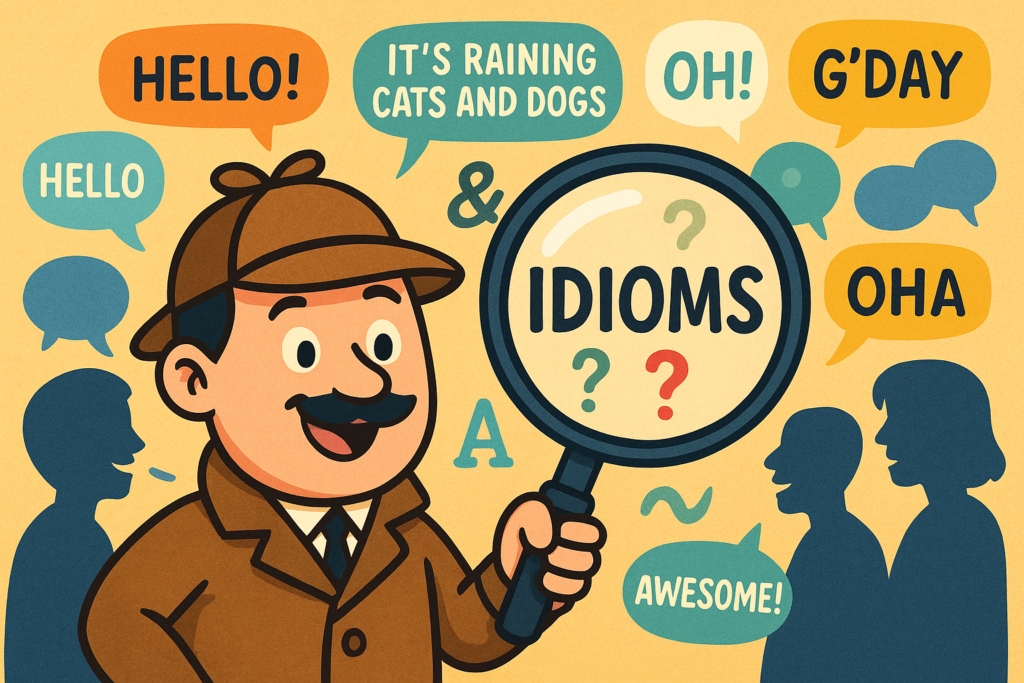
Unlocking the Local: Understanding Regional Variations in English around the World

As English language learners, we often focus on mastering the standard, ‘neutral’ accent and vocabulary of English as a global language. However, English is not a monolithic entity but a diverse and dynamic language that has evolved over centuries through contact with various cultures and societies around the world. Understanding these regional variations can enhance our language skills and deepen our connection with the cultures behind the words.

Unlocking the Local: Understanding Regional Variations in English around the World Read More »